


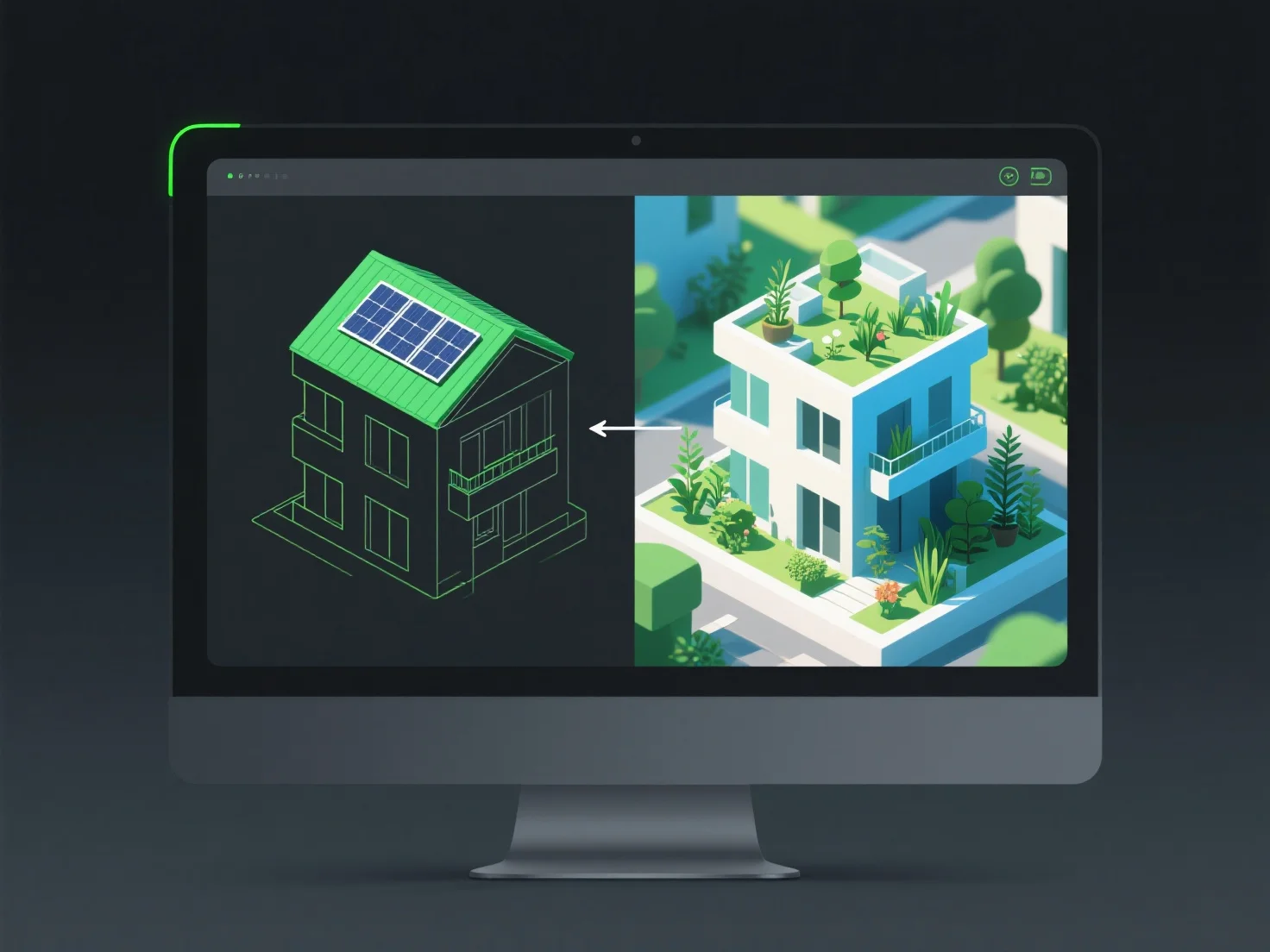
3D-моделювання допомагає реалізовувати екологічно стійкі проекти, забезпечуючи точну візуалізацію та оптимізацію використання ресурсів і впливу на навколишнє середовище, що дозволяє раннє виявлення екологічно чистих рішень для мінімізації реальних відходів ресурсів.
Ключові застосування у різних галузях включають: - Архітектура: оптимізація планування будівель для природного освітлення, вентиляції та енергоефективності з метою зменшення вуглецевого сліду. - Виробництво: зниження відходів матеріалів за допомогою віртуального прототипування та ітерації дизайну перед фізичним виробництвом. - Містобудування: моделювання зелених зон, інтеграція відновлюваної енергії та сталої інфраструктури для підвищення екологічної стійкості.
Для новачків у сфері сталого дизайну 3D-моделювання допомагає тестувати еко-матеріали або енергозберігаючі макети, віддаючи пріоритет відповідальним рішенням без дорогих фізичних випробувань.