


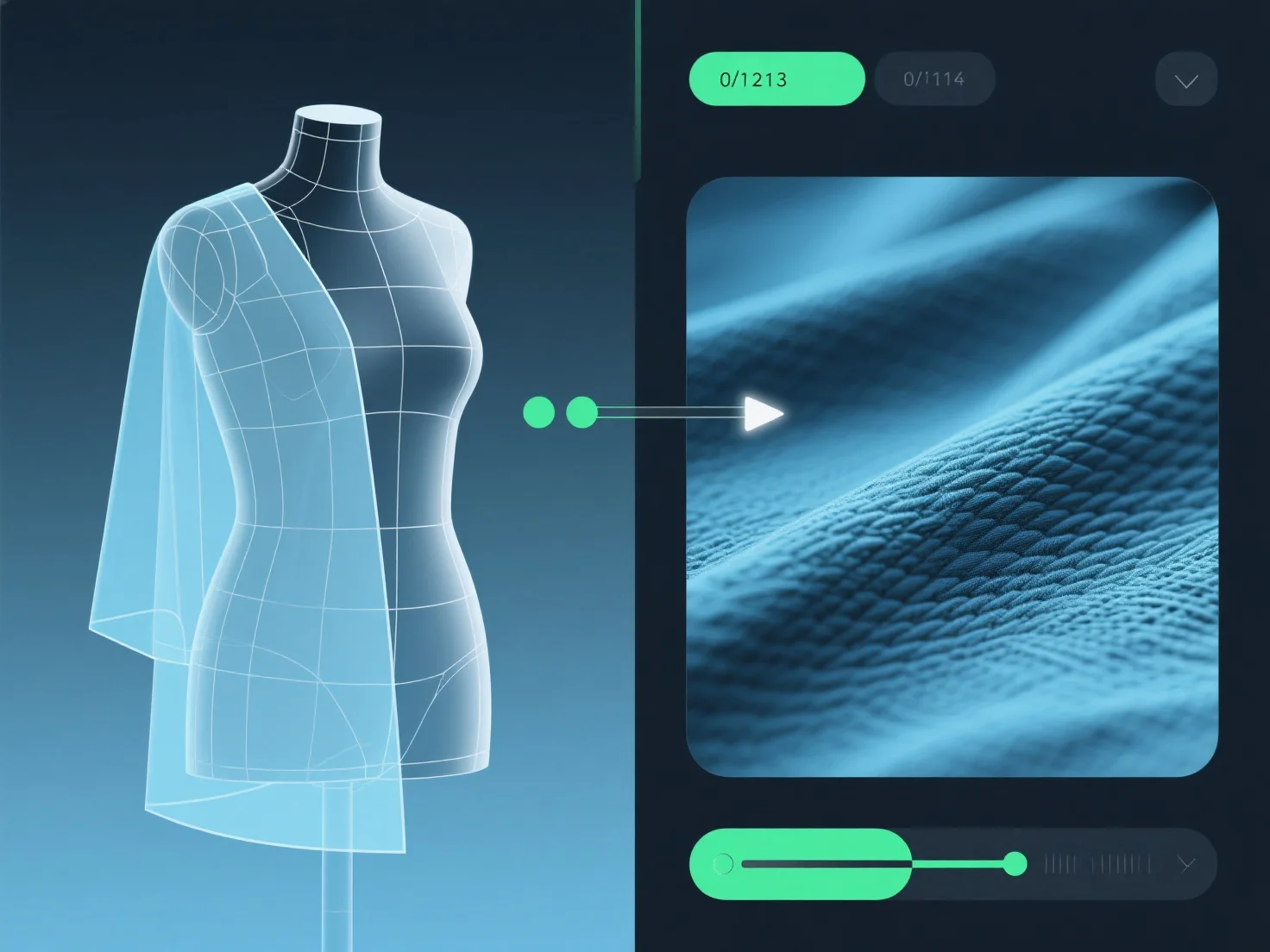
3D-моделювання створює реалістичні текстури одягу та тканини шляхом симуляції фізичних властивостей і деталей поверхні, об'єднання поведінки матеріалу і візуального картографування для досягнення реалістичних результатів.
- **Моделювання фізичних властивостей**: Це визначає ключові атрибути, такі як еластичність, товщина та тертя. Вони визначають, як тканини драпіруються, розтягуються або згортаються на 3D-формах, імітуючи рух у реальному світі.
- **Додавання деталей поверхні за допомогою текстурних карт**: карти високої роздільної здатності відтворюють візерунки, шви, зморшки або дефекти тканини. Це надає візуальній реалістичності, завдяки чому текстури виглядають тактильними навіть у цифрових рендерах.
Разом ці кроки забезпечують те, щоб текстури 3D-одягу виглядали та поводилися автентично, об'єднуючи віртуальні та фізичні характеристики тканини.