


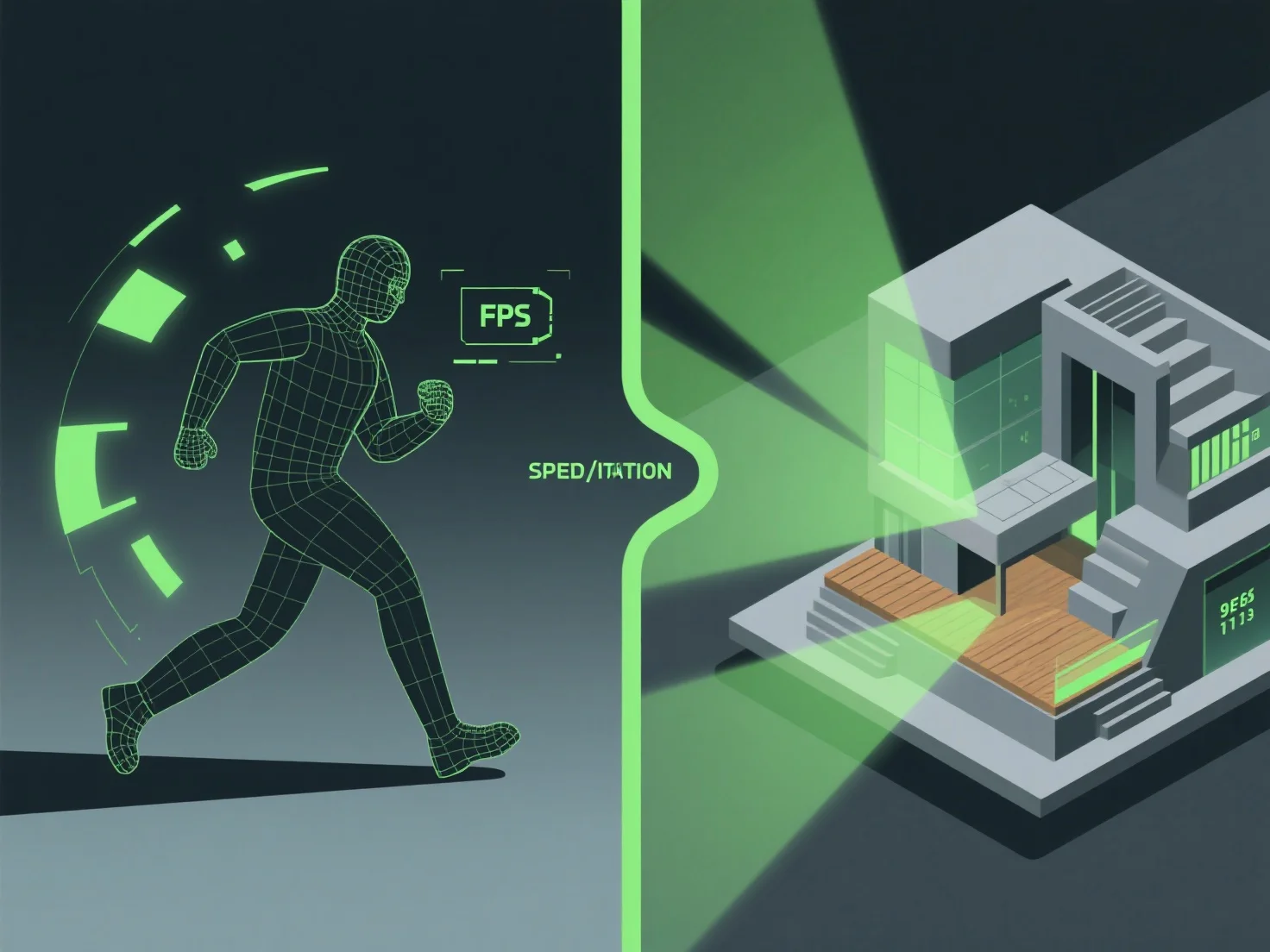
Движки рендерингу в реальному часі, такі як Unity та Unreal, відрізняються від офлайн-рендерерів, таких як V-Ray, в основному своїми пріоритетами щодо швидкості рендерингу та візуальної якості.
Движки в режимі реального часу надають пріоритет швидкості для миттєвого відображення кадрів, забезпечуючи інтерактивні враження, такі як ігри, доповнена реальність і віртуальна реальність. Вони жертвують деякими фотореалістичними деталями, щоб підтримувати плавну роботу в режимі реального часу.
На відміну від цього, офлайн-рендерери фокусуються на досягненні фотореалізму за допомогою складного освітлення, текстур і ефектів. Вони вимагають годин або навіть днів для обробки одного кадру, що робить їх ідеальними для фільмів, високоякісних анімацій і візуалізації продуктів, де інтерактивність не потрібна.
Обирайте движки в режимі реального часу для сценаріїв, що вимагають миттєвої взаємодії; вибирайте офлайн-рендери, коли кінематографічна, реалістична якість є головним пріоритетом.