


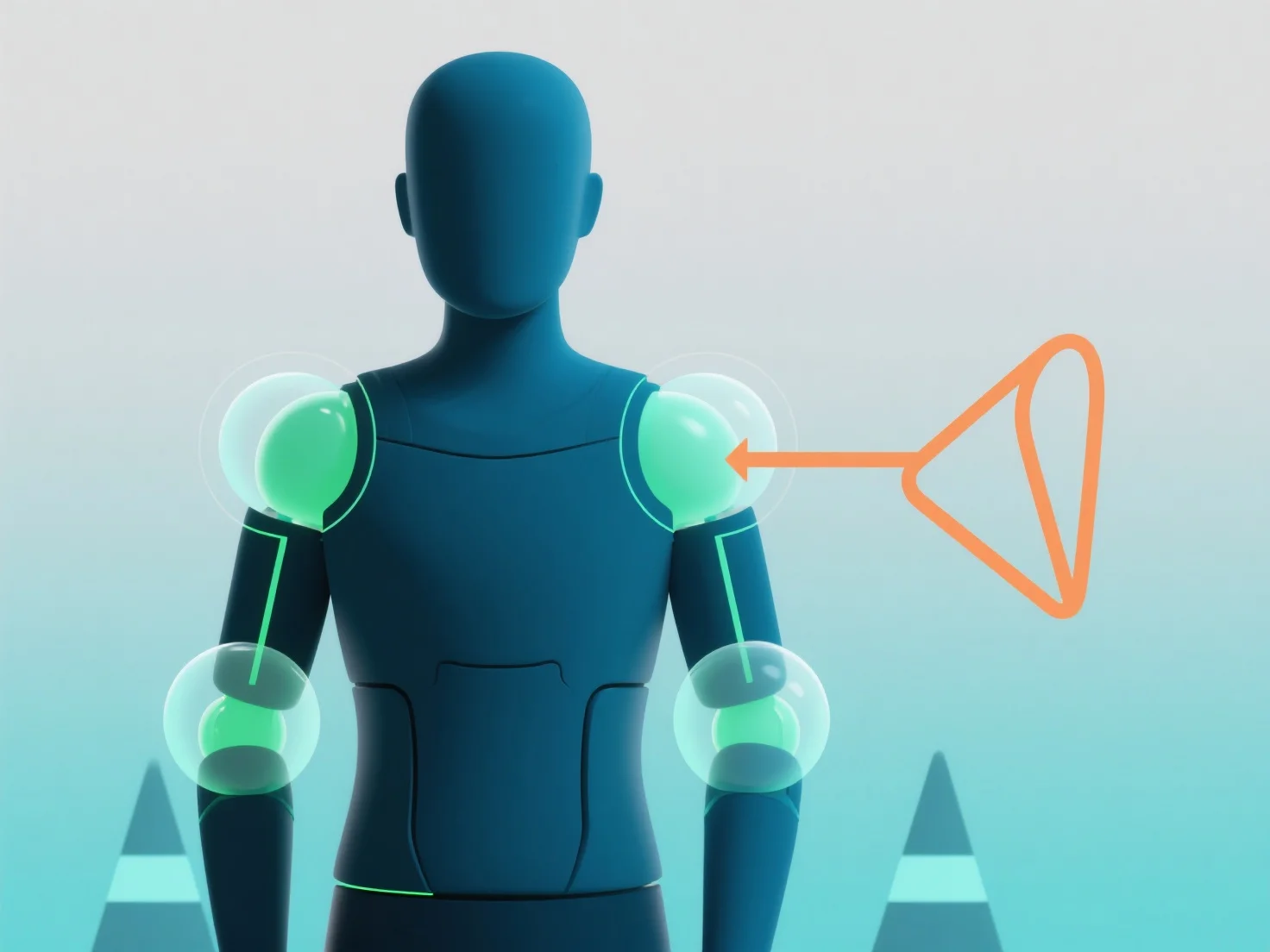
З'єднання та обмеження в рамках ригінгу безпосередньо визначають поведінку руху 3D-моделі та її структурну стабільність під час анімації.
Суглоби виступають у ролі опорних точок, забезпечуючи основні рухи, такі як обертання.
Обмеження, такі як ІК (зворотна кінематика), обмеження або зв'язки батьків і дітей, обмежують або направляють рух. ІК підтримує вирівнювання кінцівок під час досягнення мети, обмеження запобігають надмірному обертанню, а зв'язки батьків і дітей забезпечують ієрархічний рух.
Разом вони забезпечують контрольоване, реалістичне пересування моделі, уникаючи нерозбірливих або неприродних поз та підтримуючи структурну цілісність.