


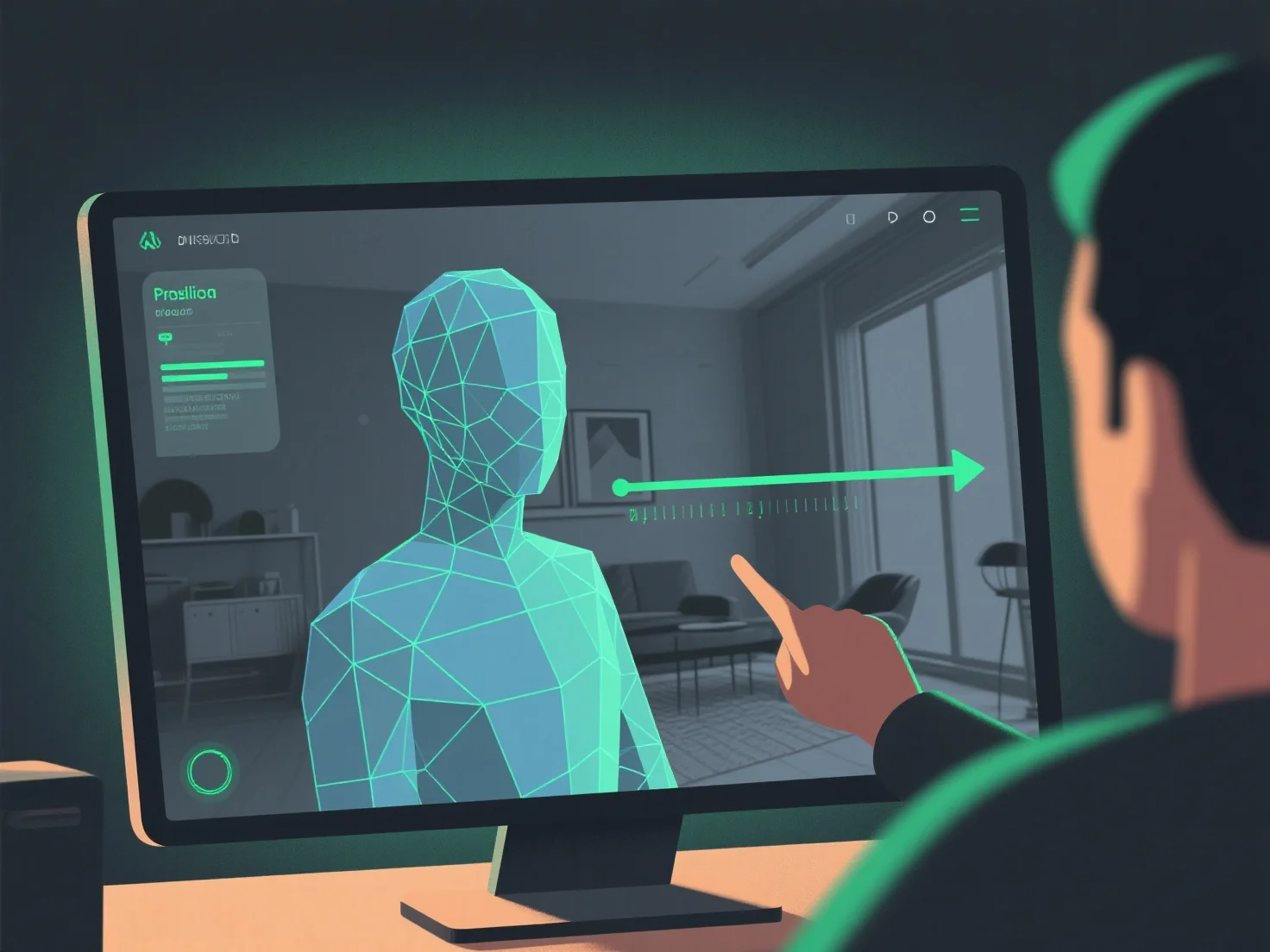
3D-моделери оптимізують свою роботу для додатків доповненої реальності, балансуючи складність моделі з продуктивністю в режимі реального часу та забезпечуючи сумісність з апаратним і програмним забезпеченням для AR.
Ключові оптимізації включають: - Зменшення кількості полігонів для прискорення рендерингу та зниження вимог до обробки. - Стиснення текстур для мінімізації використання пам'яті при збереженні важливих деталей. - Вирівнювання моделей з системами відстеження доповненої реальності для підтримання просторової точності у реальних середовищах.
Практичні налаштування відрізняються залежно від випадку використання: мобільні додатки доповненої реальності віддають пріоритет ультралегким моделям; симуляції навчання додають візуальні маркери для стабільного відстеження; роздрібні примірки спрощують приховані частини, але детально відображають видимі поверхні.
Тестування на ранньому етапі в інструментах доповненої реальності.