


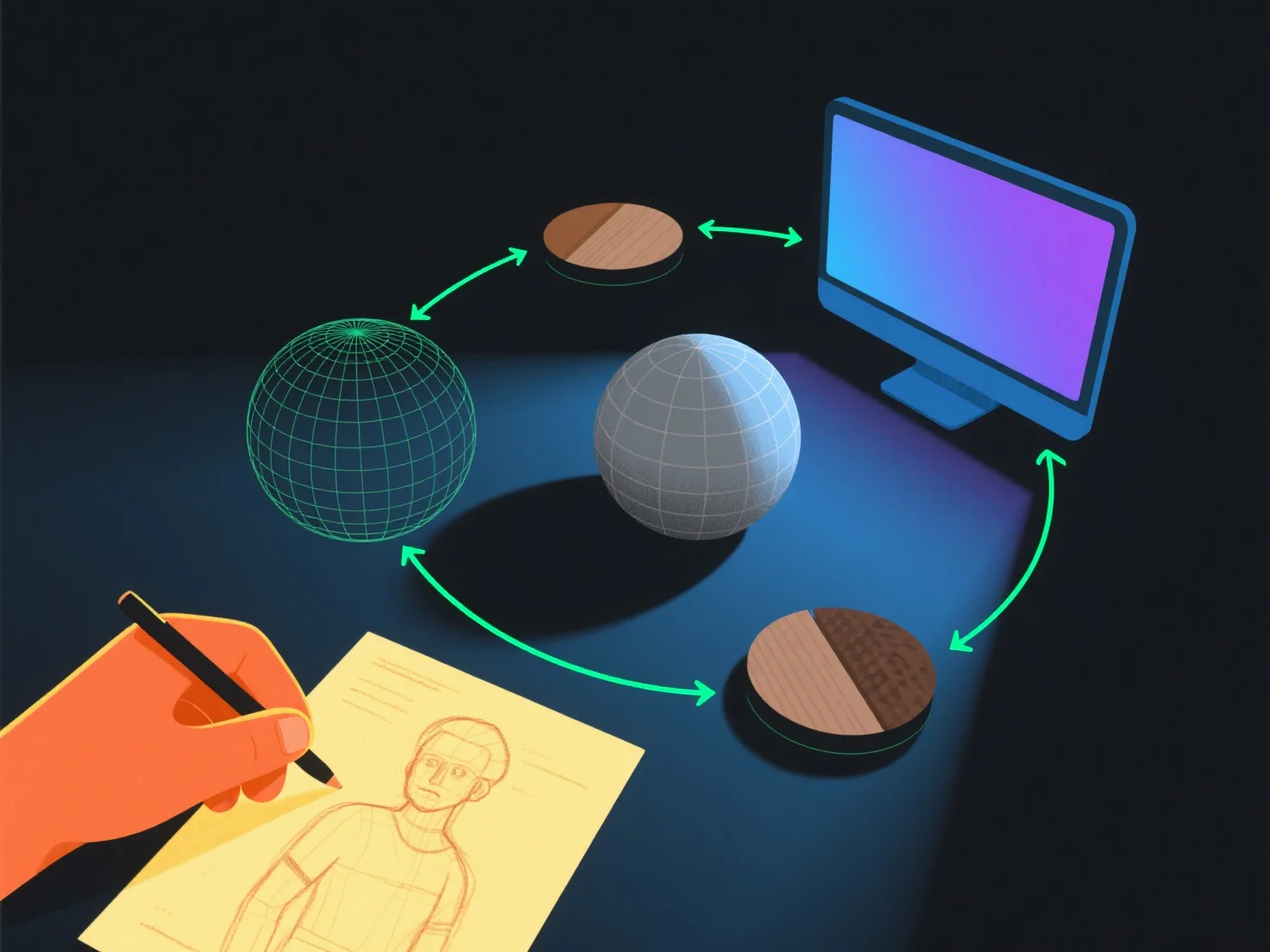
O pipeline 3D, desde o conceito até a renderização final, envolve seis etapas principais: design do conceito, modelagem 3D, texturização, rigging (para ativos animados), iluminação e renderização final.
- **Design de conceito**: Transforma ideias em conceitos visuais através de esboços ou mood boards, definindo a direção criativa do projeto. - **Modelagem 3D**: Constrói geometria 3D digital usando software, formando a forma básica e a estrutura do ativo. - **Texturização**: Adiciona detalhes de superfície (cor, padrões, materiais) para melhorar o realismo e o apelo visual. - **Rigging (para animação)**: Cria um esqueleto com controlos para permitir o movimento (por exemplo, articulações de personagens ou articulação de objetos). - **Renderização final**: Calcula as interações de luz e material para gerar a imagem final ou o quadro de animação.
Estes passos sequenciais transformam os conceitos iniciais em visuais polidos e prontos para renderização.