


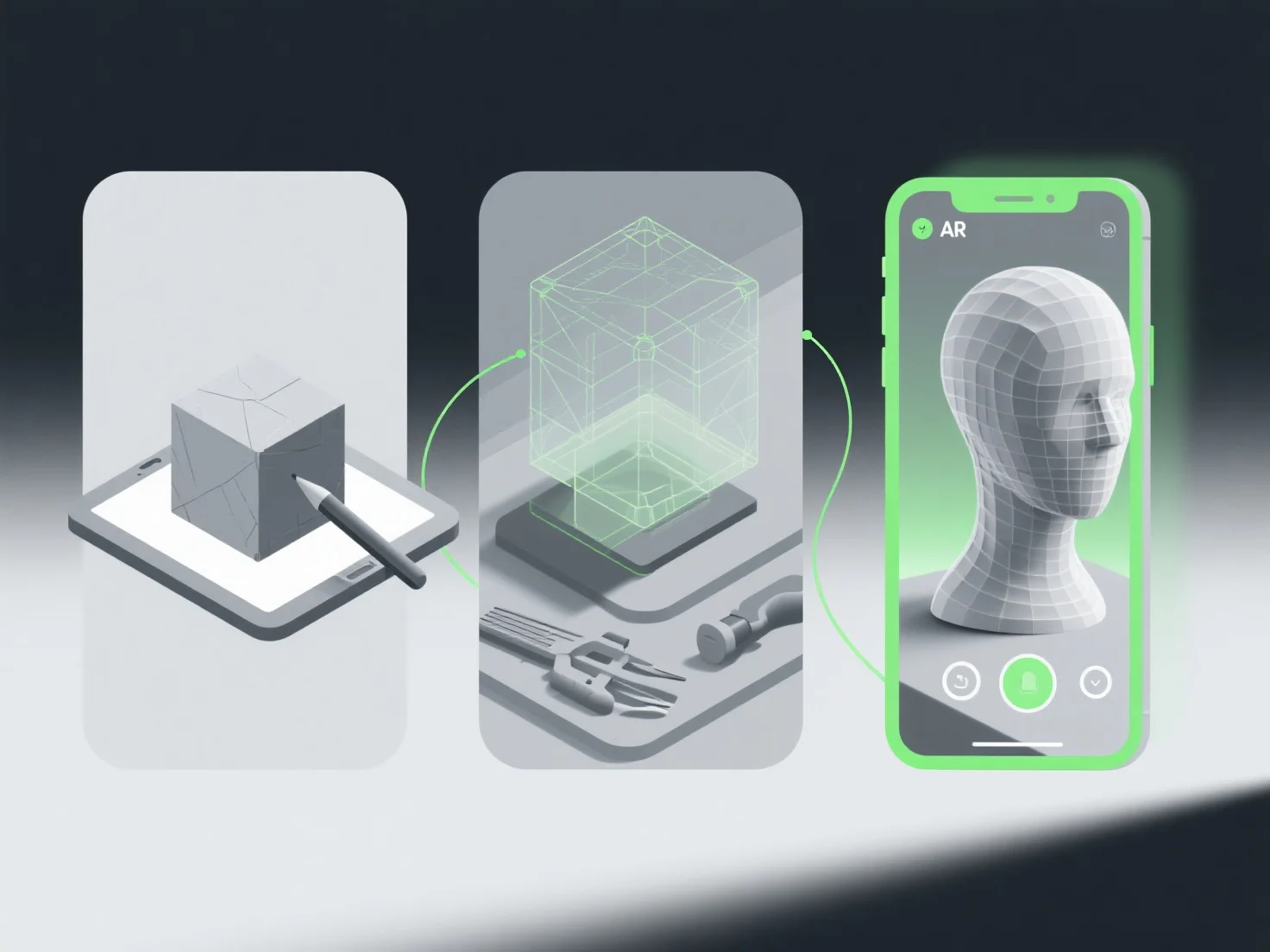
O fluxo de trabalho ideal para criar modelos 3D para experiências de realidade aumentada (RA) envolve a definição de requisitos, modelagem eficiente, otimização em tempo real, integração específica para RA e testes rigorosos para garantir compatibilidade e desempenho.
Primeiro, defina os casos de uso de RA e as restrições técnicas: Clarifique a plataforma alvo.
Em seguida, crie modelos low-poly: Use ferramentas como o Blender ou o Maya para construir uma geometria leve, evitando polígonos excessivos que atrasam a renderização.
Em seguida, otimize as texturas e os materiais: Aplique texturas comprimidas e de alta eficiência.
Integrar elementos de rastreamento de RA: Adicionar marcadores ou pontos de recurso.
Finalmente, teste nos dispositivos alvo: Valide no hardware AR real para verificar se há atrasos, falhas ou compatibilidade, iterando para refinar o modelo.
Este fluxo de trabalho garante que os modelos de AR sejam leves, visualmente consistentes e funcionem sem problemas, melhorando a imersão do utilizador e reduzindo os obstáculos técnicos.