


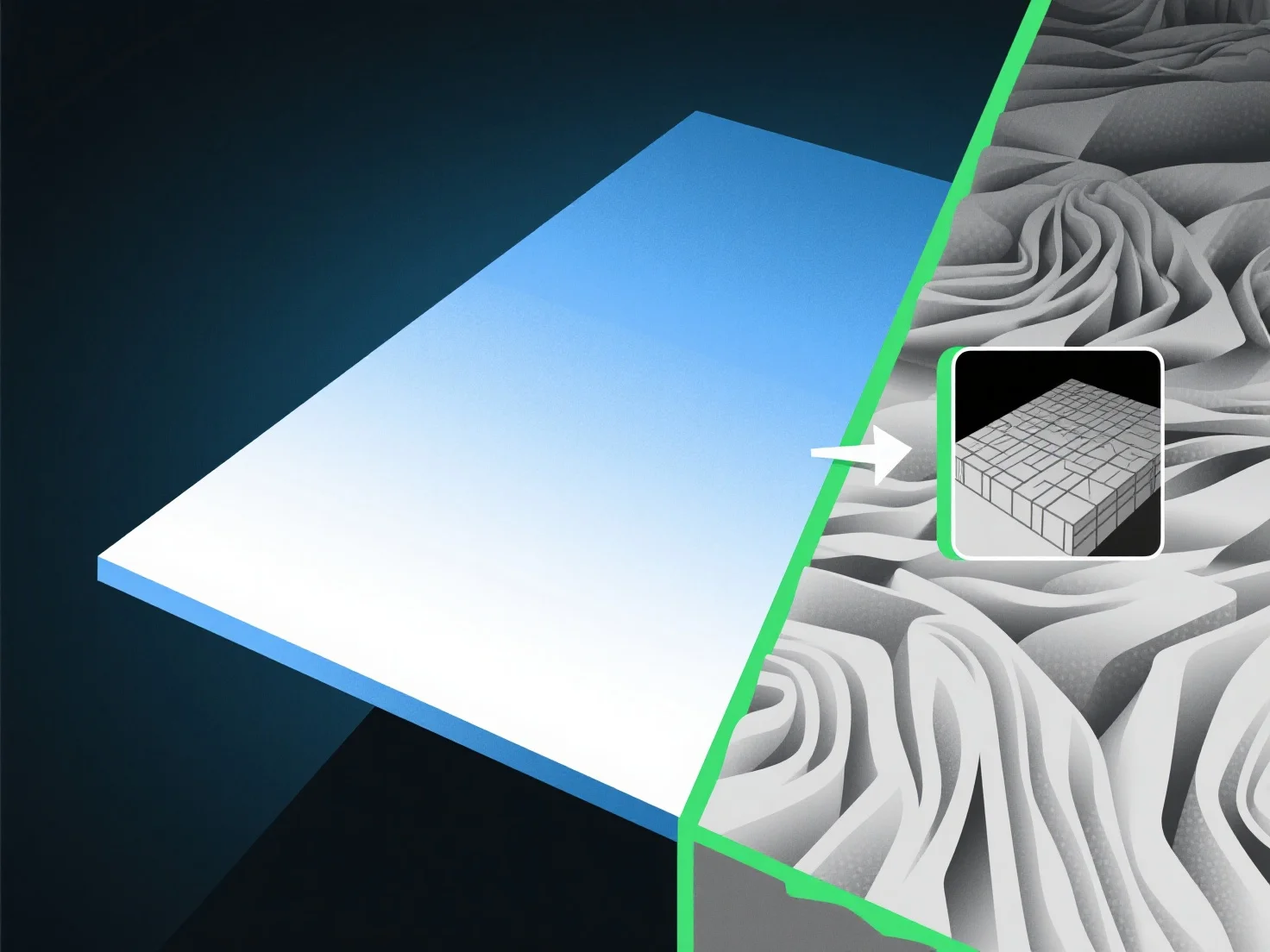
O mapeamento de deslocamento na texturização 3D modifica a geometria da superfície de um modelo deslocando os vértices com base numa textura em tons de cinzento, criando uma profundidade física real.
- **Função principal**: Adiciona relevo superficial tangível, tornando as texturas fisicamente precisas em vez de apenas visualmente convincentes. - **Aplicações típicas**: Usado para terreno, rochas ou materiais orgânicos em jogos, filmes e visualização de produtos para aumentar o realismo e a imersão. - **Consideração chave**: Requer contagens de polígonos mais elevadas para garantir que as superfícies deslocadas apareçam suaves, ao contrário do mapeamento normal, que funciona em modelos com menos polígonos.