


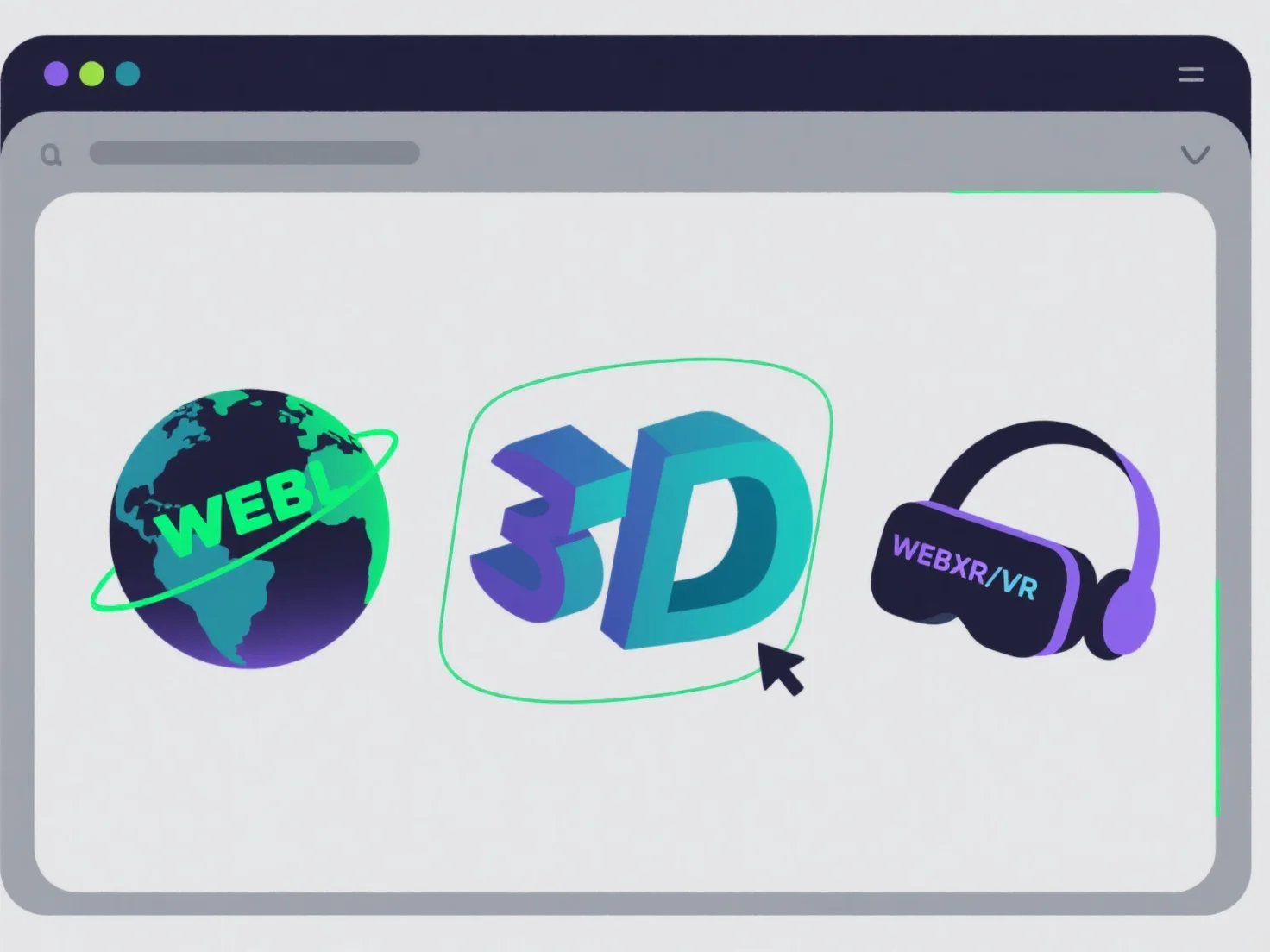
Os formatos de implementação típicos para 3D baseado na web incluem principalmente renderização baseada em WebGL, bibliotecas 3D JavaScript e formatos de modelo 3D leves integrados com HTML5, todos aproveitando os padrões web para exibição 3D nativa no navegador.
- Renderização baseada em WebGL: Uma API de baixo nível que permite o acesso direto ao hardware gráfico, utilizando os padrões OpenGL ES para renderizar gráficos 3D sem plugins, garantindo compatibilidade entre navegadores. - Bibliotecas 3D em JavaScript: Ferramentas como Three.js, Babylon.js ou PlayCanvas abstraem a complexidade do WebGL, oferecendo funções pré-construídas para configuração de cena, carregamento de modelos e animação, acelerando o desenvolvimento. - Formatos de modelos 3D leves: Formatos como glTF (GL Transmission Format) ou USDZ são otimizados para entrega na web, com tamanhos de arquivo compactados e análise eficiente, reduzindo os tempos de carregamento para uma interação suave.
Estes formulários, coletivamente, equilibram o desempenho e a acessibilidade, permitindo uma integração 3D perfeita em websites em todos os dispositivos.