


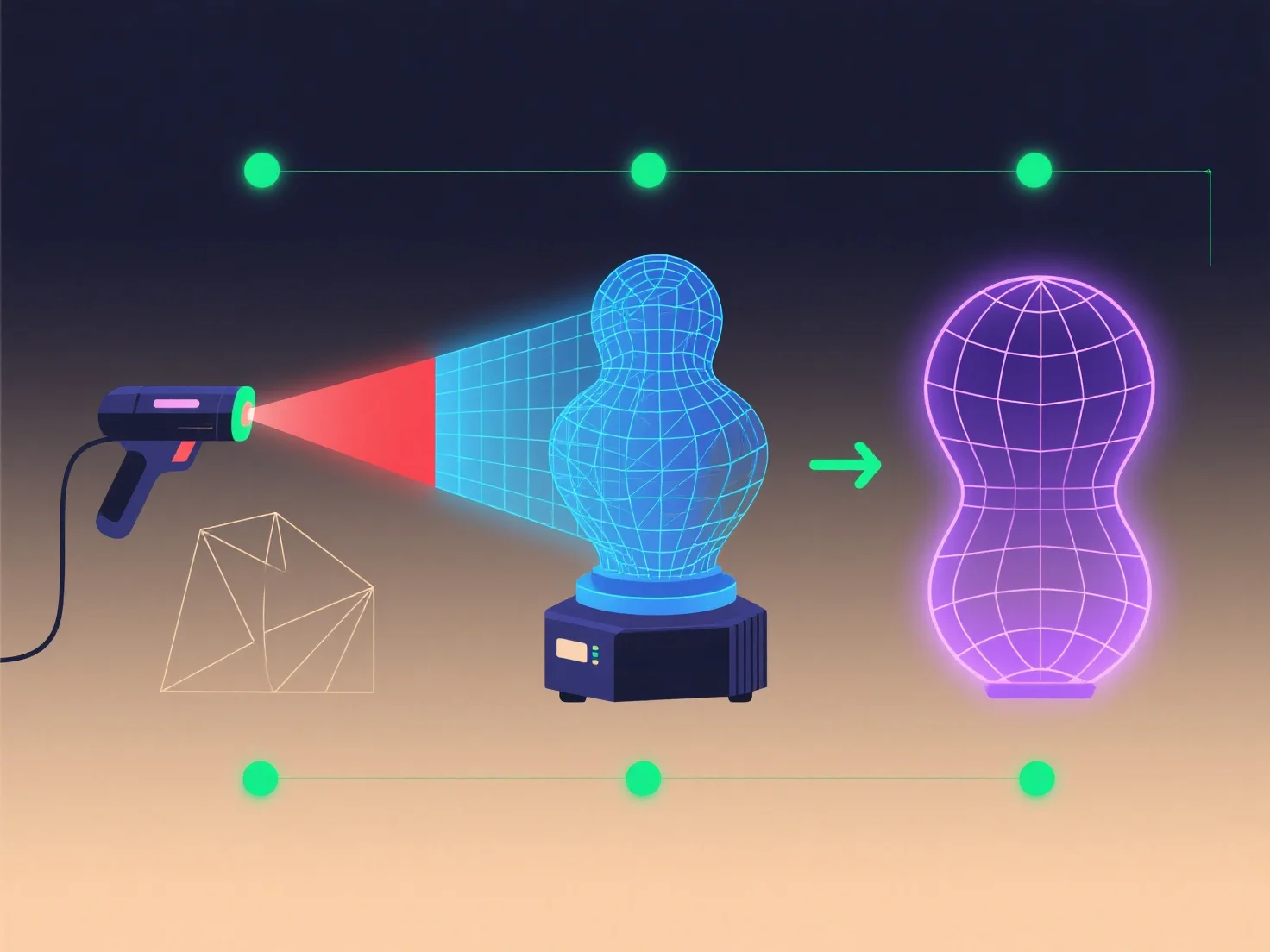
A tecnologia de digitalização 3D está a evoluir no sentido de uma maior precisão, uma captura de dados mais rápida e uma maior acessibilidade, impulsionada por avanços na tecnologia de sensores e na integração de IA. Estas progressões melhoram a precisão, reduzem o tempo de digitalização e diminuem as barreiras de entrada, expandindo a sua utilização em várias indústrias.
- **Maior precisão**: Nova tecnologia de sensores e algoritmos de calibração aumentam a resolução, permitindo digitalizações detalhadas de implantes médicos e peças aeroespaciais, com margens de erro agora abaixo de 0,1 mm em dispositivos de topo de gama. - **Captura de dados mais rápida**: O processamento alimentado por IA agiliza a geração de nuvens de pontos, reduzindo os tempos de digitalização de horas para minutos. Isto é fundamental para aplicações em tempo real, como engenharia reversa. - **Maior acessibilidade**: Scanners portáteis, de nível de consumidor.
Esta evolução posiciona a digitalização 3D como uma ferramenta versátil para prototipagem, preservação do património cultural e muito mais.