


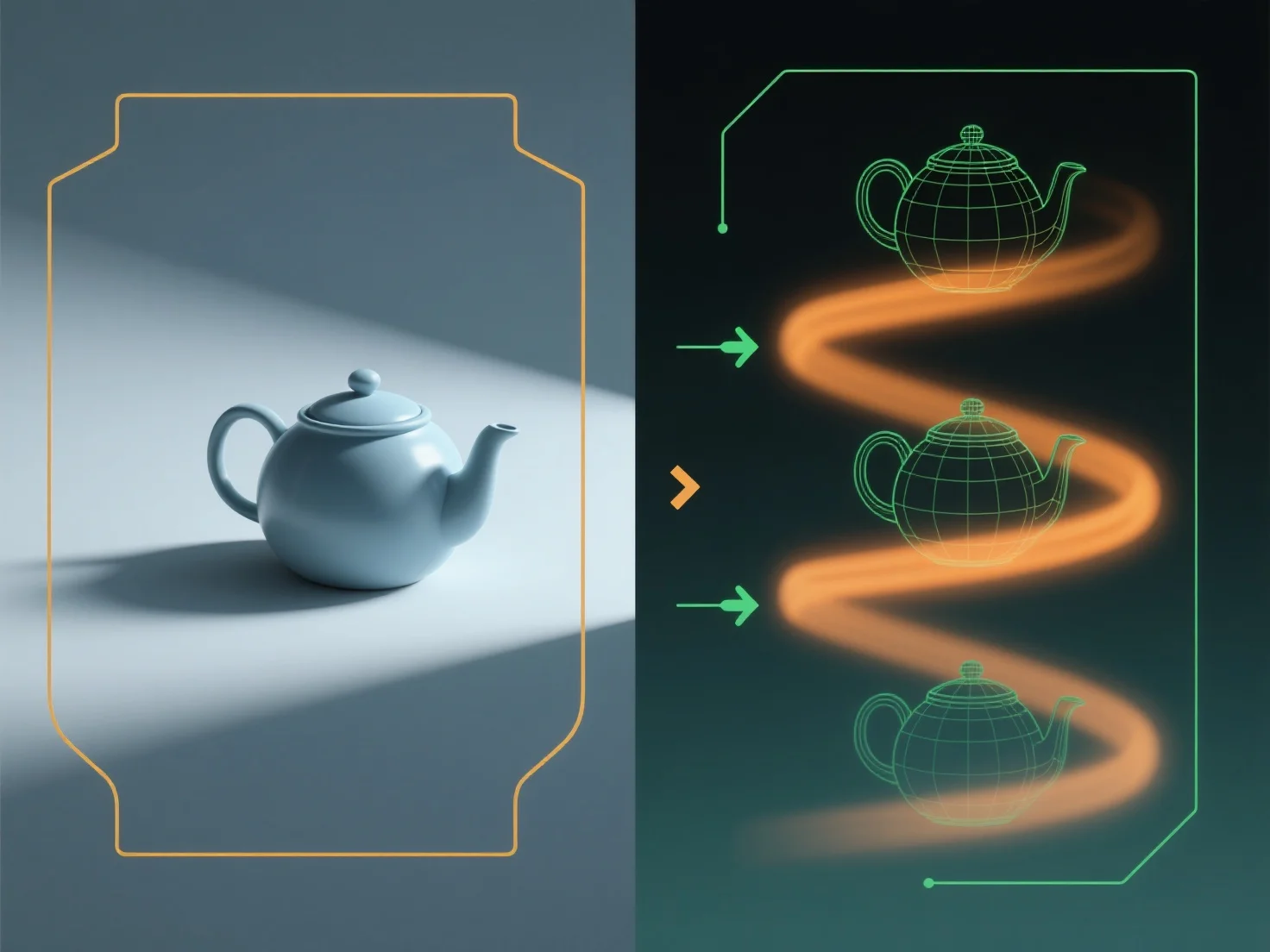
O pipeline de renderização para imagens estáticas e cenas animadas difere principalmente na dependência do tempo: as imagens estáticas concentram-se num único quadro, enquanto as cenas animadas requerem sequenciamento de quadros baseado no tempo e cálculos de movimento.
Os pipelines de imagem estática processam um quadro com geometria, texturas e iluminação fixas. Não estão envolvidas variáveis de tempo. Os passos principais incluem o processamento da geometria, a iluminação e a sombreamento para produzir uma única imagem final.
Os pipelines animados, pelo contrário, iteram ao longo do tempo, atualizando as posições, rotações ou deformações dos objetos, quadro a quadro. Eles também integram efeitos relacionados com o movimento, como o motion blur, para simular um movimento suave entre quadros sequenciais.
Em suma, a renderização estática lida com um único momento, enquanto a renderização animada gere uma sequência de momentos dinâmicos ao longo do tempo.