


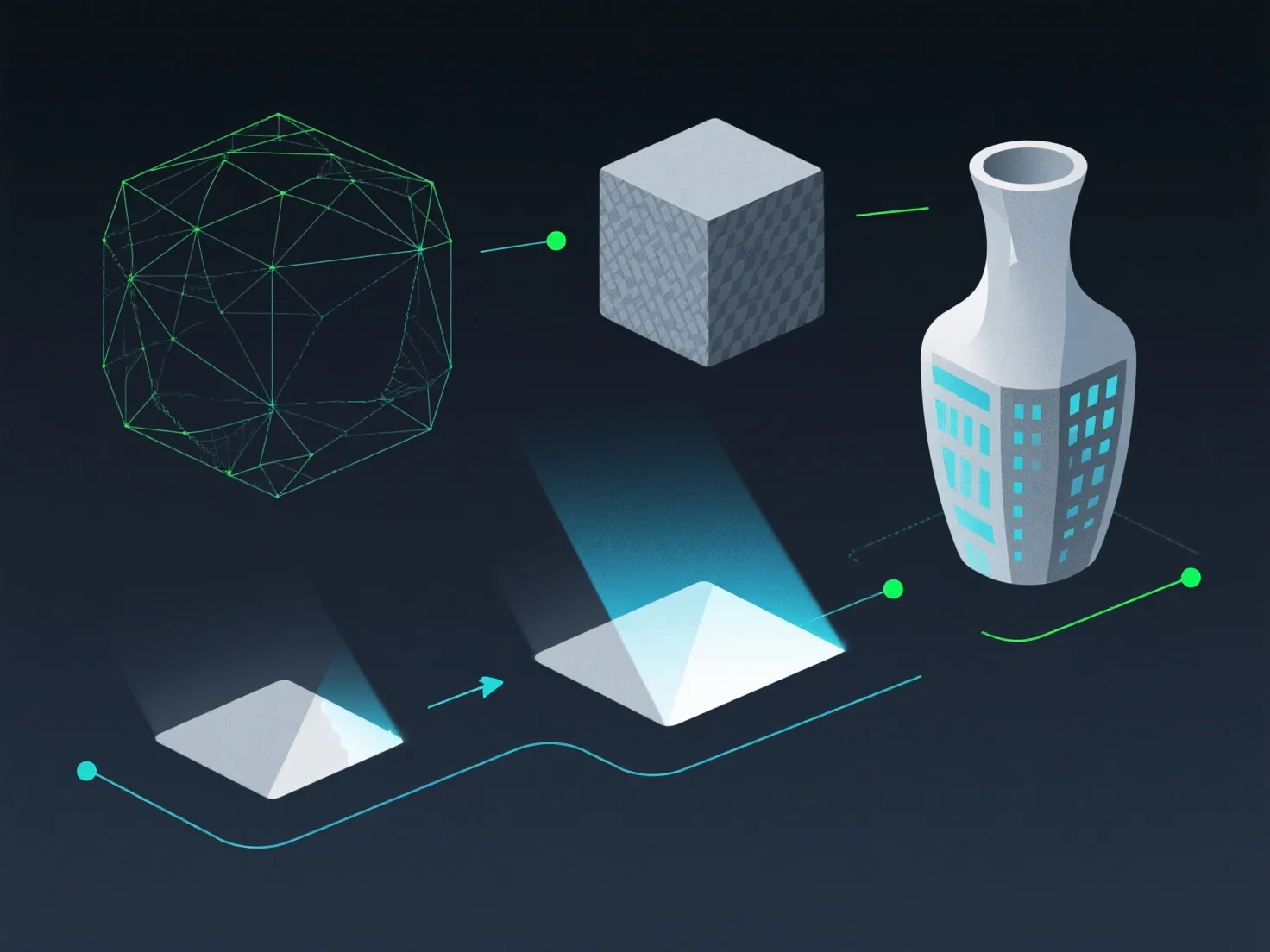
O pipeline de renderização na modelagem 3D funciona processando dados 3D através de fases sequenciais para gerar imagens 2D, convertendo dados brutos do modelo (vértices, texturas, iluminação) em renderizações visualmente coerentes através da transformação geométrica, cálculo de iluminação e determinação da cor dos pixels.
Os principais estágios incluem: - **Processamento de vértices**: Transforma coordenadas 3D em espaço de ecrã 2D, lidando com escalamento, rotação e cálculos de posição para mapear os vértices no plano de visualização. - **Rasterização**: Converte formas 3D (por exemplo, triângulos) em grades de pixels, determinando quais pixels cada forma cobre para formar a estrutura básica da imagem. - **Sombreamento de pixels**: Aplica texturas, efeitos de iluminação e detalhes de cor a cada pixel, refinando a imagem com realismo através de sombreamento, reflexões e propriedades materiais.
Estas fases funcionam sequencialmente para transformar modelos 3D nas imagens 2D que se vêem em jogos, animações ou renderizações.