


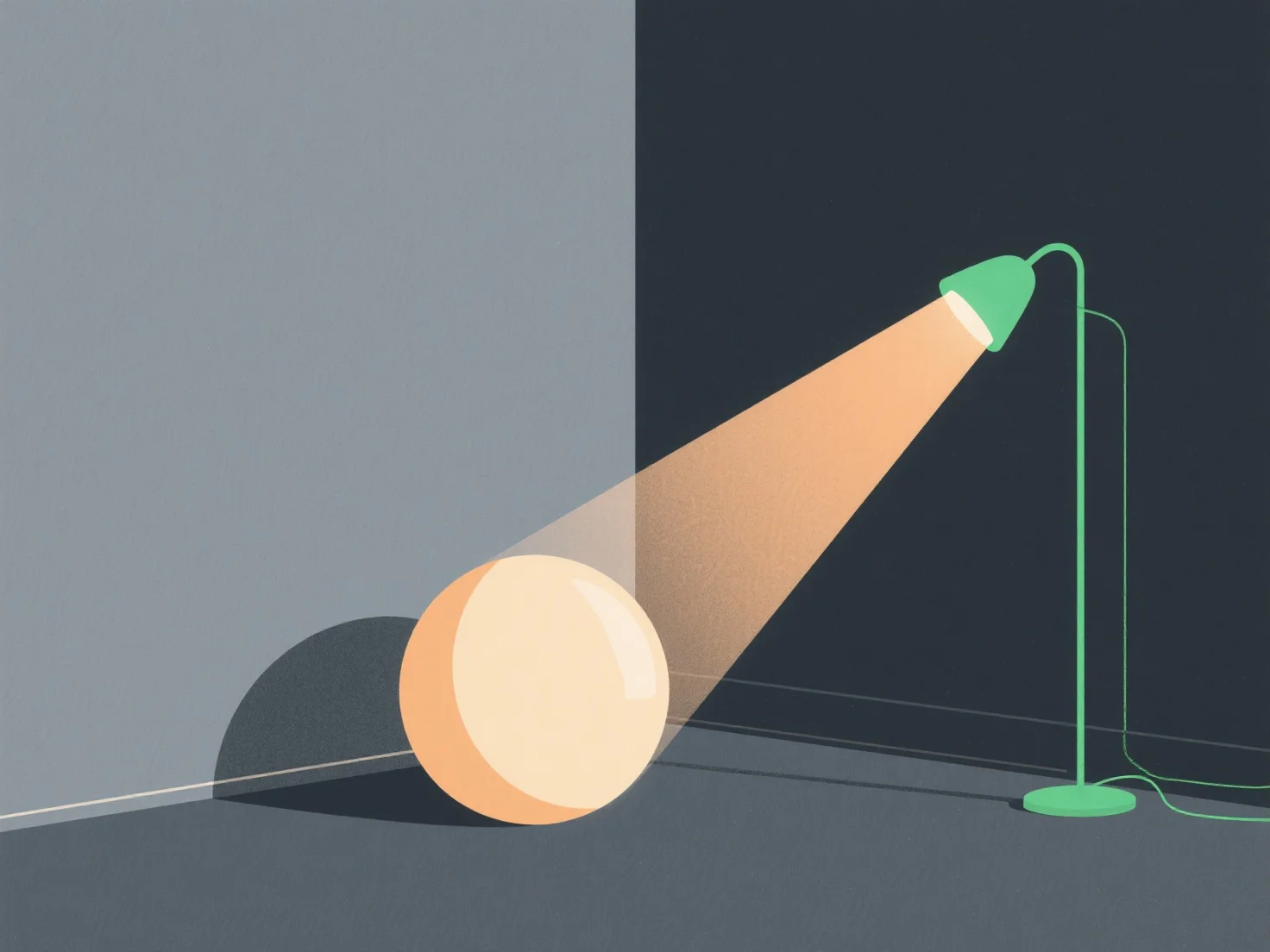
A iluminação de rebote na renderização 3D funciona simulando raios de luz que reflectem nas superfícies e, em seguida, iluminam outros objectos ou áreas, imitando a iluminação indirecta do mundo real para melhorar o realismo da cena.
Ele opera através de etapas-chave: - **Emissão direta de luz**: Os raios iniciais provêm de fontes primárias (por exemplo, sol, lâmpadas). - **Interação com a superfície**: Os raios atingem as superfícies, que absorvem alguma luz e refletem o resto com base em propriedades como albedo (refletividade) e textura. - **Iluminação indireta**: Os raios refletidos atuam como fontes secundárias, iluminando objetos próximos ou regiões sombrias.
Ao ter em conta estes raios reflectidos, as cenas 3D ganham sombras mais suaves, uma mistura de cores natural e profundidade, tornando os renders mais realistas em vez de planos.