


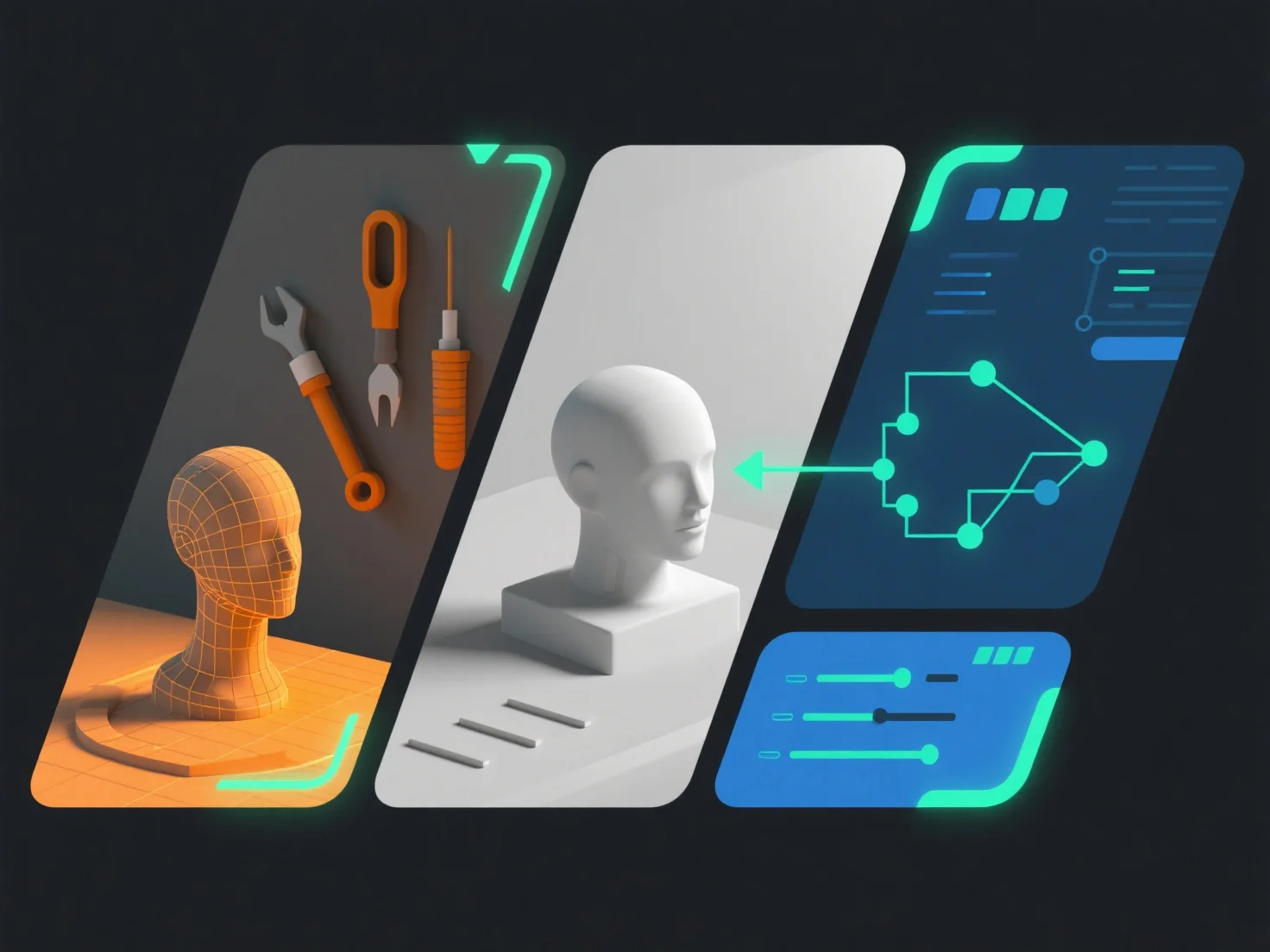
As ferramentas baseadas em funções melhoram a eficiência do fluxo de trabalho 3D, personalizando ferramentas e interfaces para funções específicas do utilizador, reduzindo a complexidade e agilizando a execução de tarefas.
- **Acesso personalizado às ferramentas**: Cada função (por exemplo, modeladores, animadores, renderizadores) acede apenas às ferramentas relevantes, minimizando distrações e passos desnecessários. - **Curva de aprendizagem reduzida**: Interfaces simplificadas e específicas por função reduzem o tempo de formação, permitindo aos utilizadores dominar as ferramentas mais rapidamente. - **Coordenação melhorada**: Definições claras de funções alinham os esforços da equipa, evitando sobreposições ou lacunas em tarefas como texturização ou rigging.
Ao focar nas necessidades específicas do papel, otimiza a produtividade e garante uma progressão suave do fluxo de trabalho.