


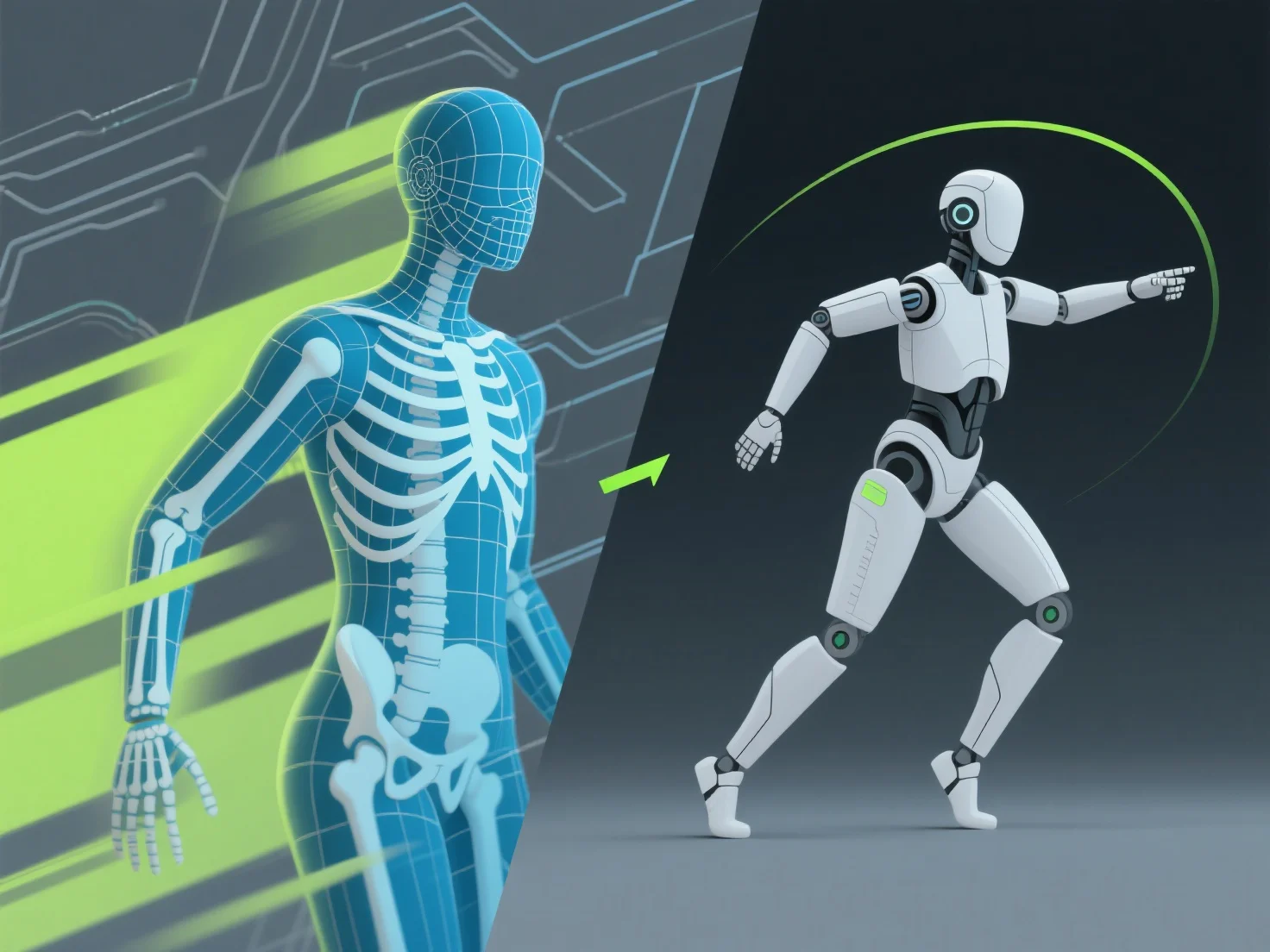
O rigging afeta diretamente a animação de personagens 3D no ciclo de produção, fornecendo a estrutura esquelética e os sistemas de controlo que permitem que os personagens se movam, atuando como o elo central entre modelos 3D estáticos e animações dinâmicas, determinando o alcance do movimento, o realismo e a eficiência da produção.
- **Dependência a montante**: Depende da topologia do modelo (por exemplo, fluxo de arestas) para garantir uma deformação natural; uma topologia deficiente pode causar problemas de rigging, como a distorção da malha. - **Eficiência a jusante**: Rigs bem desenhados com controlos intuitivos permitem aos animadores manipular facilmente membros, expressões faciais ou dinâmicas, acelerando o fluxo de trabalho; rigs complexos/não responsivos forçam um tempo extra de ajuste, atrasando a produção. - **Impacto na qualidade**: Bons rigs permitem movimentos suaves e realistas; os defeituosos levam a deformações não naturais.
Para otimizar, teste as plataformas de teste precocemente com movimentos básicos para detectar problemas antes da animação completa, garantindo tanto a qualidade como a eficiência no ciclo de produção.