


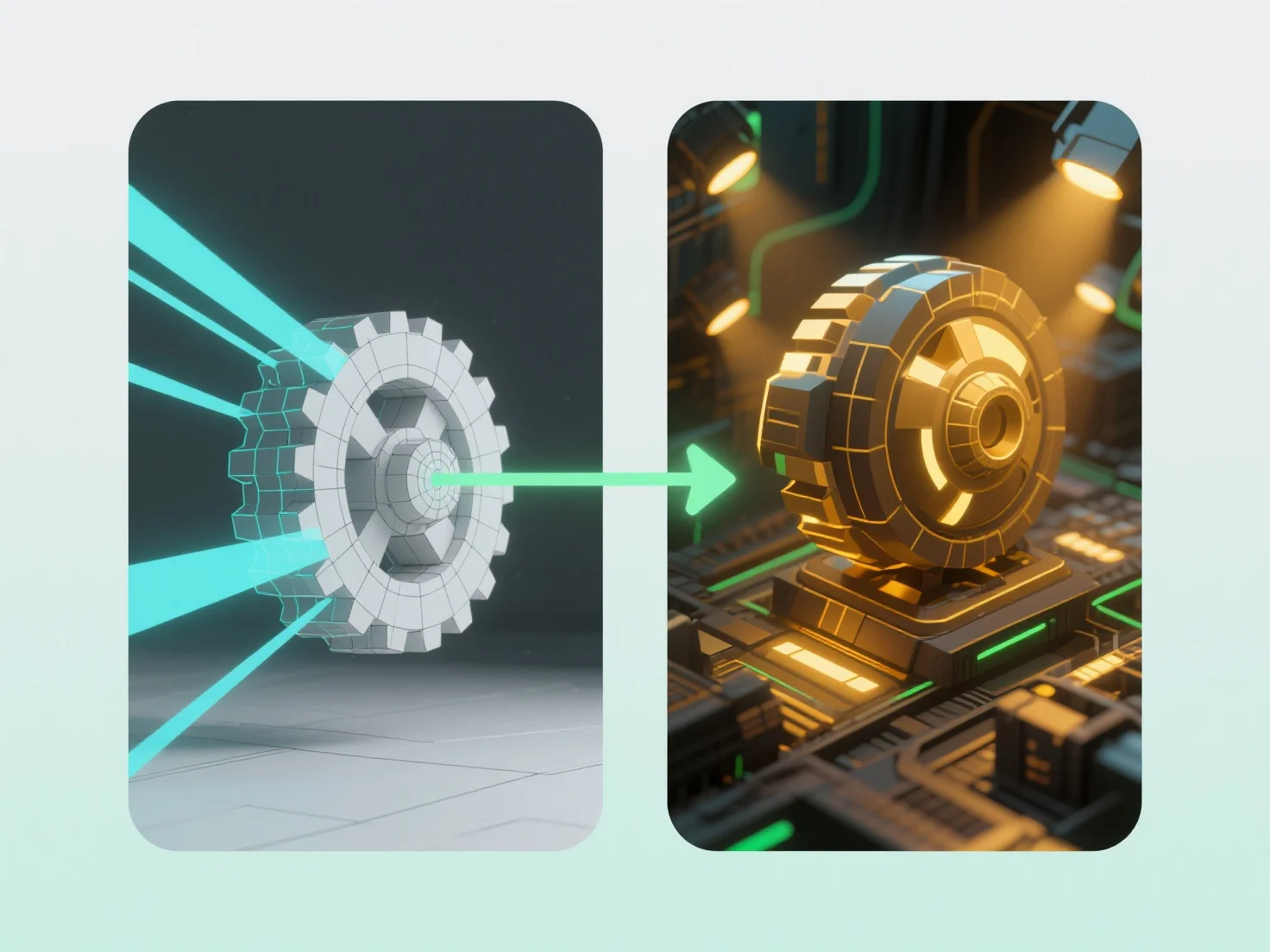
A renderização 3D em tempo real e a renderização offline diferem no processo, priorizando a velocidade versus a qualidade: a renderização em tempo real utiliza cálculos simplificados e em tempo real para uma saída instantânea, enquanto a renderização offline depende de um processamento intensivo e demorado para obter um elevado nível de detalhe.
A renderização em tempo real gera imagens imediatamente, reduzindo a contagem de polígonos, usando iluminação/sombreamento básicos e aproveitando a aceleração da GPU para atingir taxas de quadros em tempo real.
No entanto, a renderização offline processa cada quadro durante períodos prolongados (de minutos a horas por quadro). Aplica técnicas avançadas, como tração de raios, texturas de alta resolução e iluminação global, armazenando os quadros renderizados para utilização posterior.