


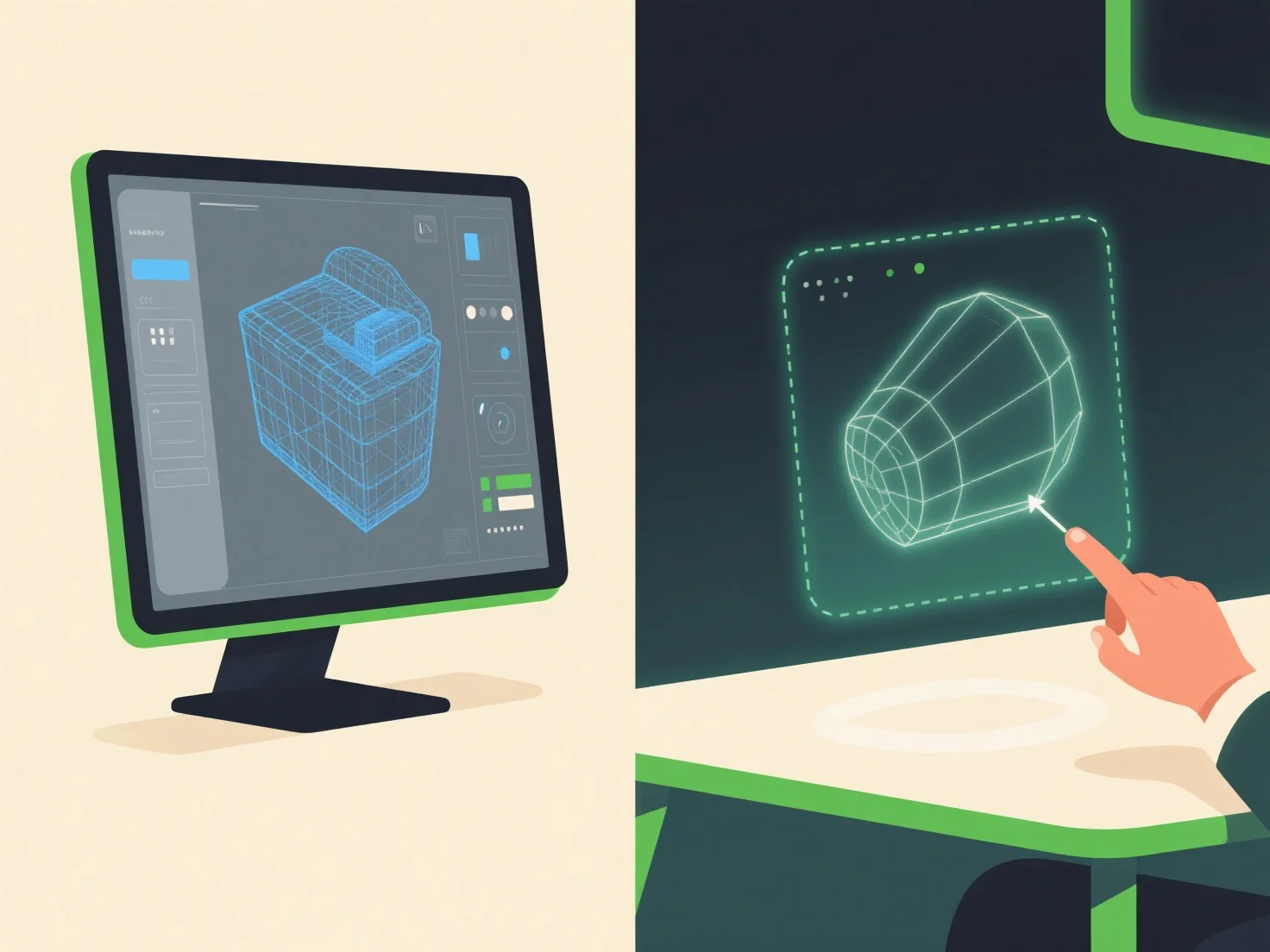
A apresentação 3D baseada em AR difere da visualização 3D no ecrã principalmente na integração do ambiente e na interacção: a AR sobrepõe modelos 3D ao mundo real, enquanto o 3D no ecrã está confinado a um ecrã 2D.
- **Ambiente de Exibição**: A RA combina conteúdo 3D com o ambiente físico do utilizador (por exemplo, um modelo de mobília numa sala de estar), criando uma sensação de presença. A visualização 3D no ecrã mostra modelos dentro de um ecrã fixo, sem contexto do mundo real. - **Experiência de Interacção**: A RA permite a interacção espacial, permitindo aos utilizadores rodar, dimensionar ou andar em torno de modelos 3D para ver os detalhes de todos os ângulos. O 3D no ecrã restringe a interacção aos limites do ecrã, limitando a exploração imersiva.
Em suma, a RA é adequada para cenários que necessitam de contexto do mundo real e imersão interativa, enquanto o 3D no ecrã é melhor para análises detalhadas e limitadas ao ecrã.