


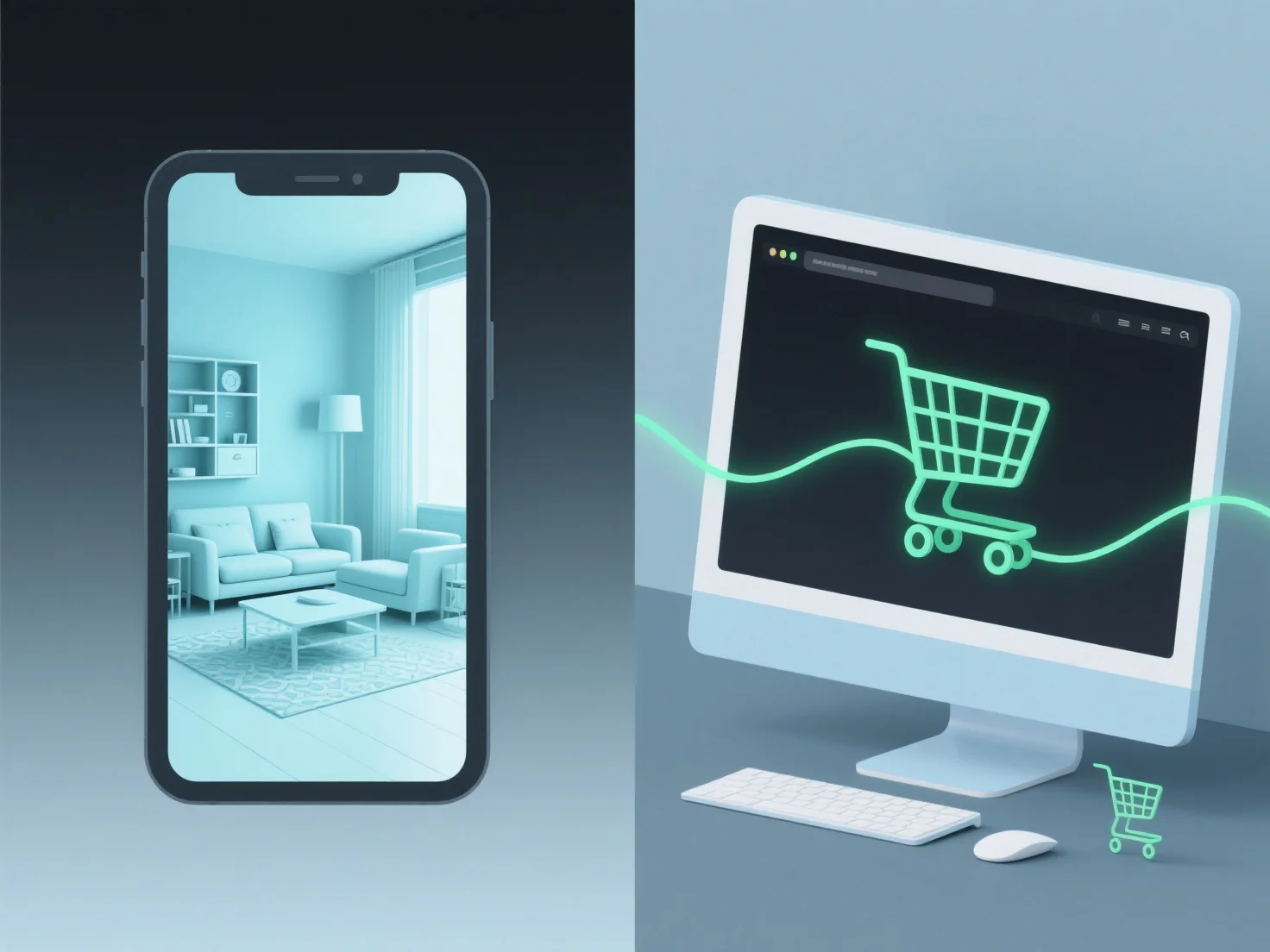
As experiências 3D baseadas em AR geralmente alcançam taxas de conversão mais elevadas do que as 3D baseadas na web, especialmente quando os utilizadores precisam de interagir com produtos em contextos do mundo real.
A realidade aumentada sobrepõe modelos 3D ao ambiente real do utilizador, melhorando a perceção do produto e reduzindo a incerteza na compra. Em contraste, o 3D baseado na web está confinado à exibição no ecrã, oferecendo uma relevância contextual limitada.
Os principais cenários incluem o varejo.
Para produtos físicos, o 3D baseado em AR permite aos utilizadores visualizar itens no seu próprio espaço, reduzindo a hesitação melhor do que o 3D na web e aumentando a conversão.