


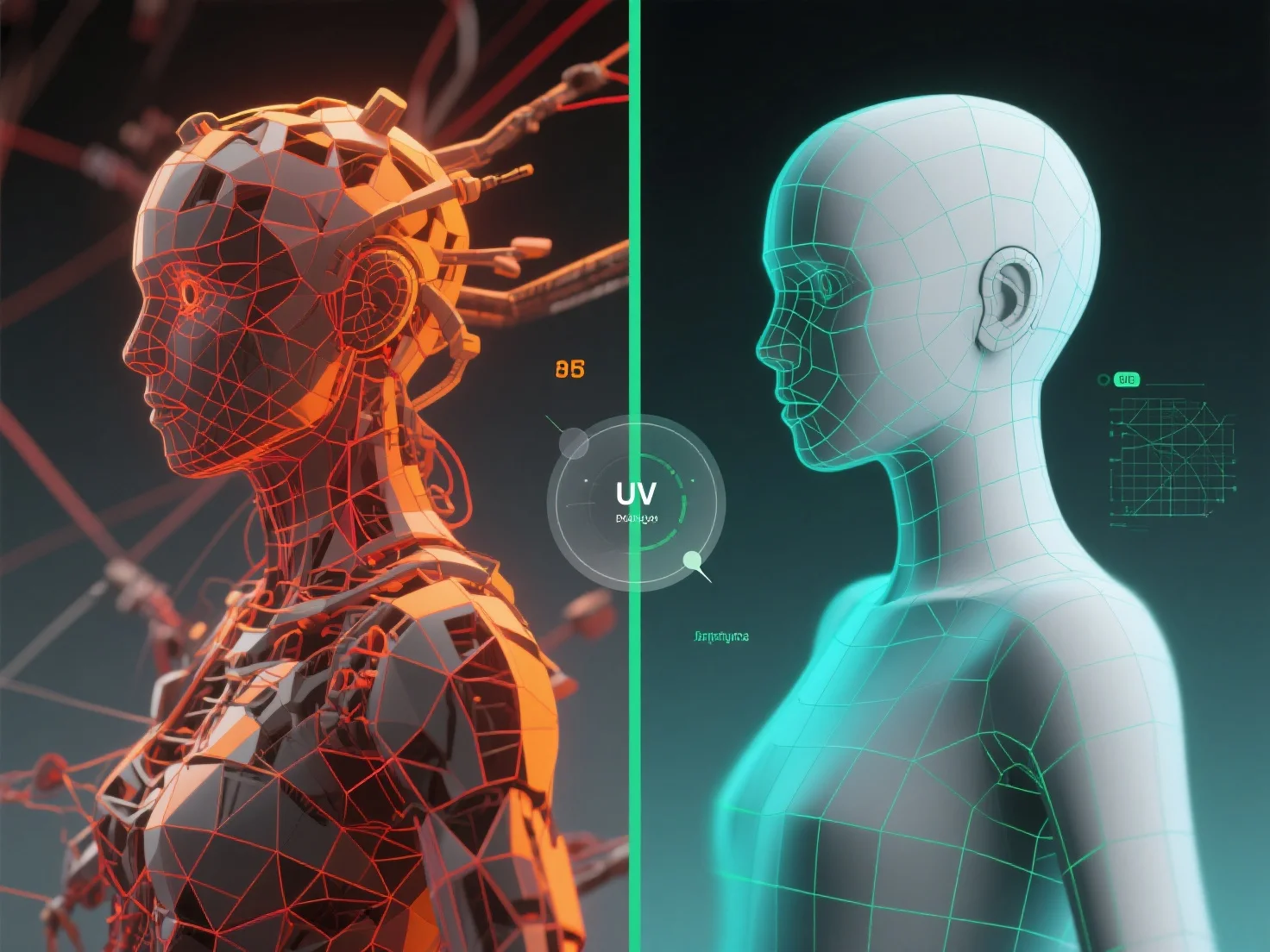
Para otimizar os designs 3D para renderização em tempo real, os modeladores concentram-se em reduzir o número de polígonos, otimizar o tamanho das texturas e simplificar os materiais, a fim de equilibrar a qualidade visual com o desempenho da renderização.
As técnicas principais incluem: - **Retopologia**: Remover polígonos redundantes para reduzir a complexidade da malha sem perder detalhes essenciais. - **Compressão de texturas**: Utilizar formatos como BCn ou JPEG para reduzir o tamanho do ficheiro e a utilização de memória da GPU. - **Nível de detalhe (LOD)**: Ajustar o detalhe do modelo com base na distância da câmara. Versões mais simples para objetos distantes reduzem a carga de renderização.
Definindo as restrições de hardware do alvo