


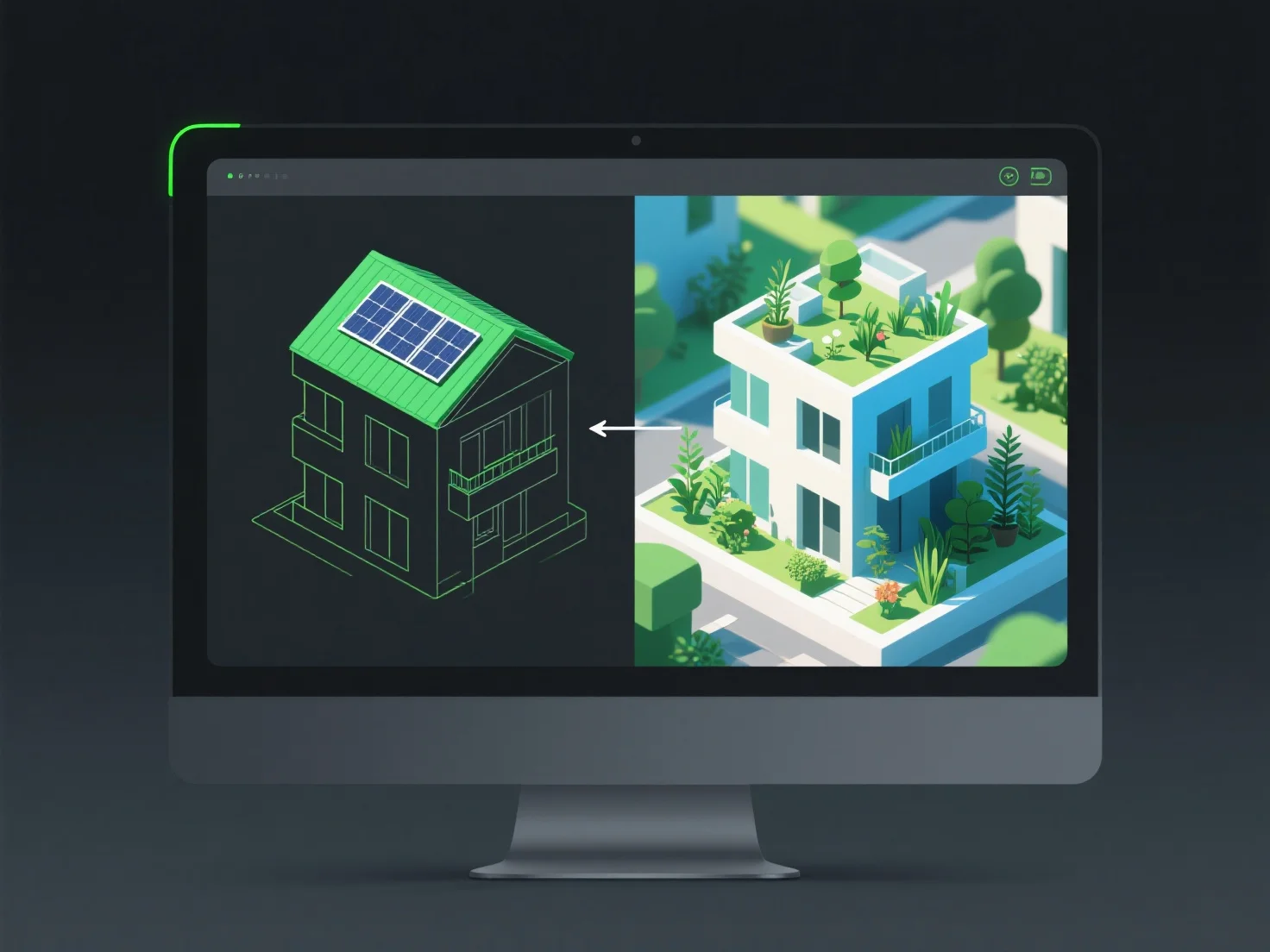
A modelagem 3D ajuda a implementar projetos ambientalmente sustentáveis, permitindo uma visualização precisa e a otimização da utilização de recursos e do impacto ambiental, permitindo a identificação precoce de soluções ecológicas para minimizar o desperdício de recursos no mundo real.
As principais aplicações em várias indústrias incluem: - Arquitetura: Otimizar os layouts dos edifícios para luz natural, ventilação e eficiência energética, a fim de reduzir a pegada de carbono. - Fabricação: Reduzir o desperdício de materiais através da prototipagem virtual e da iteração de design antes da produção física. - Planeamento Urbano: Simular espaços verdes, integração de energia renovável e infraestruturas sustentáveis para aumentar a resiliência ambiental.
Para iniciantes em design sustentável, a modelagem 3D ajuda a testar materiais ecológicos ou layouts de poupança de energia, priorizando escolhas responsáveis sem ensaios físicos dispendiosos.