


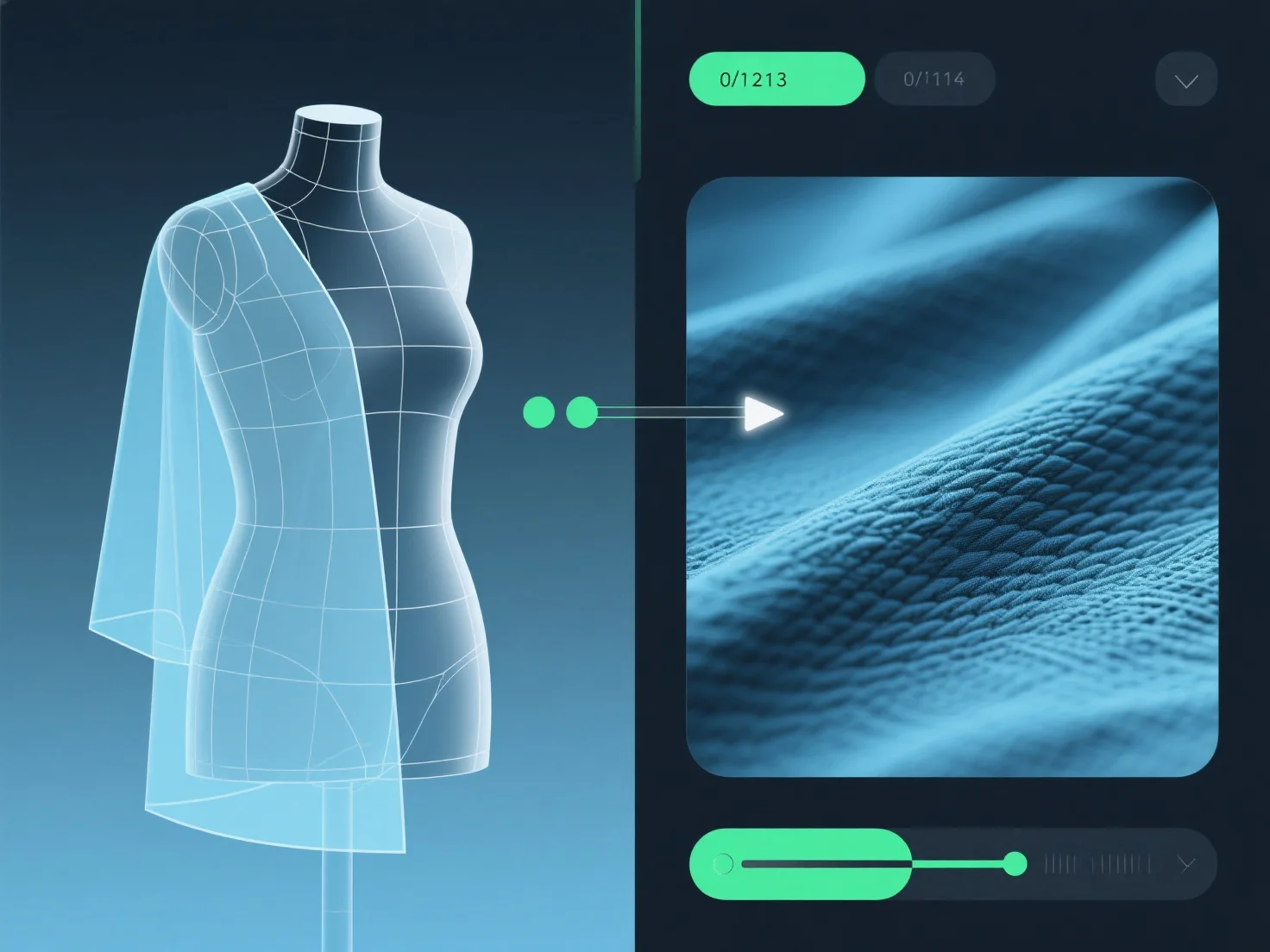
A modelagem 3D cria roupas e texturas de tecidos realistas, simulando propriedades físicas e detalhes de superfície, combinando o comportamento do material e o mapeamento visual para obter resultados realistas.
- **Simular propriedades físicas**: Define atributos-chave como elasticidade, espessura e fricção. Estes determinam como os tecidos se drapejam, esticam ou dobram sobre formas 3D, imitando o movimento do mundo real.
- **Adicionar detalhes de superfície através de mapas de textura**: Mapas de alta resolução replicam padrões de tecelagem, costuras, rugas ou defeitos do tecido. Isto confere um realismo visual, fazendo com que as texturas pareçam táteis, mesmo em renderizações digitais.
Juntos, estes passos garantem que as texturas de vestuário 3D tenham um aspeto e um comportamento autênticos, fazendo a ponte entre as características dos tecidos virtuais e físicos.