


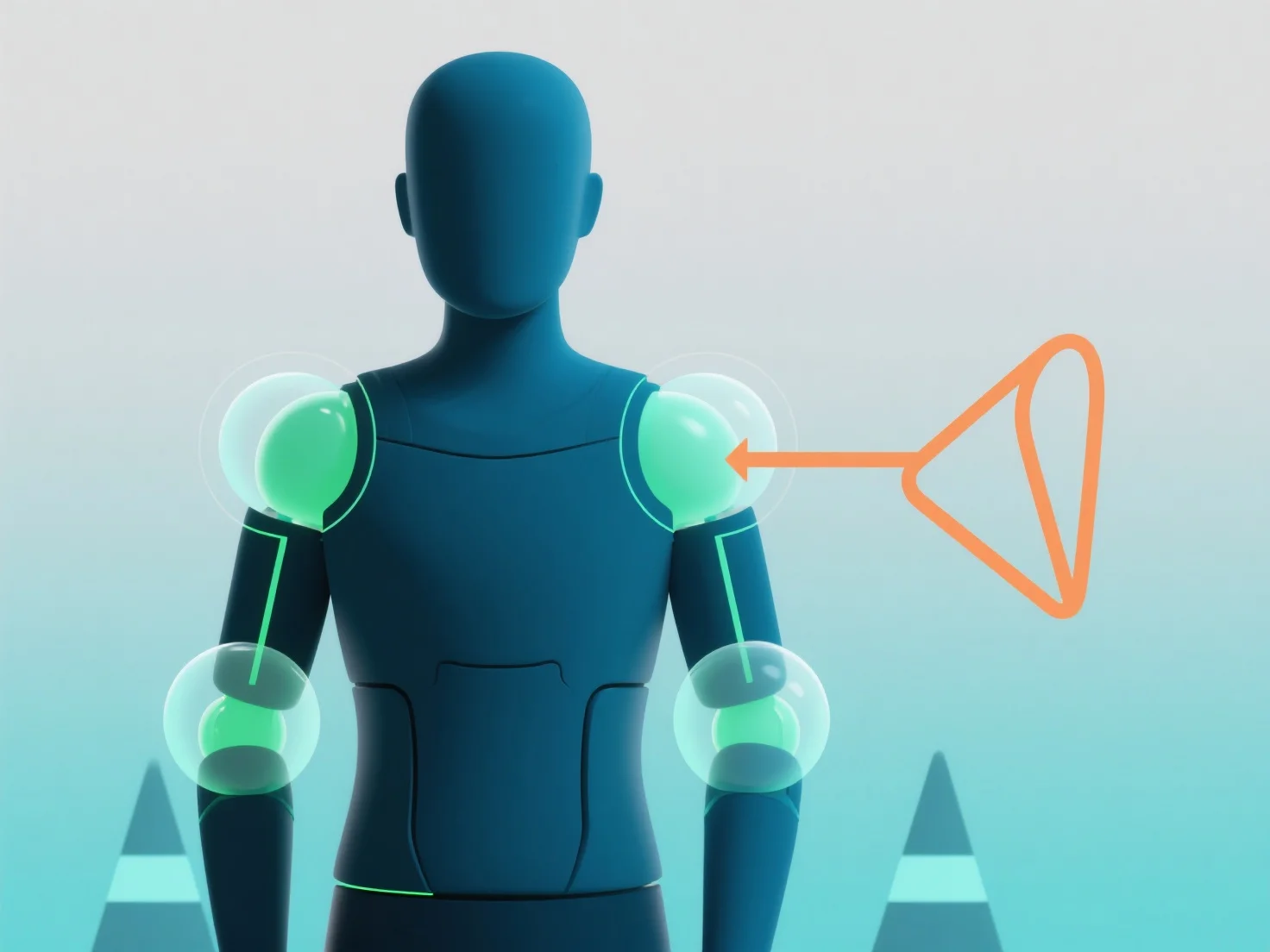
As articulações e restrições no rigging determinam diretamente o comportamento de movimento e a estabilidade estrutural de um modelo 3D durante a animação.
As articulações atuam como pontos de pivô, permitindo movimentos básicos como a rotação.
Restrições, como IK (Inverse Kinematics), limitação ou restrições pai-filho, restringem ou guiam o movimento. IK mantém os membros alinhados ao alcançar, as restrições de limitação impedem a rotação excessiva e as ligações pai-filho asseguram o movimento hierárquico.
Juntos, eles garantem que o modelo se mova de forma controlada e realista, evitando poses desarticuladas ou não naturais e mantendo a integridade estrutural.