Home/Hitem3D FAQ/How does real-time ray-traced 3D presentation compare to rasterized 3D?

How does real-time ray-traced 3D presentation compare to rasterized 3D?

Rasterized 3D prioritizes speed for real-time use; ray-traced 3D offers superior realism but needs more computing power.

How does real-time ray-traced 3D presentation compare to rasterized 3D?

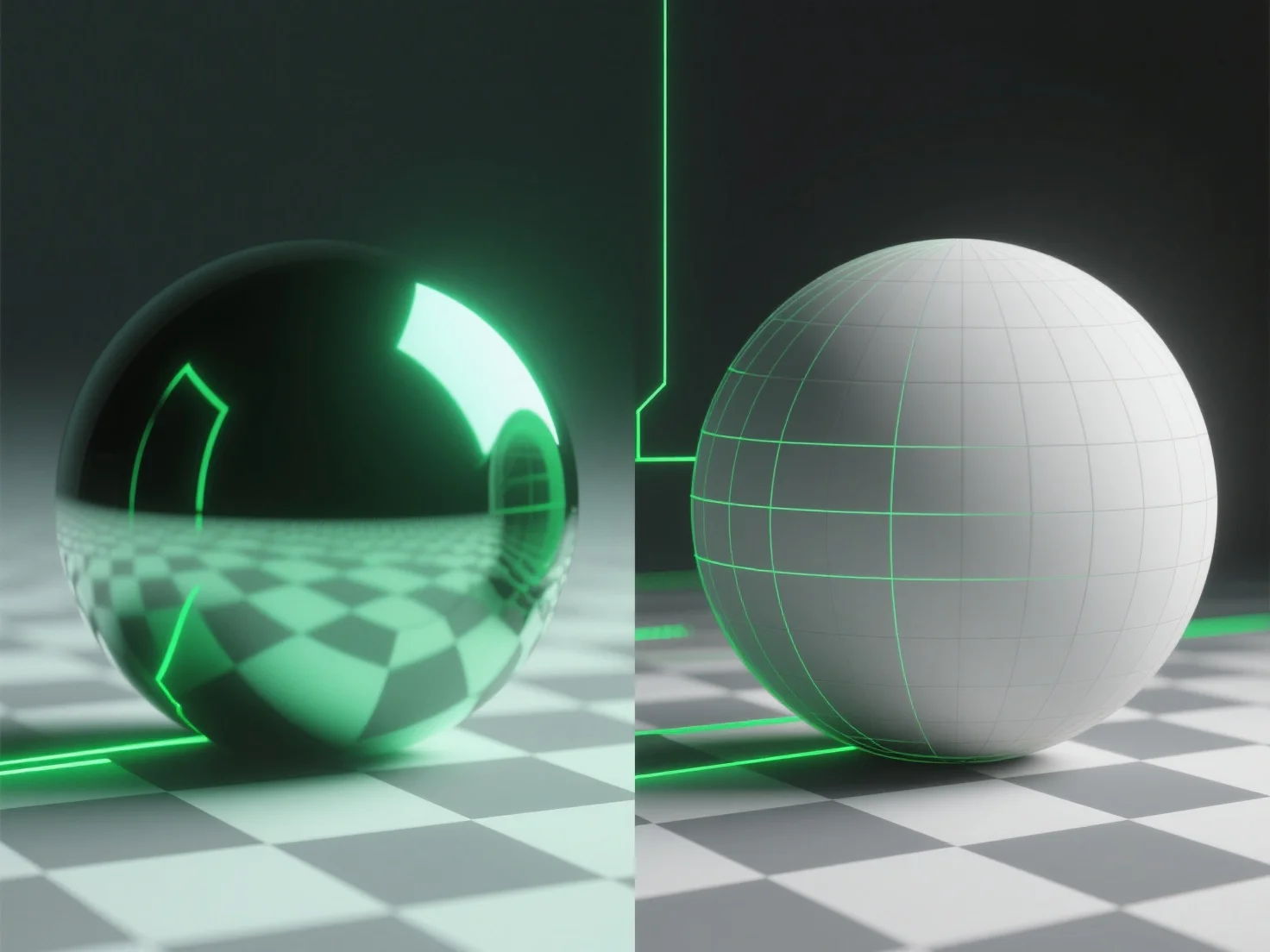
Real-time ray-traced 3D presentation typically offers more realistic lighting, shadows, and reflections than rasterized 3D but requires higher computing power, while rasterized 3D prioritizes speed and efficiency.

- **Rasterized 3D**: Renders by projecting 3D polygons onto a 2D screen, using techniques like texture mapping and shadow maps to approximate lighting. It’s fast and efficient, ideal for real-time applications (e.g., games), but lacks the natural depth of real-world light interactions.

- **Ray-traced 3D**: Simulates light paths by tracing rays from the camera, calculating how light bounces off surfaces. This creates lifelike effects like global illumination, accurate reflections, and soft shadows, enhancing immersion, but demands powerful GPUs for smooth performance.

In short, rasterized 3D excels in speed for real-time use, while ray tracing delivers superior realism with higher hardware requirements.

PreviousNext
제품
웹 스튜디오
API 플랫폼
기능
이미지를 3D로
멀티뷰를 3D로
릴리프
세그멘테이션
모델
일반 모델
인물 모델
리소스
블로그
FAQ
API 문서
회사 소개
가격