Home/Hitem3D FAQ/What is the optimal workflow for creating 3D models for augmented reality experiences?

What is the optimal workflow for creating 3D models for augmented reality experiences?

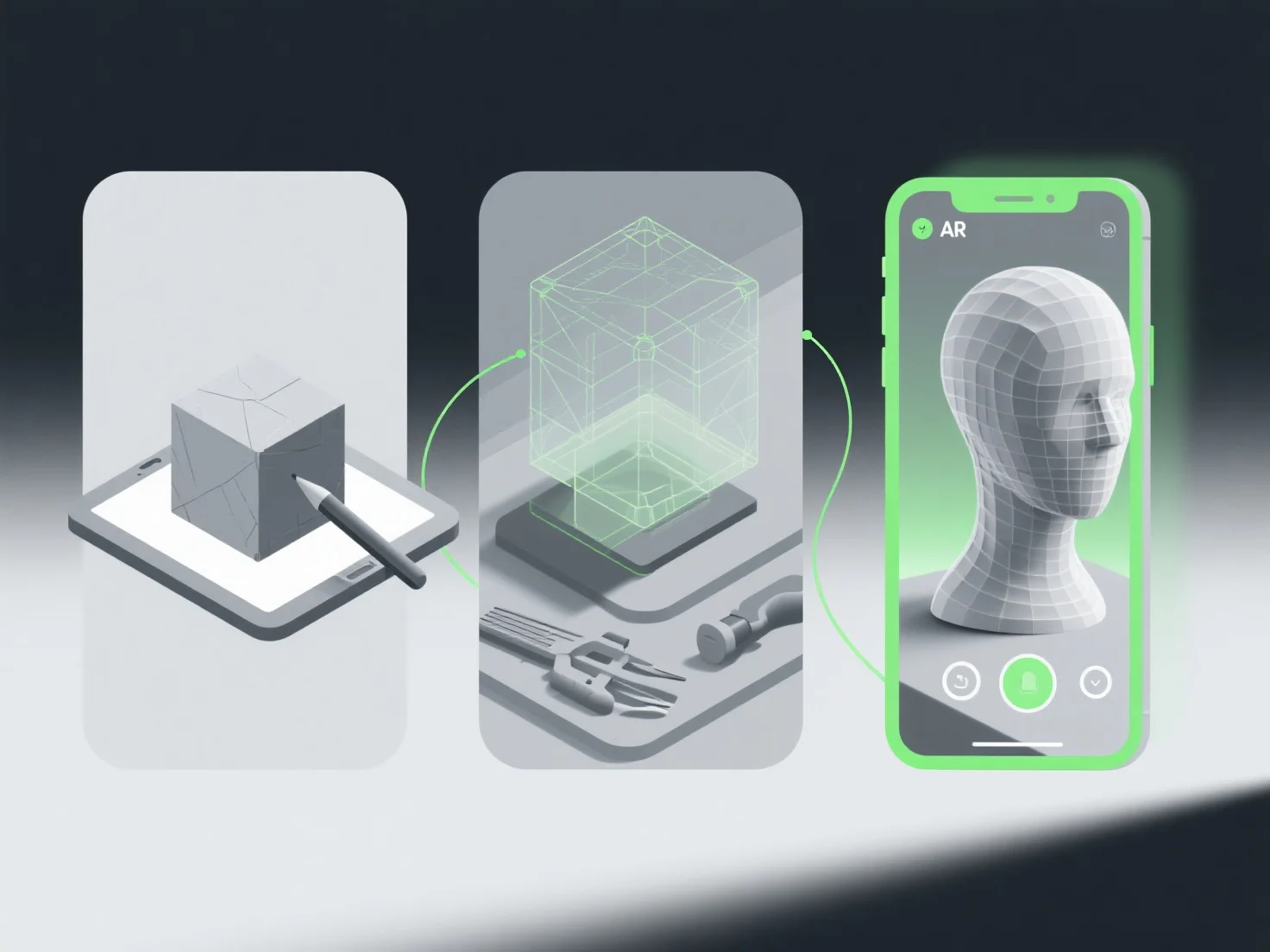
The optimal AR 3D modeling workflow includes defining requirements, low-poly modeling, optimization, integration, and testing for performance.

What is the optimal workflow for creating 3D models for augmented reality experiences?

The optimal workflow for creating 3D models for augmented reality (AR) experiences involves defining requirements, efficient modeling, real-time optimization, AR-specific integration, and rigorous testing to ensure compatibility and performance.

First, define AR use cases and technical constraints: Clarify the target platform (e.g., mobile, AR glasses), device specs, and user needs to guide model scope.

Next, create low-poly models: Use tools like Blender or Maya to build lightweight geometry, avoiding excessive polygons that slow rendering.

Then optimize textures and materials: Apply compressed, high-efficiency textures (e.g., PBR) and reduce resolution to balance quality with AR runtime performance.

Integrate AR tracking elements: Add markers or feature points (e.g., planes, objects) for seamless real-world alignment.

Finally, test on target devices: Validate on actual AR hardware to check for lag, glitches, or compatibility, iterating to refine the model.

This workflow ensures AR models are lightweight, visually consistent, and perform smoothly, enhancing user immersion and reducing technical hurdles.

PreviousNext
製品
Webスタジオ
APIプラットフォーム
機能
画像から3Dへ
マルチビューから3Dへ
リリーフ
セグメンテーション
モデル
汎用モデル
ポートレートモデル
リソース
ブログ
よくある質問
APIドキュメント
私たちについて
料金