Home/Hitem3D FAQ/How does real-time ray-traced 3D presentation compare to rasterized 3D?

How does real-time ray-traced 3D presentation compare to rasterized 3D?

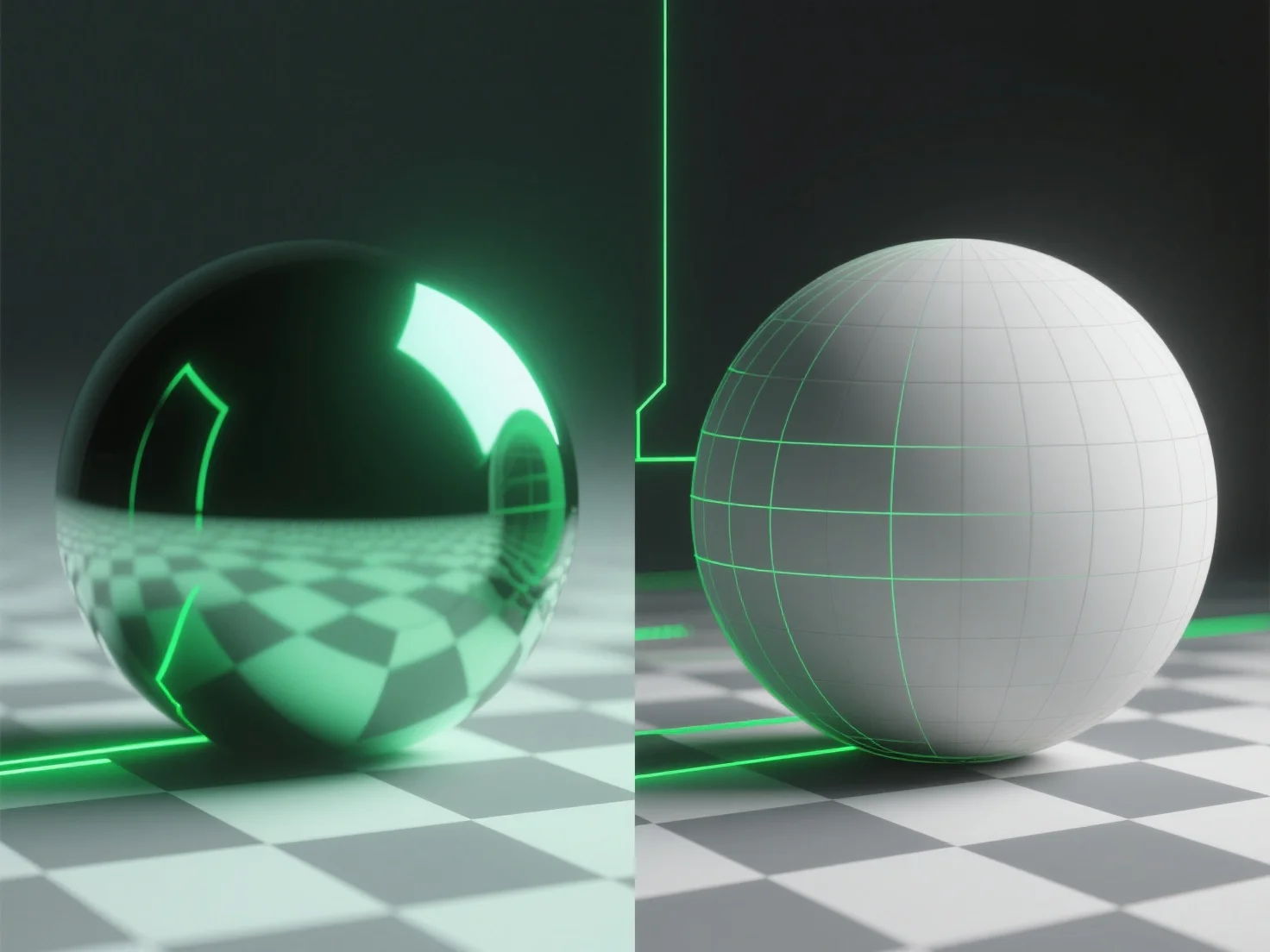
Rasterized 3D prioritizes speed for real-time use; ray-traced 3D offers superior realism but needs more computing power.

How does real-time ray-traced 3D presentation compare to rasterized 3D?

Real-time ray-traced 3D presentation typically offers more realistic lighting, shadows, and reflections than rasterized 3D but requires higher computing power, while rasterized 3D prioritizes speed and efficiency.

- **Rasterized 3D**: Renders by projecting 3D polygons onto a 2D screen, using techniques like texture mapping and shadow maps to approximate lighting. It’s fast and efficient, ideal for real-time applications (e.g., games), but lacks the natural depth of real-world light interactions.

- **Ray-traced 3D**: Simulates light paths by tracing rays from the camera, calculating how light bounces off surfaces. This creates lifelike effects like global illumination, accurate reflections, and soft shadows, enhancing immersion, but demands powerful GPUs for smooth performance.

In short, rasterized 3D excels in speed for real-time use, while ray tracing delivers superior realism with higher hardware requirements.

PreviousNext
製品
Webスタジオ
APIプラットフォーム
機能
画像から3Dへ
マルチビューから3Dへ
リリーフ
セグメンテーション
モデル
汎用モデル
ポートレートモデル
リソース
ブログ
よくある質問
APIドキュメント
私たちについて
料金