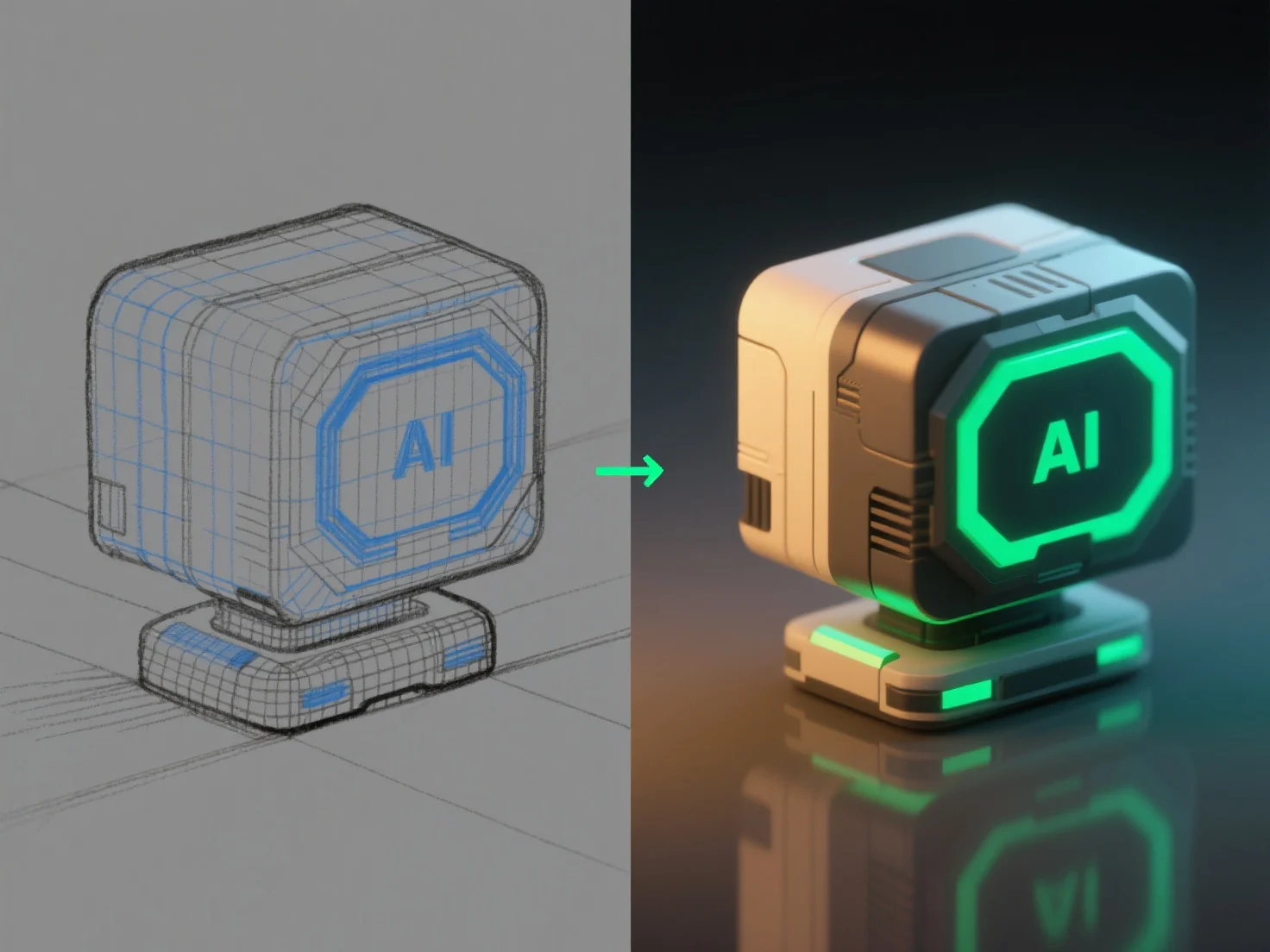
3D models transition from conceptualization to final rendering through a structured process of design definition, digital creation, and image generation.
Conceptualization: Define the model’s purpose, shape, and details via sketches, references, or mood boards to set the design direction. 3D modeling: Use software to build a digital mesh (vertices, edges, faces) as the model’s basic framework. Texturing: Add surface properties—color, patterns, and materials (e.g., roughness, reflectivity)—for realism. Lighting setup: Configure light sources to control shadows, highlights, and ambiance. Rendering: Software calculates and generates the final 2D/3D image using model, textures, and lighting data.
For beginners, start with simple objects (e.g., cubes) and tools like Blender to practice each stage.
