


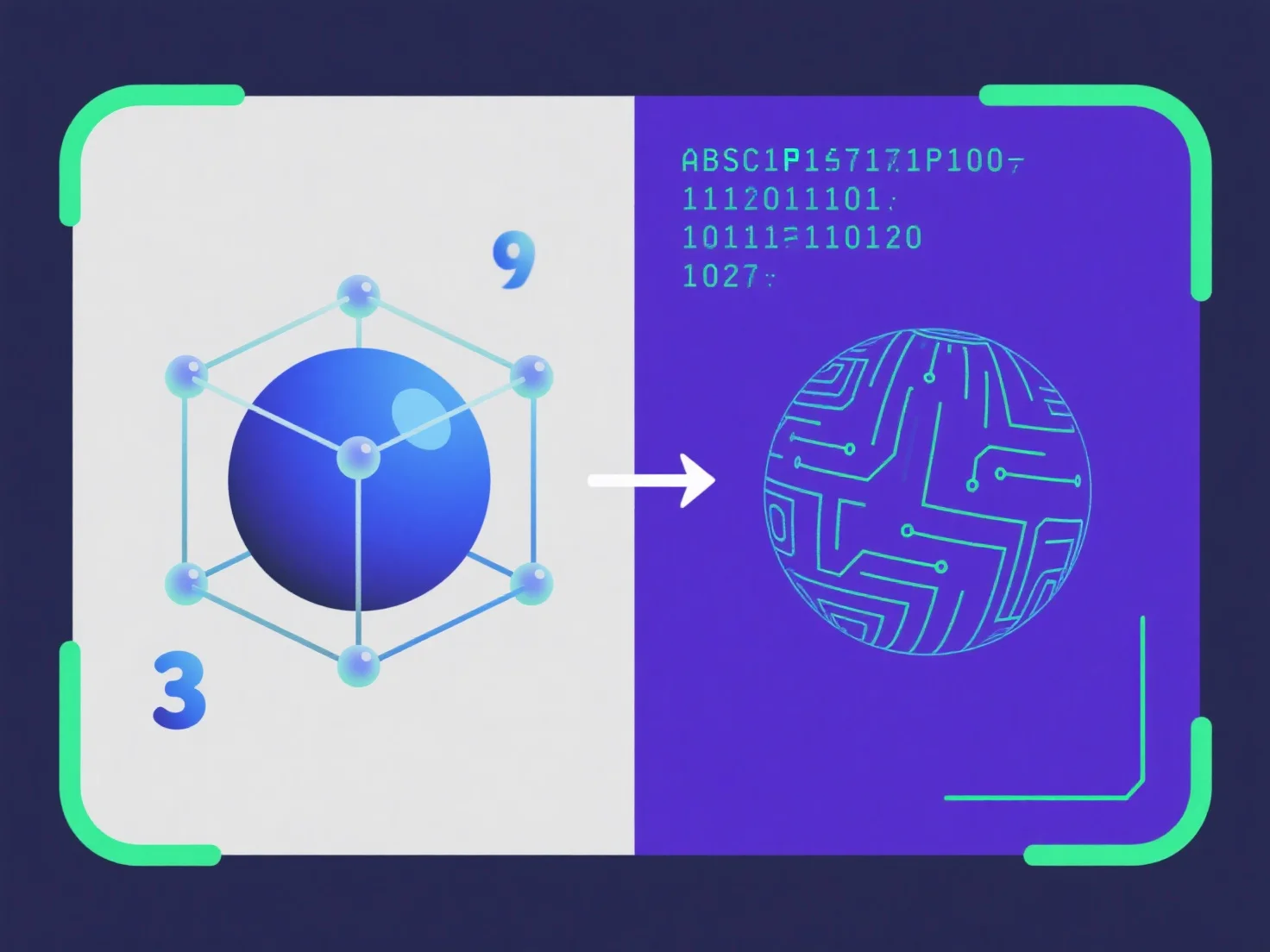
Perbedaan utama antara format file 3D biner dan ASCII adalah pengkodean data: ASCII menggunakan teks yang dapat dibaca manusia, sedangkan biner menggunakan kode biner yang ringkas dan dioptimalkan untuk mesin.
File ASCII 3D menyimpan data sebagai teks biasa.
Untuk pengeditan manual atau debugging, ASCII sangat praktis; untuk penyimpanan efisien, transmisi cepat, atau model besar, biner lebih disukai.