


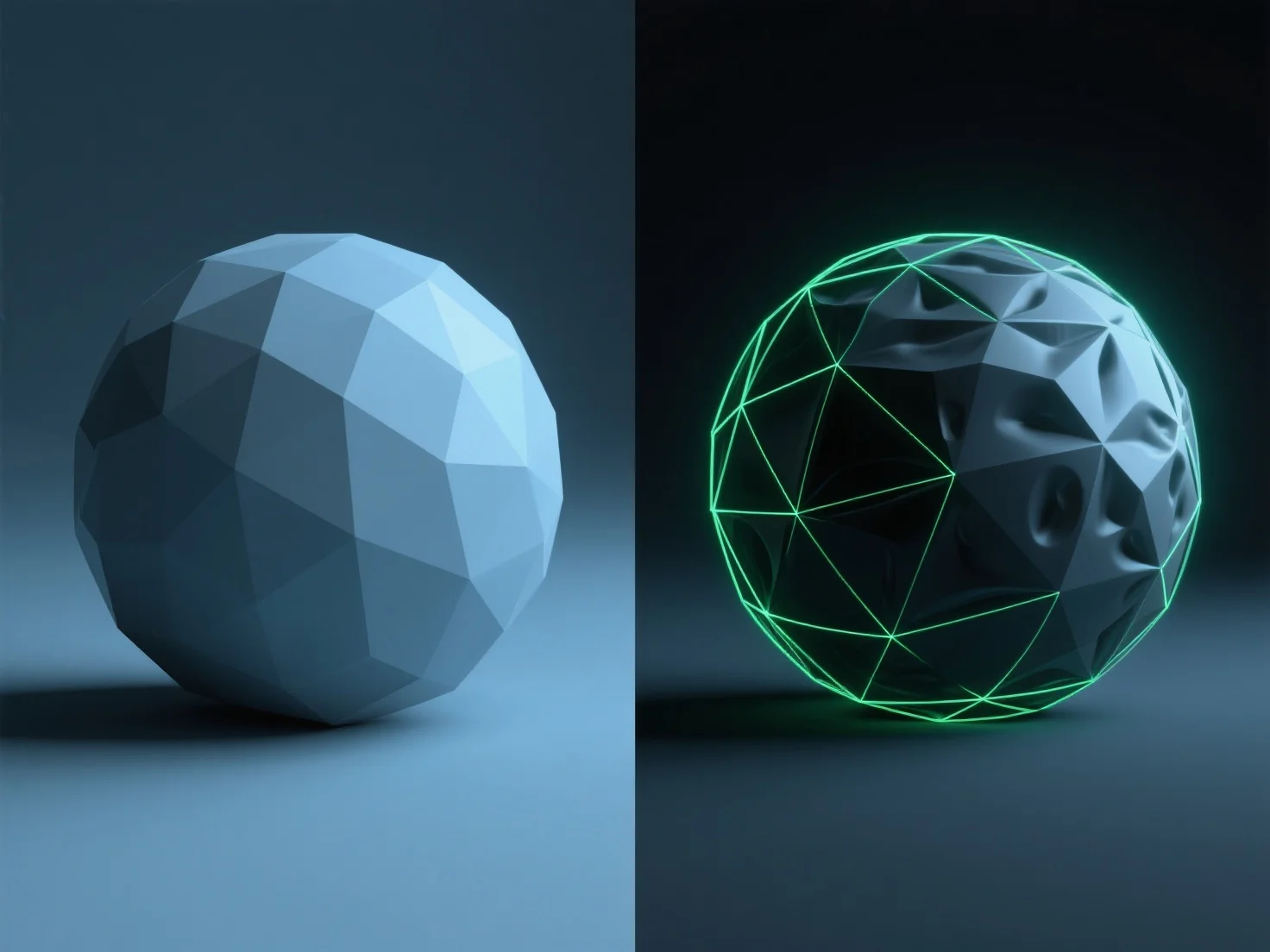
Pemetaan normal dalam efek visual 3D adalah teknik tekstur yang mensimulasikan detail permukaan seperti tonjolan atau alur dengan memodifikasi normal permukaan, menciptakan ilusi kedalaman tanpa menambahkan geometri ekstra.
- **Cara kerjanya**: Mengkodekan informasi ketinggian ke dalam tekstur, di mana warna setiap piksel mewakili arah normal permukaan. Arah normal ini memengaruhi refleksi cahaya, meniru tampilan geometri terperinci. - **Manfaat efisiensi**: Lebih efisien daripada menambahkan geometri fisik, karena menghindari peningkatan jumlah poligon. Menyeimbangkan detail visual dan kinerja rendering. - **Aplikasi tipikal**: Banyak digunakan dalam pemodelan/rendering 3D untuk meningkatkan realisme saat jumlah poligon harus tetap rendah, memastikan kualitas visual tinggi tanpa meningkatkan beban komputasi.