


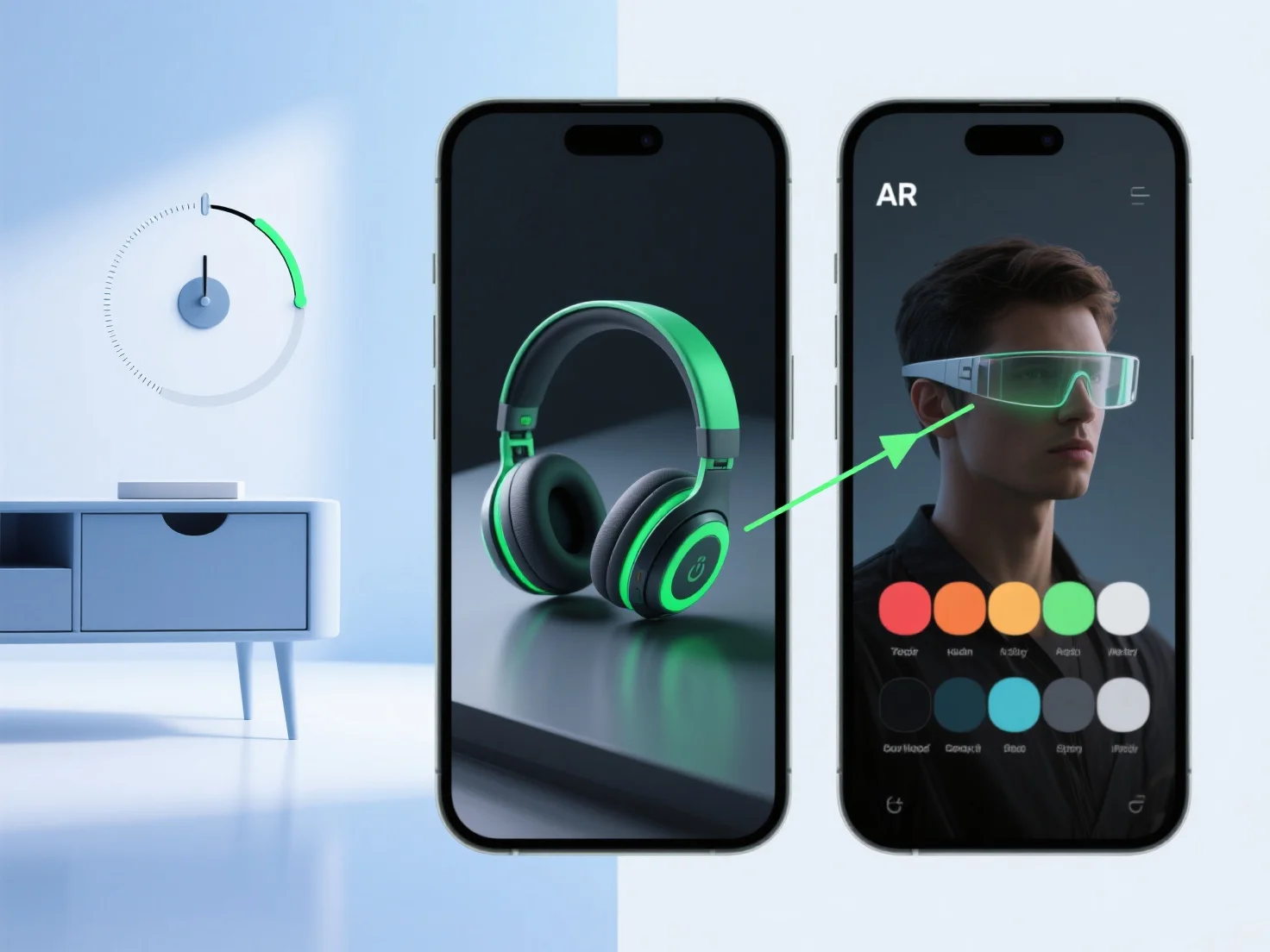
Bentuk umum dari implementasi 3D dalam e-commerce termasuk model produk 3D, tampilan interaktif 360 derajat, alat AR untuk mencoba pakaian, dan konfigurator produk virtual, semuanya bertujuan untuk meningkatkan visualisasi produk dan memperkecil kesenjangan pengalaman online-offline.
1. Model produk 3D: Menawarkan rotasi dan zoom 360° terperinci, memungkinkan pengguna memeriksa tekstur, dimensi, dan fitur secara detail. Ideal untuk barang-barang kompleks seperti elektronik atau furnitur. 2. Tampilan interaktif 360 derajat: Mudah diproduksi dengan gambar berurutan, menunjukkan produk dari semua sudut; titik masuk berbiaya rendah untuk bisnis kecil yang baru mengenal teknologi 3D. 3. Alat uji coba AR: Gunakan augmented reality untuk mensimulasikan penggunaan produk (misalnya, pemasangan perhiasan virtual, uji coba riasan), meningkatkan keterlibatan dan mengurangi pengembalian. 4. Konfigurator produk virtual: Biarkan pelanggan menyesuaikan produk (warna, bahan, bagian) secara real time, memvisualisasikan opsi yang dipersonalisasi sebelum membeli.
Implementasi-implementasi ini membuat produk online lebih nyata, mendorong konversi, mengurangi ketidakpastian, dan meningkatkan kepuasan belanja secara keseluruhan.