


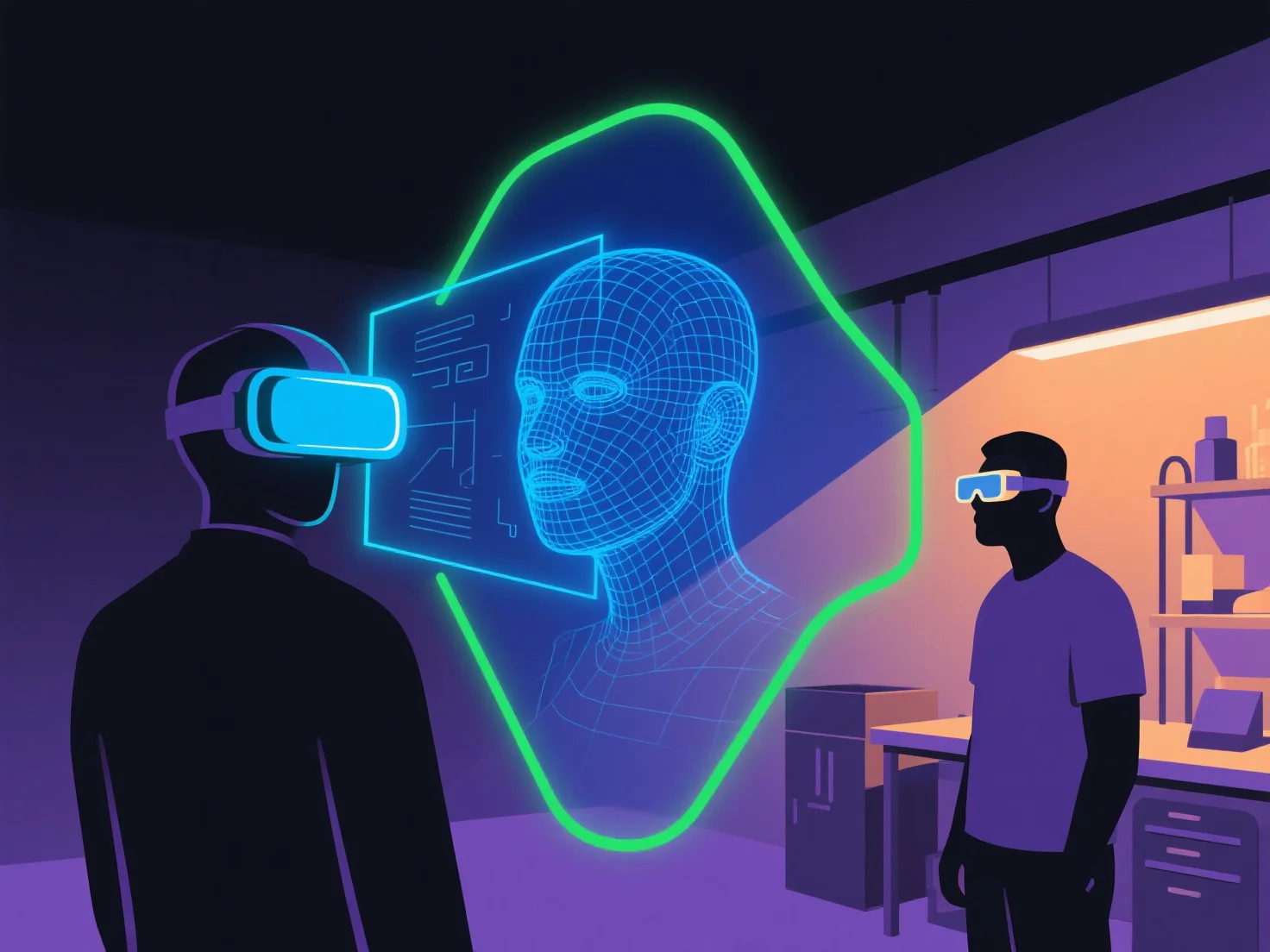
Pemodelan 3D digunakan dalam solusi VR dan AR dengan menciptakan aset digital inti, seperti objek 3D, lingkungan, atau karakter, yang dirender oleh sistem menjadi pengalaman visual yang imersif. Model-model ini menjadi fondasi bagi dunia virtual sepenuhnya di VR dan overlay dunia nyata di AR, memungkinkan interaksi pengguna yang interaktif dan realistis.
- **Fondasi untuk imersi**: VR mengandalkan model 3D terperinci untuk membangun dunia virtual sepenuhnya, sedangkan AR menggunakannya untuk melapisi elemen digital ke dalam realitas, memastikan koherensi visual antara ruang digital dan fisik. - **Mengaktifkan interaksi**: Model mendukung keterlibatan pengguna, seperti memanipulasi objek dalam game VR atau mengakses detail peralatan dalam pelatihan AR, meningkatkan interaktivitas. - **Mengoptimalkan kinerja**: Model poligon rendah diprioritaskan untuk memastikan rendering yang lancar, yang sangat penting untuk menjaga imersi, terutama dalam prototipe awal.
Aplikasi umum termasuk game VR (lingkungan interaktif), pelatihan AR (lapisan peralatan), dan tur virtual (ruang 3D yang realistis).