


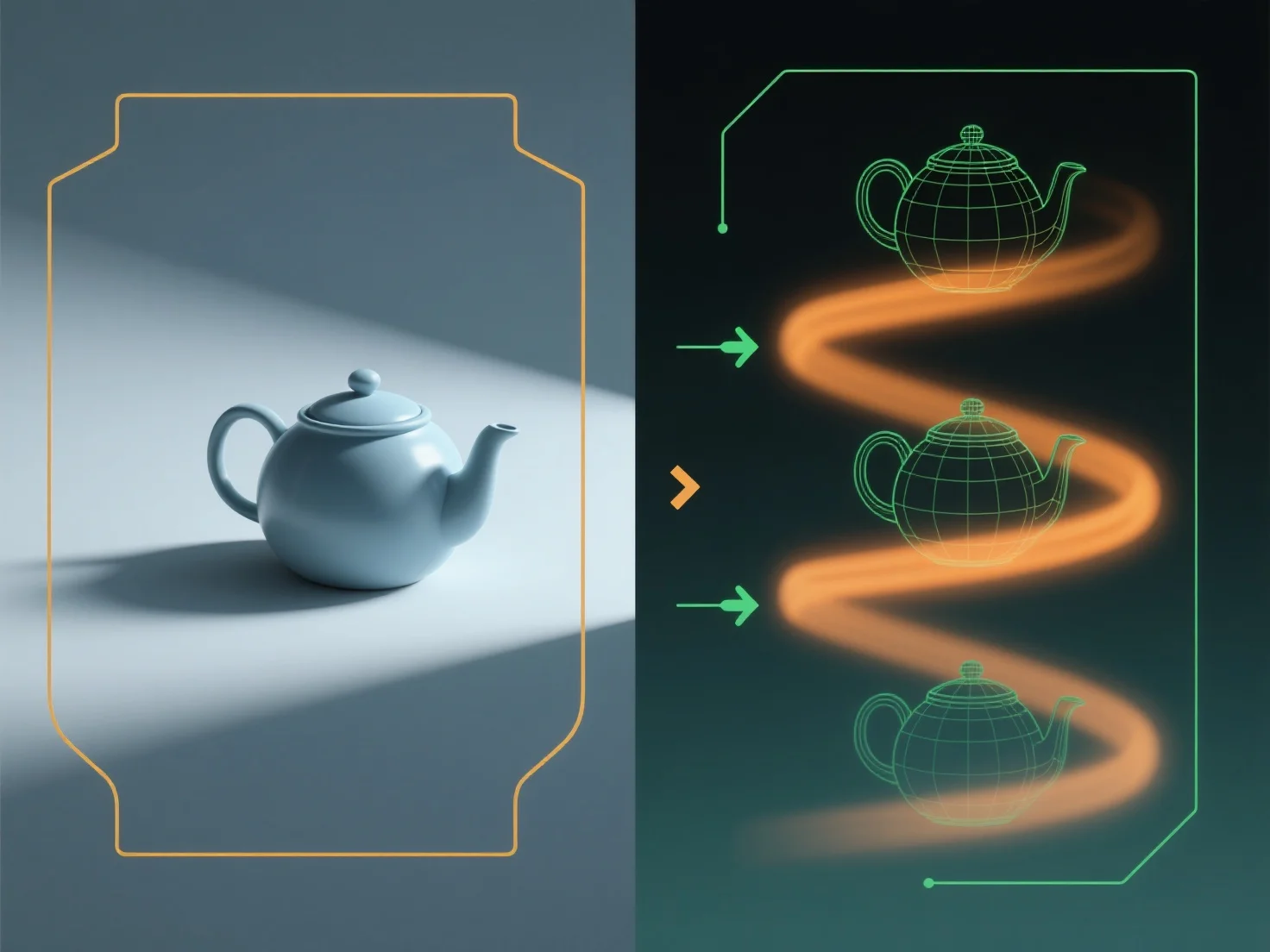
Pipeline rendering untuk gambar statis dan adegan animasi terutama berbeda dalam ketergantungan waktu: gambar statis fokus pada satu frame, sedangkan adegan animasi membutuhkan pengurutan frame berbasis waktu dan perhitungan gerakan.
Pipa gambar statis memproses satu frame dengan geometri, tekstur, dan pencahayaan tetap. Tidak ada variabel waktu yang terlibat. Langkah-langkah inti termasuk pemrosesan geometri, pencahayaan, dan shading untuk menghasilkan satu gambar akhir.
Sebaliknya, pipa animasi mengulangi proses seiring waktu, memperbarui posisi objek, rotasi, atau deformasi frame demi frame. Mereka juga mengintegrasikan efek terkait gerakan seperti blur gerakan untuk mensimulasikan gerakan halus di seluruh frame berurutan.
Secara singkat, rendering statis menangani satu momen, sedangkan rendering animasi mengelola urutan momen dinamis seiring waktu.