


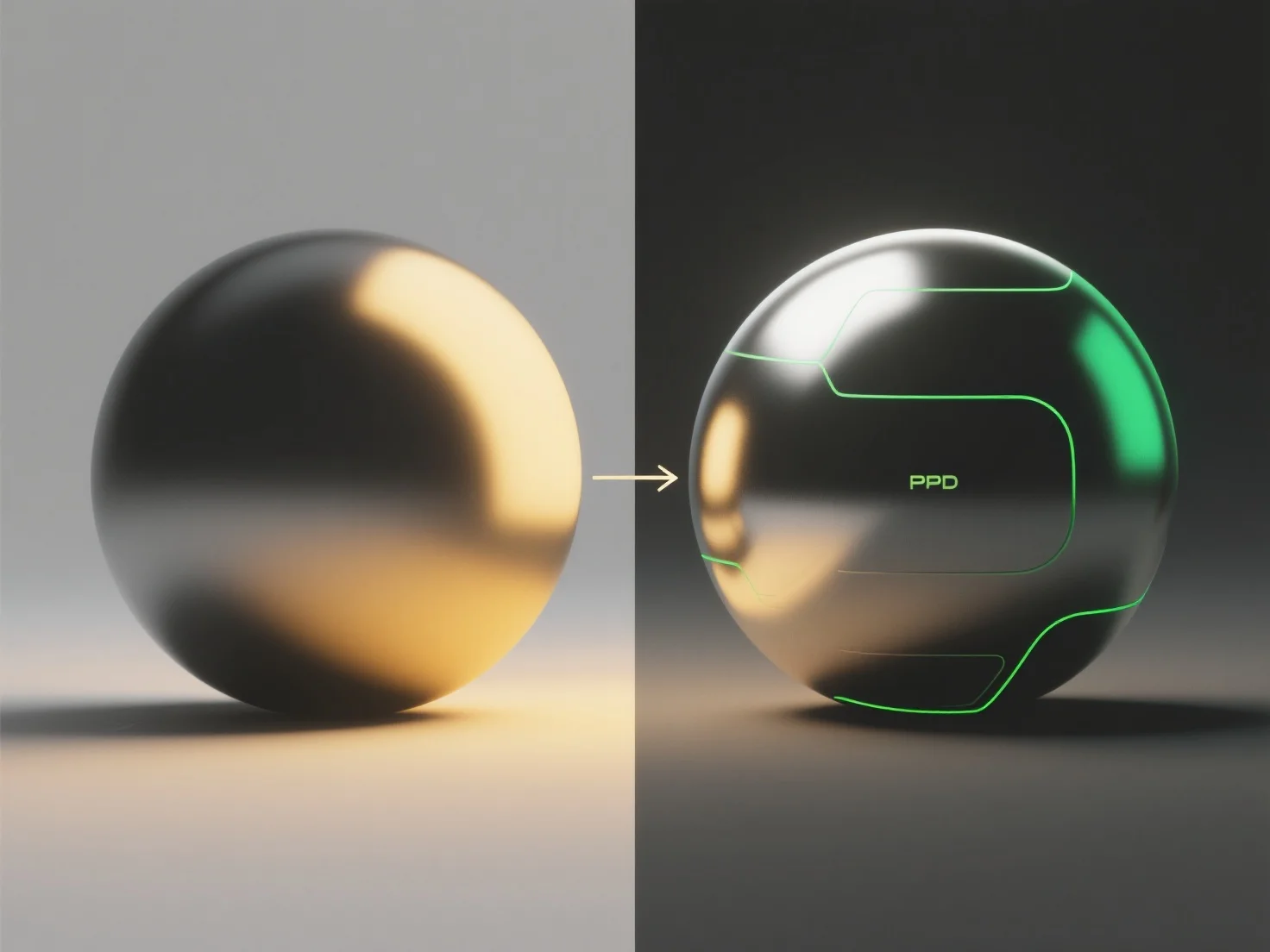
PBR (Physically Based Rendering) meningkatkan akurasi pencahayaan dengan mensimulasikan interaksi cahaya-material di dunia nyata melalui algoritma yang akurat secara fisik, memastikan pencahayaan yang konsisten dan realistis dengan mereplikasi perilaku cahaya alami.
Mekanisme kunci untuk akurasi: - Mengandalkan atribut material fisik: Menggunakan albedo (warna dasar), kasar (tekstur permukaan), dan metalisitas (konduktivitas) untuk mendefinisikan interaksi cahaya, menghindari penyesuaian manual yang sewenang-wenang. - Menerapkan konservasi energi: Meniru fisika dunia nyata di mana energi cahaya tidak diciptakan atau dihancurkan. Misalnya, permukaan kasar menyebarkan lebih banyak cahaya, sedangkan yang halus memantulkan lebih banyak cahaya, sehingga menjaga keseimbangan energi yang realistis. - Beradaptasi dengan lingkungan dinamis: Secara otomatis menyesuaikan dengan kondisi cahaya yang bervariasi (sinar matahari, lampu dalam ruangan), tidak seperti rendering tradisional yang membutuhkan penyesuaian khusus untuk setiap adegan.
Ini membuat PBR ideal untuk gaming, film, dan visualisasi produk, menyederhanakan pencahayaan yang akurat dan alami tanpa penyesuaian manual yang rumit.