


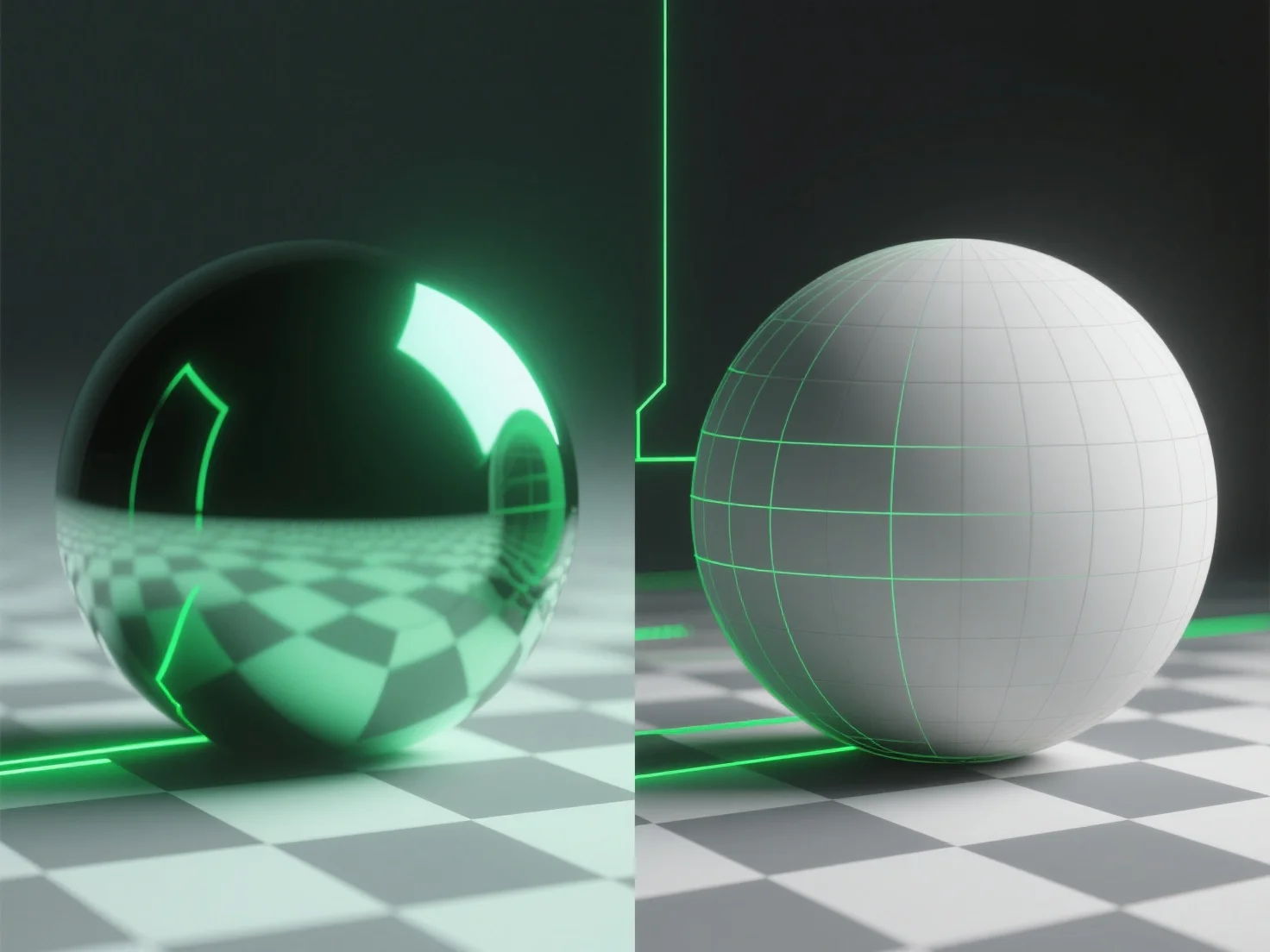
Presentasi 3D yang ditelusuri sinar secara real-time biasanya menawarkan pencahayaan, bayangan, dan refleksi yang lebih realistis daripada 3D yang dirasterisasi, tetapi membutuhkan daya komputasi yang lebih tinggi, sedangkan 3D yang dirasterisasi memprioritaskan kecepatan dan efisiensi.
- **3D yang dirasterisasi**: Render dengan memproyeksikan poligon 3D ke layar 2D, menggunakan teknik seperti pemetaan tekstur dan peta bayangan untuk memperkirakan pencahayaan. Ini cepat dan efisien, ideal untuk aplikasi real-time.
- **Ray-traced 3D**: Mensimulasikan jalur cahaya dengan menelusuri sinar dari kamera, menghitung bagaimana cahaya memantul dari permukaan. Ini menciptakan efek yang realistis seperti pencahayaan global, refleksi yang akurat, dan bayangan lembut, meningkatkan imersi, tetapi membutuhkan GPU yang kuat untuk kinerja yang lancar.
Secara singkat, rasterized 3D unggul dalam kecepatan untuk penggunaan real-time, sedangkan ray tracing memberikan realisme yang superior dengan persyaratan perangkat keras yang lebih tinggi.