


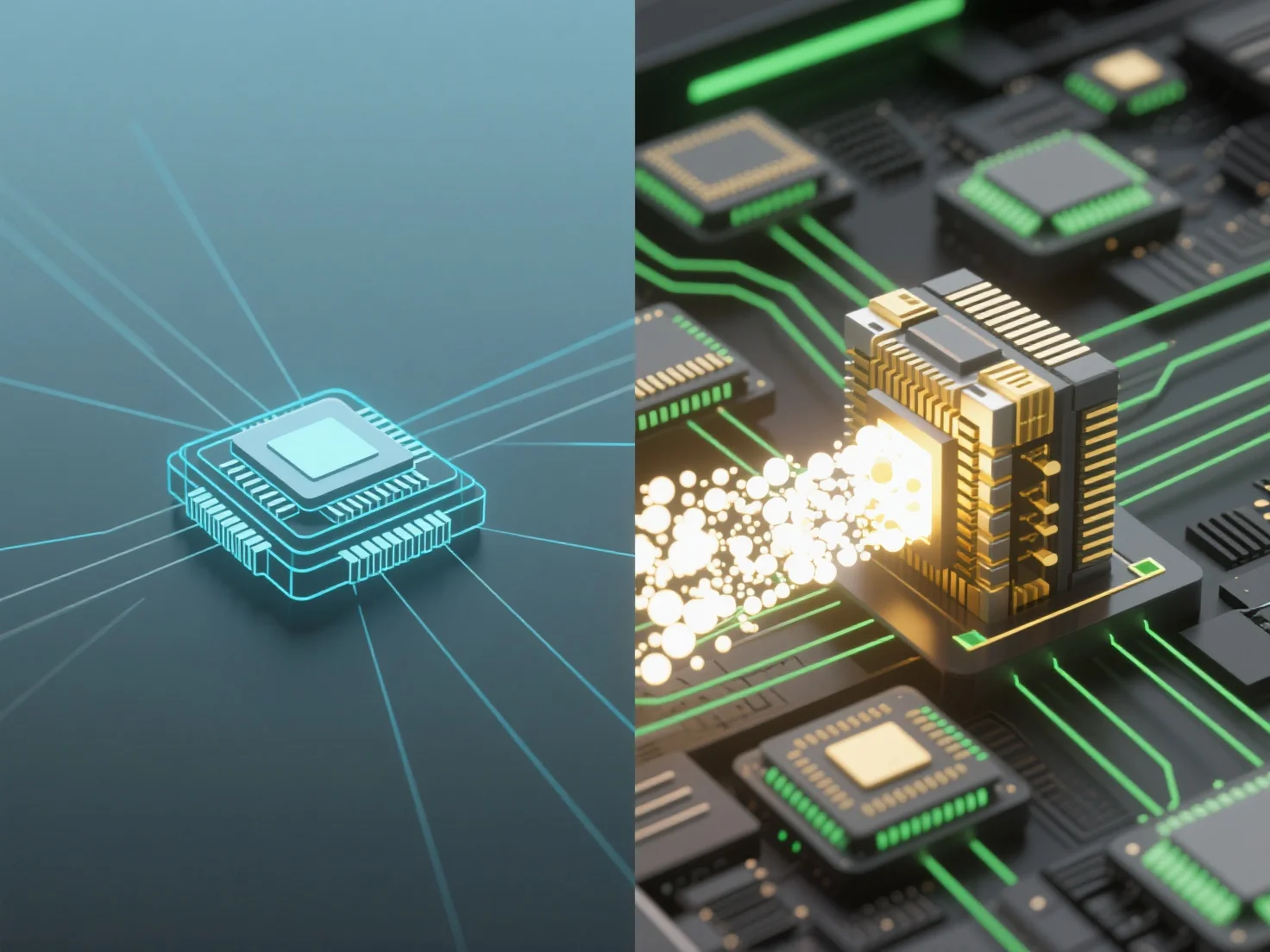
Akselerasi GPU meningkatkan rendering 3D dengan memanfaatkan pemrosesan paralel untuk menangani tugas grafis yang kompleks secara lebih efisien daripada CPU, secara signifikan mengurangi waktu rendering dan meningkatkan kualitas output.
- Kemampuan pemrosesan paralel: GPU memiliki ribuan inti, memungkinkan eksekusi simultan dari berbagai tugas grafis. Seperti rendering poligon, menerapkan tekstur, dan menghitung efek pencahayaan. Tidak seperti CPU, yang fokus pada pemrosesan sekuensial. - Penanganan data visual yang efisien: Mereka unggul dalam memproses volume besar data visual dengan cepat, mendukung pratinjau real-time yang mulus selama desain dan output render akhir yang lebih cepat untuk proyek 3D. - Sinergi perangkat lunak: Saat dipasangkan dengan perangkat lunak rendering yang dioptimalkan untuk GPU, ini semakin meningkatkan efisiensi alur kerja, memungkinkan seniman untuk melakukan iterasi dan memberikan hasil berkualitas tinggi dengan lebih cepat.
Secara ringkas, akselerasi GPU mempercepat rendering 3D melalui pemrosesan paralel, penanganan data yang efisien, dan optimisasi perangkat lunak, menjadikannya sangat penting untuk produksi grafis 3D yang cepat dan berkualitas tinggi.