


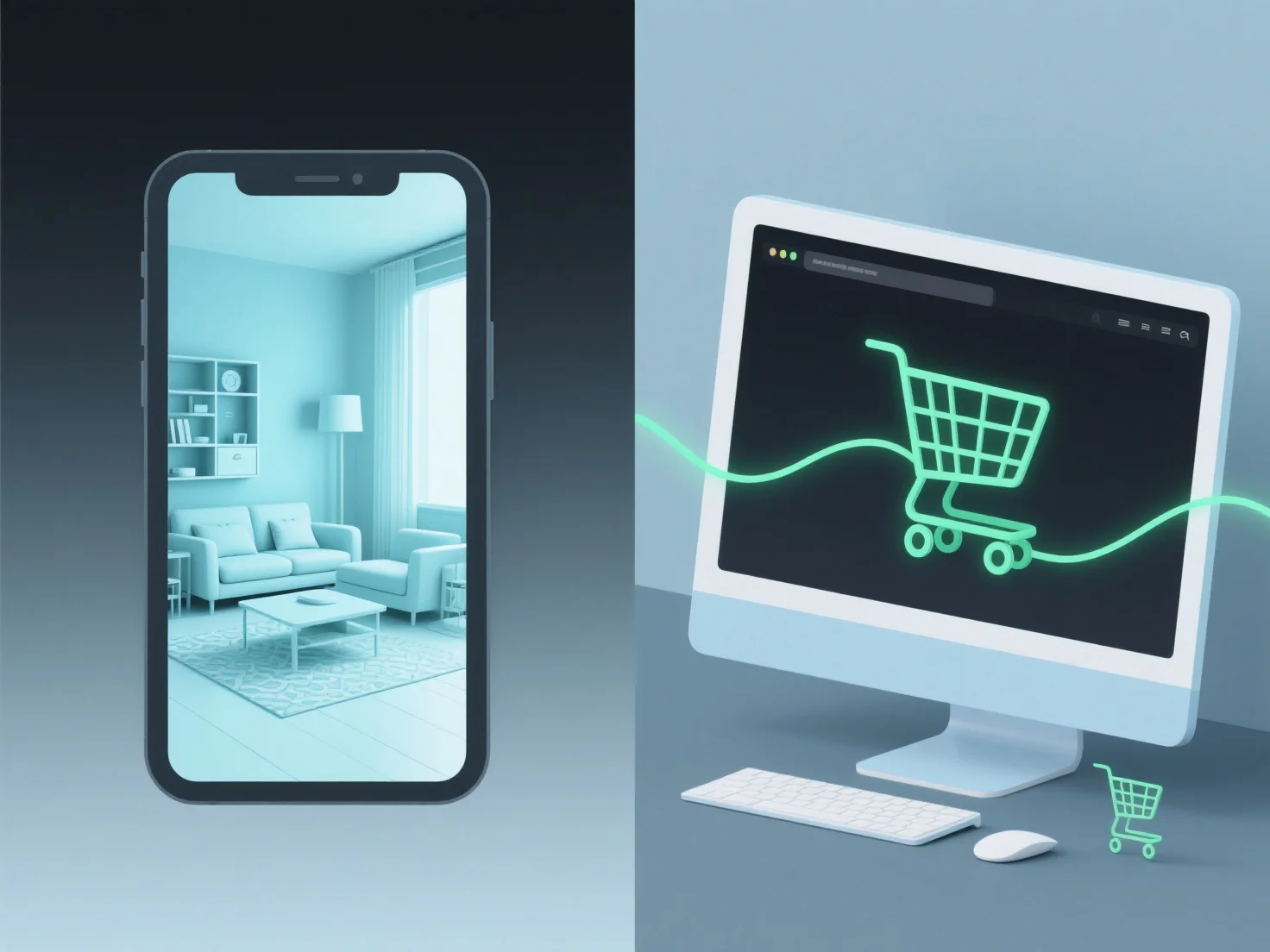
Pengalaman 3D berbasis AR umumnya mencapai tingkat konversi yang lebih tinggi daripada 3D berbasis web, terutama ketika pengguna perlu berinteraksi dengan produk dalam konteks dunia nyata.
AR menempatkan model 3D di lingkungan aktual pengguna, meningkatkan persepsi produk dan mengurangi ketidakpastian pembelian. Sebaliknya, 3D berbasis web terbatas pada tampilan layar, menawarkan relevansi kontekstual yang terbatas.
Scenario kunci termasuk ritel.
Untuk produk fisik, AR 3D memungkinkan pengguna memvisualisasikan barang di ruang mereka sendiri, mengurangi keraguan lebih baik daripada web 3D dan meningkatkan konversi.