


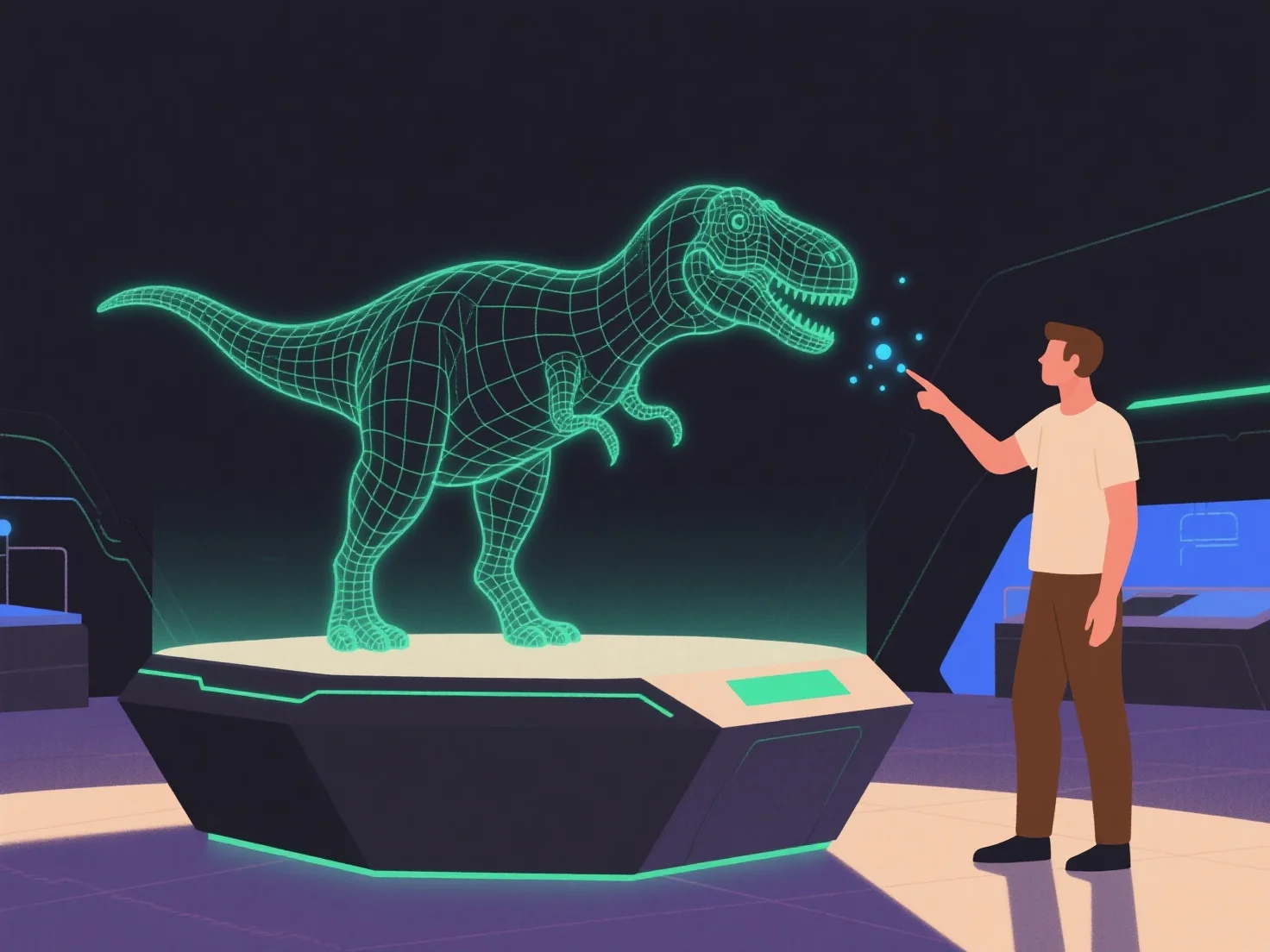
Pemodelan 3D meningkatkan pameran museum interaktif dengan menciptakan aset digital interaktif yang terperinci yang meningkatkan keterlibatan dan aksesibilitas.
- **Replika digital yang mirip dengan aslinya**: Ini menghasilkan pemindaian 3D yang akurat dari artefak, memungkinkan pengunjung untuk dengan aman memutar, memperbesar, atau memeriksa barang-barang rapuh dari dekat. Sesuatu yang tidak bisa dilakukan oleh tampilan statis. - **Penceritaan imersif**: Lingkungan 3D menciptakan kembali pengaturan sejarah (misalnya, kota kuno), dipasangkan dengan overlay AR untuk narasi interaktif, membuat pameran lebih hidup. - **Aksesibilitas yang lebih luas**: Terintegrasi dengan layar sentuh atau aplikasi seluler, memungkinkan akses jarak jauh atau interaksi taktil, memenuhi beragam kebutuhan pengunjung.
Dengan memulai dengan pemindaian 3D koleksi yang ada, museum dapat membangun perpustakaan digital dan menambahkan fitur interaktif, mengubah tampilan pasif menjadi pengalaman dinamis.