


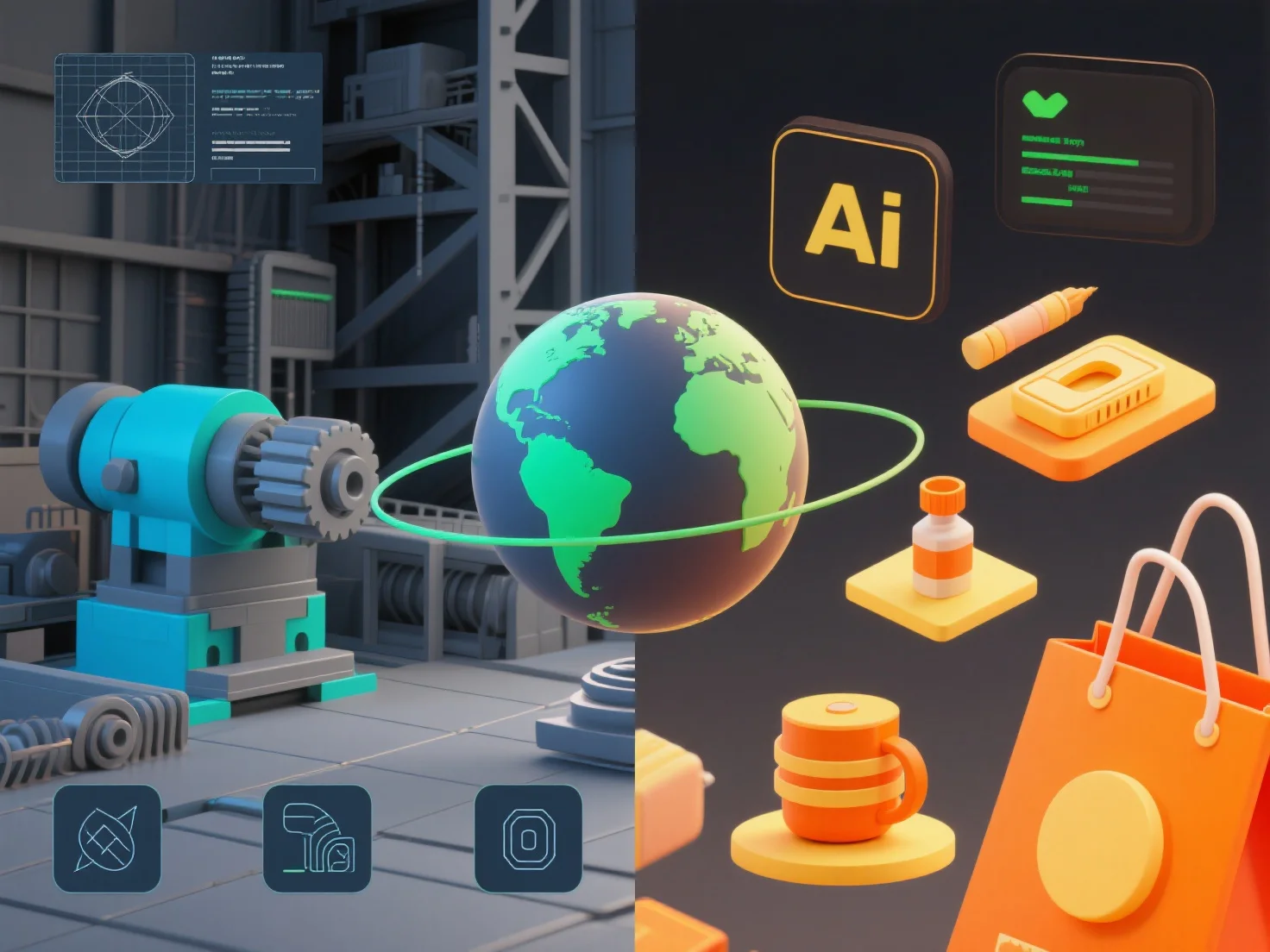
Adopsi pemodelan 3D berbeda antara industri B2B dan B2C terutama dalam hal tujuan, fokus aplikasi, dan interaksi dengan pengguna akhir.
Dalam B2B, ini terutama digunakan untuk kolaborasi teknis, pengembangan produk.
Untuk B2B, mengintegrasikan dengan alat teknis yang ada (seperti perangkat lunak CAD) meningkatkan adopsi; untuk B2C, visual 3D yang ramah pengguna dan mudah diakses.