


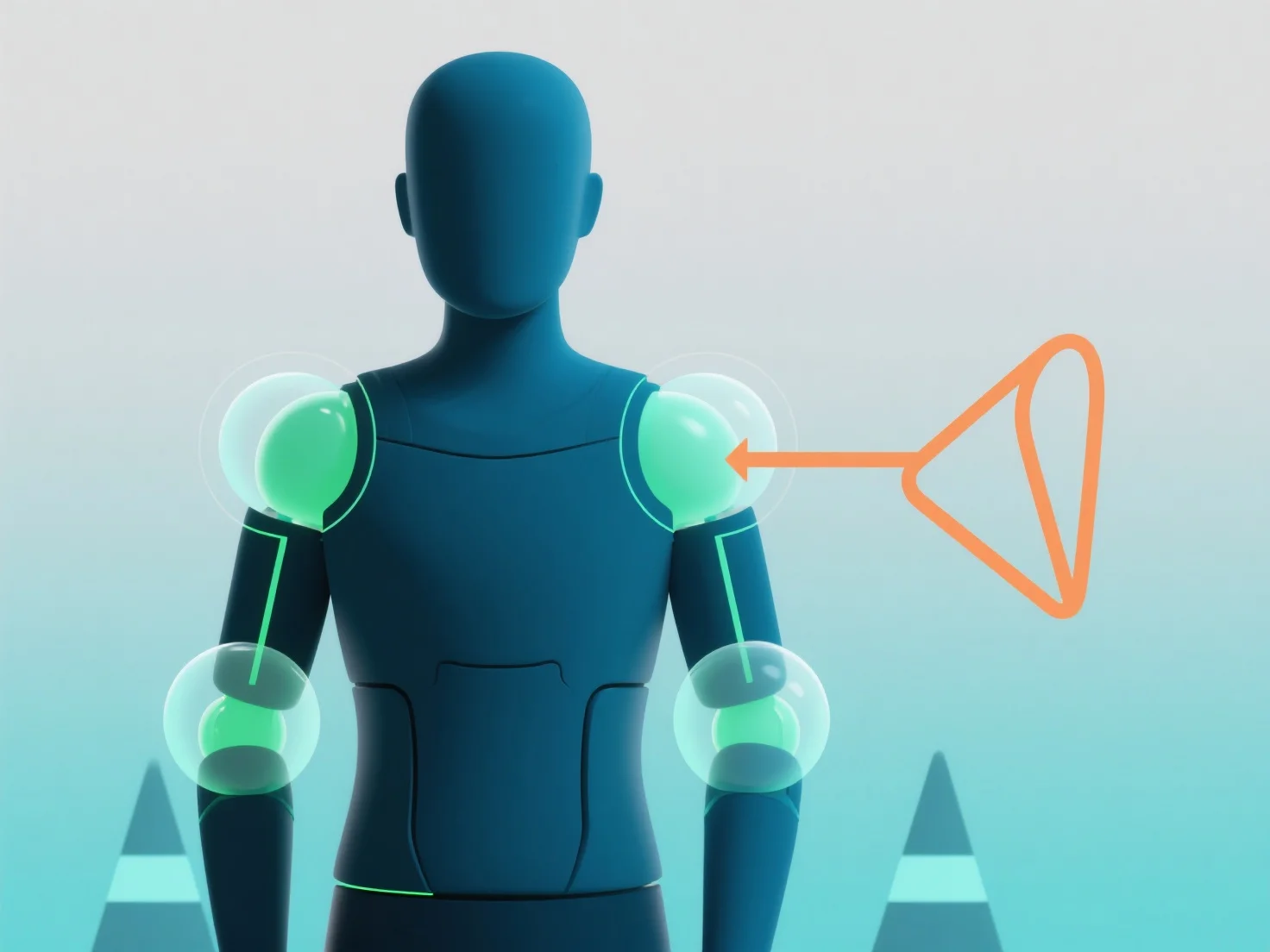
Sendi dan kendala dalam rigging secara langsung menentukan perilaku gerakan dan stabilitas struktural model 3D selama animasi.
Sendi berfungsi sebagai titik pivot, memungkinkan gerakan inti seperti rotasi.
Kendala, seperti IK (Inverse Kinematics), batasan, atau kendala orang tua-anak, membatasi atau mengarahkan gerakan. IK menjaga anggota tubuh tetap sejajar saat meraih, batasan kendala mencegah rotasi berlebihan, dan tautan orang tua-anak memastikan gerakan hierarkis.
Bersama-sama, mereka memastikan model tersebut bergerak dengan cara yang terkendali dan realistis, menghindari pose yang terputus-putus atau tidak alami, serta menjaga integritas strukturalnya.