


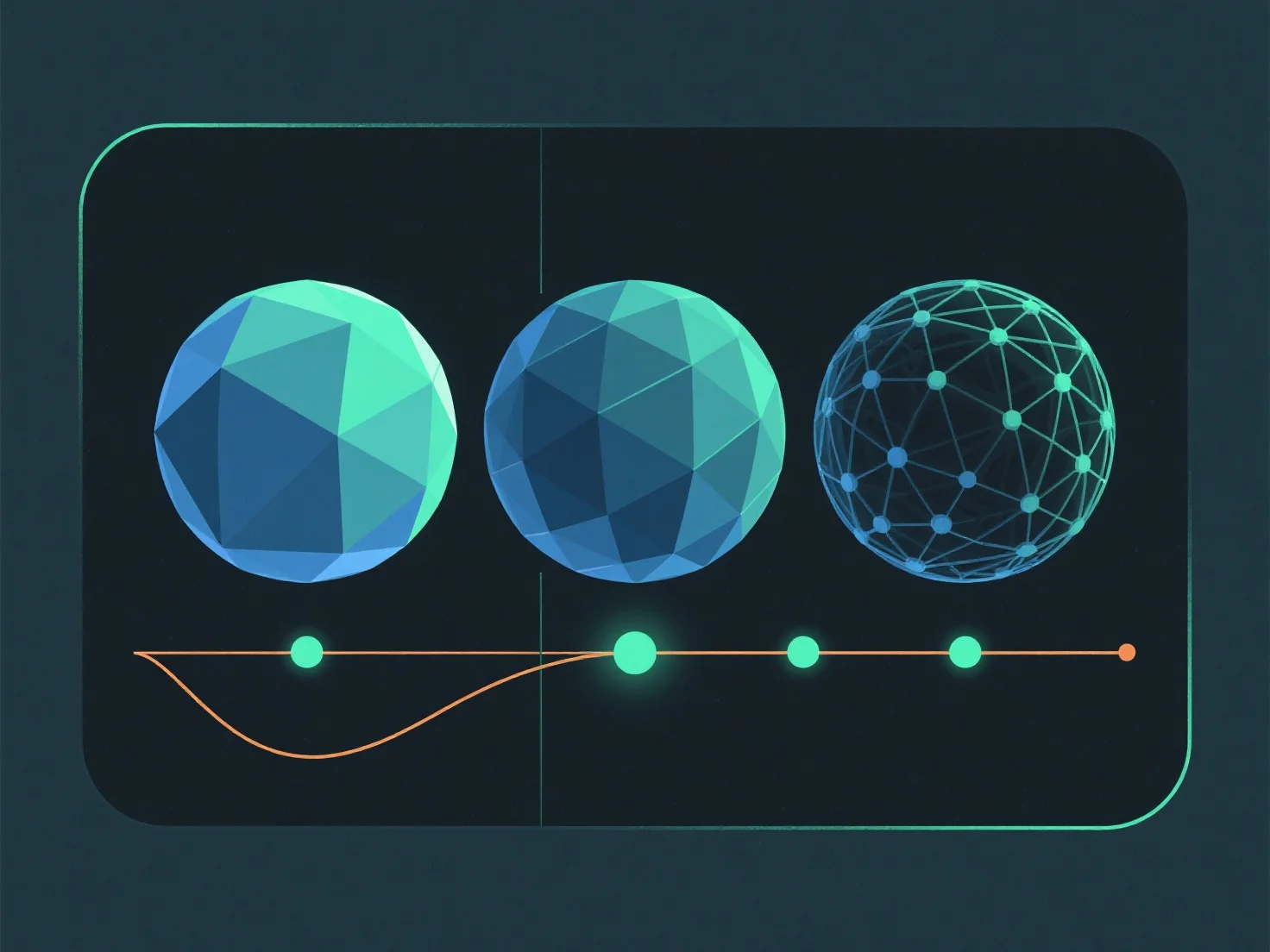
Pengembalian yang menurun dalam kualitas visual 3D terjadi ketika meningkatkan sumber daya untuk meningkatkan kualitas visual menghasilkan peningkatan yang dirasakan yang semakin kecil di luar ambang batas tertentu.
Investasi awal menunjukkan keuntungan yang jelas: Misalnya, meningkatkan jumlah poligon dari rendah ke sedang atau tekstur dasar ke high-def secara nyata meningkatkan realisme, karena pemirsa dapat dengan mudah melihat detail yang hilang.
Di luar titik kunci, pengembalian turun tajam: Meningkatkan jumlah poligon dari jutaan menjadi puluhan juta atau resolusi tekstur dari 4K menjadi 8K membutuhkan sumber daya yang jauh lebih banyak.
Oleh karena itu, meskipun upaya awal dalam kesetiaan visual 3D memberikan manfaat yang signifikan, fokus berlebihan pada detail ultra-tinggi mengakibatkan pengembalian yang menurun, di mana biaya atau usaha melebihi peningkatan yang terlihat.