


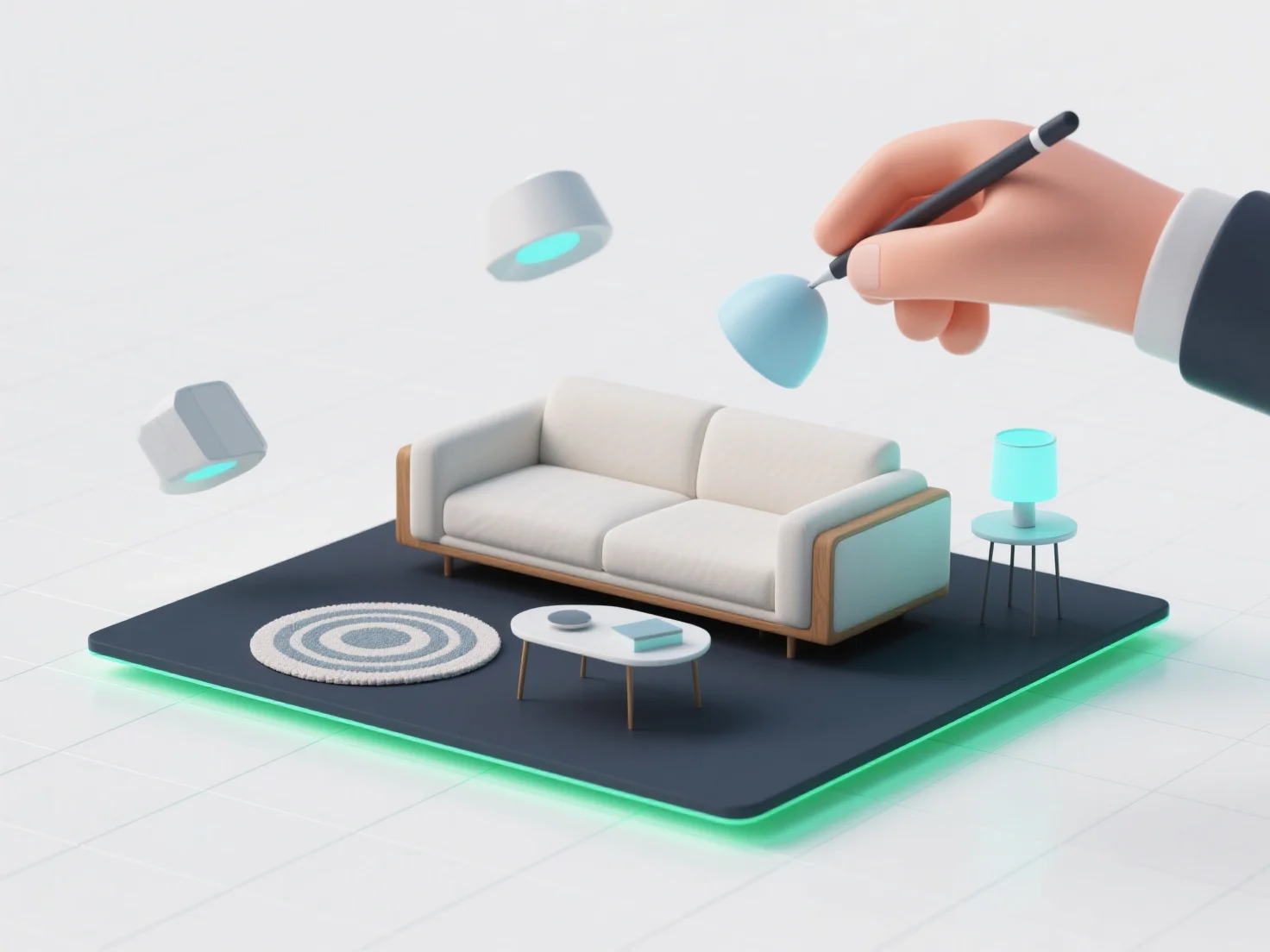
Model 3D meningkatkan desain showroom virtual untuk platform online dengan menciptakan pengalaman yang realistis, interaktif, dan imersif yang mengungguli konten 2D statis, membuat showroom lebih menarik dan berpusat pada pengguna.
- **Visualisasi produk yang nyata**: Model 3D membuat produk dengan tekstur, dimensi, dan fitur yang terperinci, memungkinkan pengguna untuk memutar, memperbesar, dan memeriksa item dengan cermat. Ini sangat penting untuk sektor seperti ritel, di mana kejelasan mendorong keputusan pembelian. - **Navigasi interaktif**: Pengguna mengontrol eksplorasi mereka, bergerak bebas melalui ruang pamer. Keterlibatan aktif ini mendorong hubungan yang lebih dalam dibandingkan dengan penelusuran 2D pasif. - **Dukungan konteks spasial**: Dalam furnitur atau otomotif, model 3D membantu memvisualisasikan bagaimana produk cocok dengan ruang dunia nyata, mengurangi ketidakpastian dan meningkatkan kepercayaan diri dalam membeli
Dengan mengintegrasikan model 3D, ruang pamer virtual menjadi alat dinamis yang meningkatkan pengalaman pengguna dan mendorong konversi.