


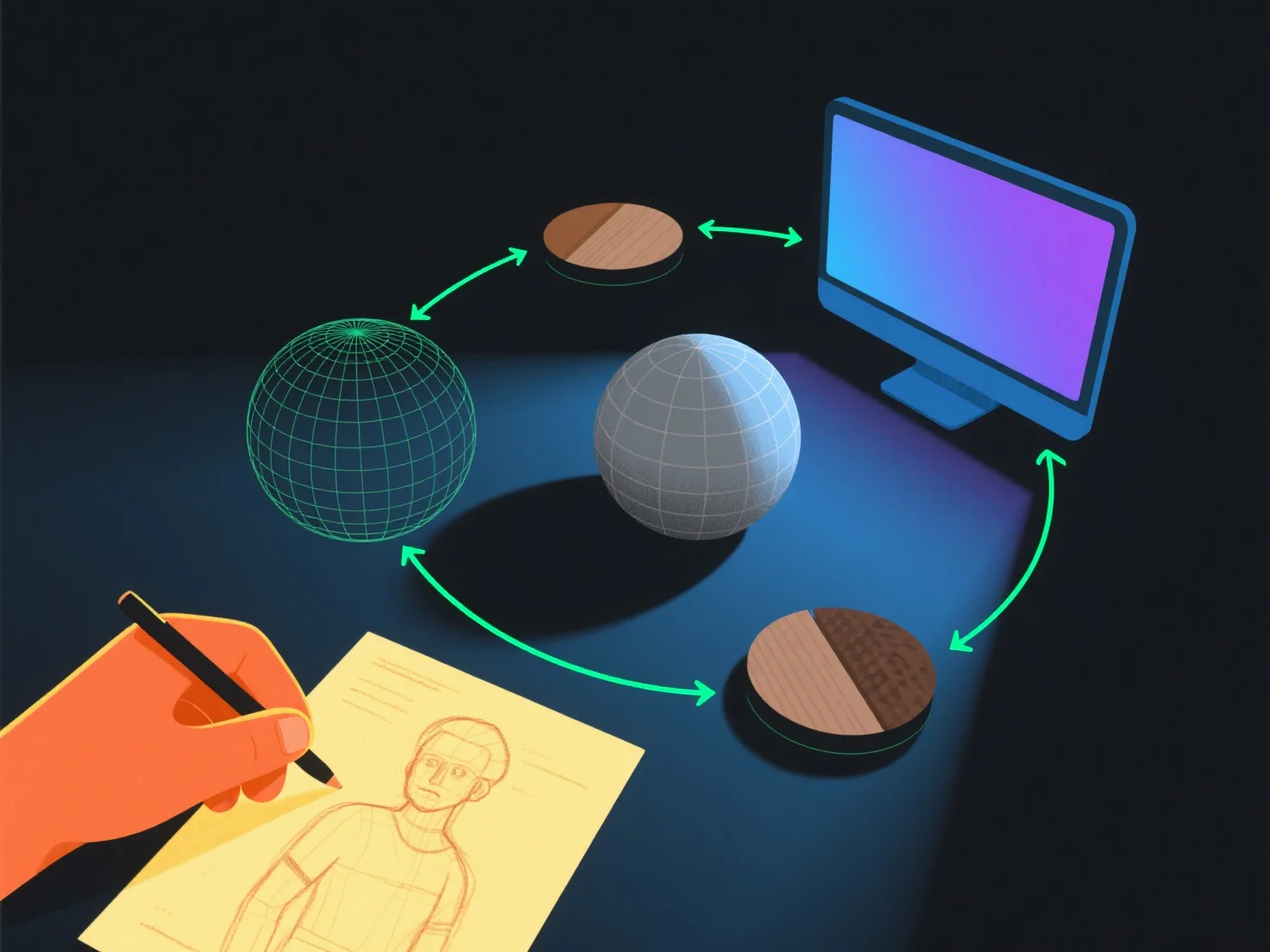
Le pipeline 3D, du concept au rendu final, comprend six étapes principales : la conception du concept, la modélisation 3D, la texturation, le rigging (pour les ressources animées), l'éclairage et le rendu final.
- **Conception conceptuelle** : Transforme les idées en concepts visuels via des croquis ou des mood boards, définissant l'orientation créative du projet. - **Modélisation 3D** : Construit une géométrie 3D numérique à l'aide d'un logiciel, formant la forme et la structure de base de l'asset. - **Texturation** : Ajoute des détails de surface (couleur, motifs, matériaux) pour améliorer le réalisme et l'attrait visuel. - **Rigging (pour l'animation)** : Construit un squelette avec des contrôles pour permettre le mouvement (par exemple, les articulations d'un personnage ou l'articulation d'un objet). - **Rendeu final** : Calcule les interactions entre la lumière et les matériaux pour générer l'image finale ou le cadre d'animation.
Ces étapes séquentielles transforment les concepts initiaux en visuels polis et prêts à être rendus.