


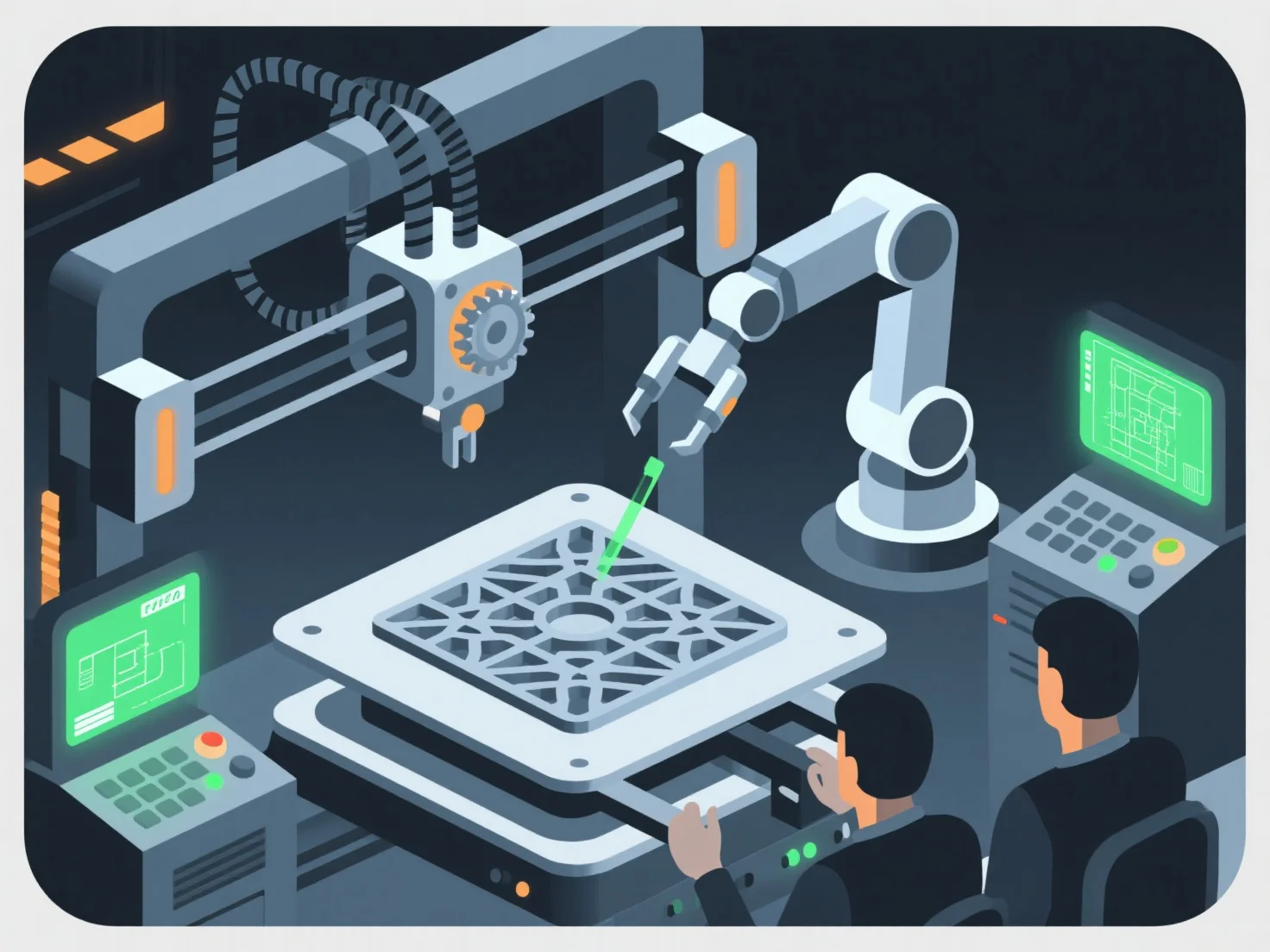
Les systèmes 3D hautement automatisés sont confrontés à des défis de production majeurs : des lacunes dans l'intégration des flux de travail, des limitations des outils techniques et une surveillance humaine réduite.
Tout d'abord, les problèmes d'intégration des flux de travail. Les incompatibilités entre les outils de conception pilotés par l'IA, les logiciels de modélisation et les imprimantes robotiques entraînent souvent des erreurs de transfert de données, conduisant à des inexactitudes dans les modèles ou des retards de production.
Deuxièmement, des limitations techniques. Les systèmes automatisés peuvent avoir des difficultés avec des géométries complexes.
Troisièmement, une surveillance réduite. La dépendance excessive à l'automatisation minimise les vérifications manuelles, ce qui rend la détection précoce des erreurs difficile.