


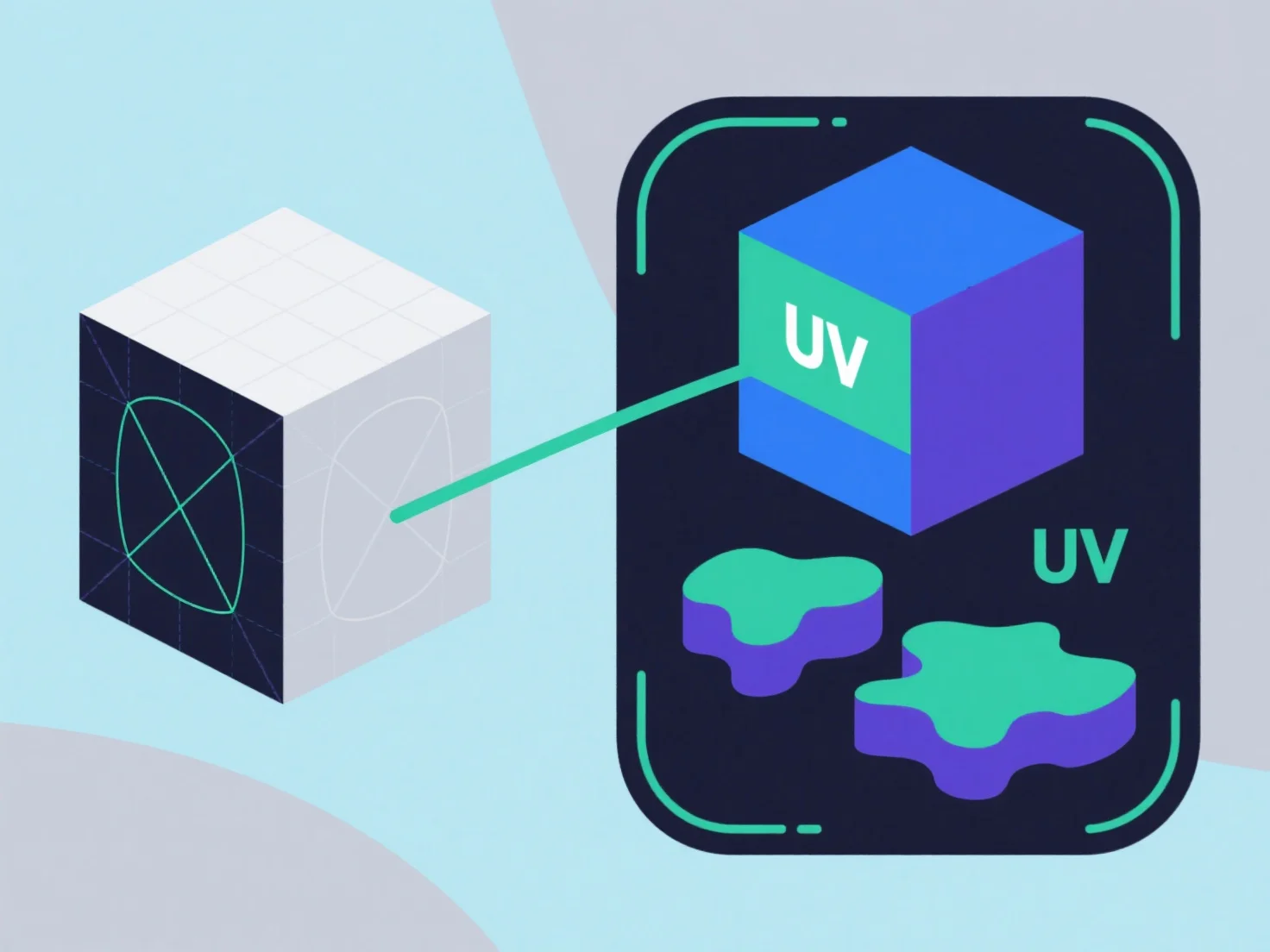
Le dépliement UV dans la modélisation 3D est le processus qui consiste à aplatir la surface d'un modèle 3D en une carte de texture 2D, servant de pont entre la géométrie 3D et la conception de textures 2D pour assurer une application précise des textures sans distorsion.
Les rôles clés incluent : - **Cartographie de texture précise** : Convertit les surfaces 3D en 2D, permettant aux artistes d'appliquer des textures (couleurs, motifs, détails) avec précision, en évitant les étirements ou les désalignements. - **Édition de texture simplifiée** : Les cartes 2D sont plus faciles à modifier dans un logiciel (par exemple, Photoshop), permettant des ajustements détaillés avant une nouvelle application sur le modèle 3D. - **Flux de surface cohérent** : Aligne les coordonnées de texture, assurant que les textures s'écoulent naturellement sur des formes complexes, améliorant ainsi le réalisme.
En bref, le dépliement UV est essentiel pour transformer l'art 2D en visuels 3D réalistes et professionnels.