


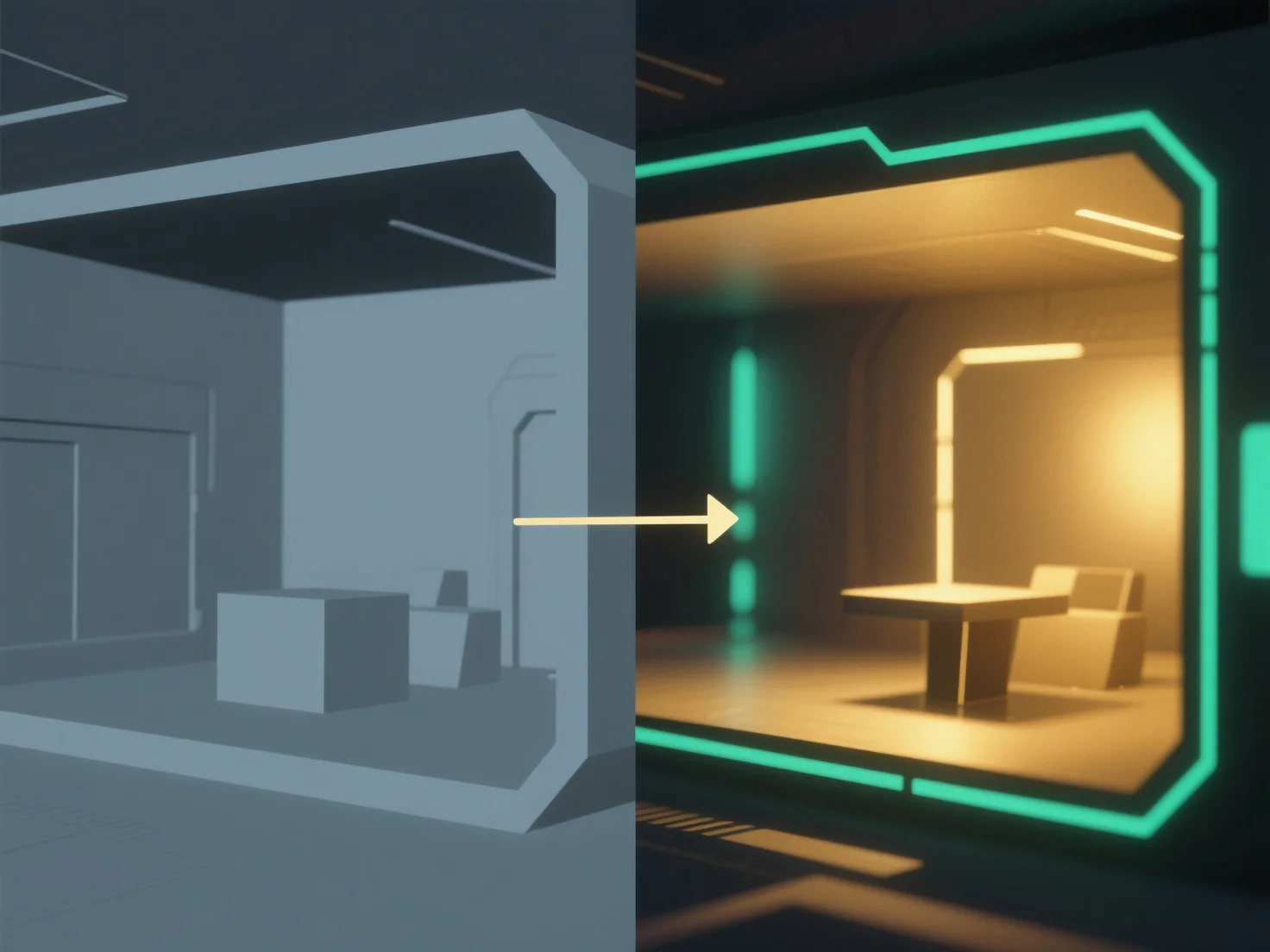
Le post-traitement dans les graphismes 3D améliore la qualité visuelle en appliquant des effets après le rendu initial, transformant les résultats bruts en images polies, réalistes ou stylisées grâce à l'affinement des couleurs, de l'éclairage et des détails.
Les fonctions clés incluent : ajuster les couleurs pour définir l'ambiance ou corriger le ton ; ajouter des effets d'éclairage.
Applications industrielles : - Développement de jeux : Utilise le grading dynamique des couleurs ou le flou de mouvement pour améliorer l'immersion dans le jeu. - Production cinématographique : Aligne les rendus 3D avec les séquences d'action en direct grâce à une correspondance précise des couleurs. - Visualisation architecturale : Améliore les présentations clients avec un éclairage réaliste et des ajustements de texture.
Pour les débutants, expérimenter avec des filtres de base dans des outils tels que le Compositor de Blender aide à observer comment de petits ajustements peuvent améliorer l'impact visuel.