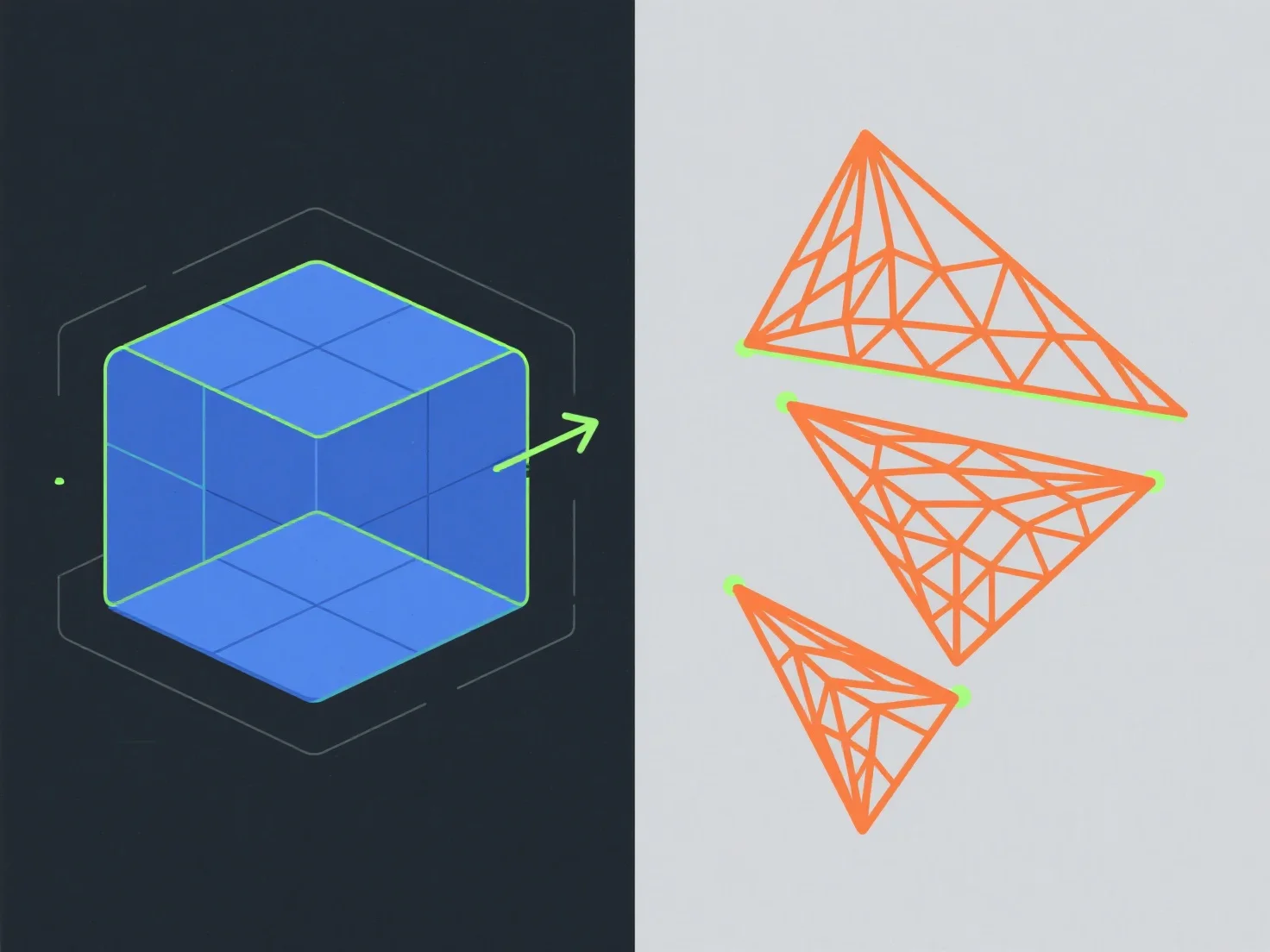
Dans la modélisation 3D, les quadrilatères (polygones à quatre côtés) et les triangles (polygones à trois côtés) diffèrent principalement en termes de structure, de flux d'arêtes et d'applications pratiques. Les quadrilatères présentent un flux d'arêtes plus fluide, ce qui les rend plus faciles à subdiviser, à ajuster et à déformer. Ils sont idéaux pour la modélisation organique (par exemple, les personnages) ou l'animation, où la flexibilité du maillage est cruciale. Les triangles, en tant que polygones les plus simples, sont plus rigides et peuvent provoquer des artefacts d'ombrage (comme des arêtes dures), mais excellent dans le rendu en temps réel (par exemple, dans les jeux) en raison de leur efficacité computationnelle. Pour les modèles nécessitant des ajustements fréquents ou de l'animation, commencer par des quadrilatères aide à maintenir une topologie propre, tandis que les triangles sont préférés pour les projets en temps réel axés sur les performances.


Quelle est la différence entre les quadrilatères et les triangles dans la modélisation 3D ?
Les quadrilatères et les triangles dans la modélisation 3D diffèrent en structure, en flux d'arêtes et en utilisations : les quadrilatères pour l'animation/le rendu organique, les triangles pour le rendu en temps réel.