


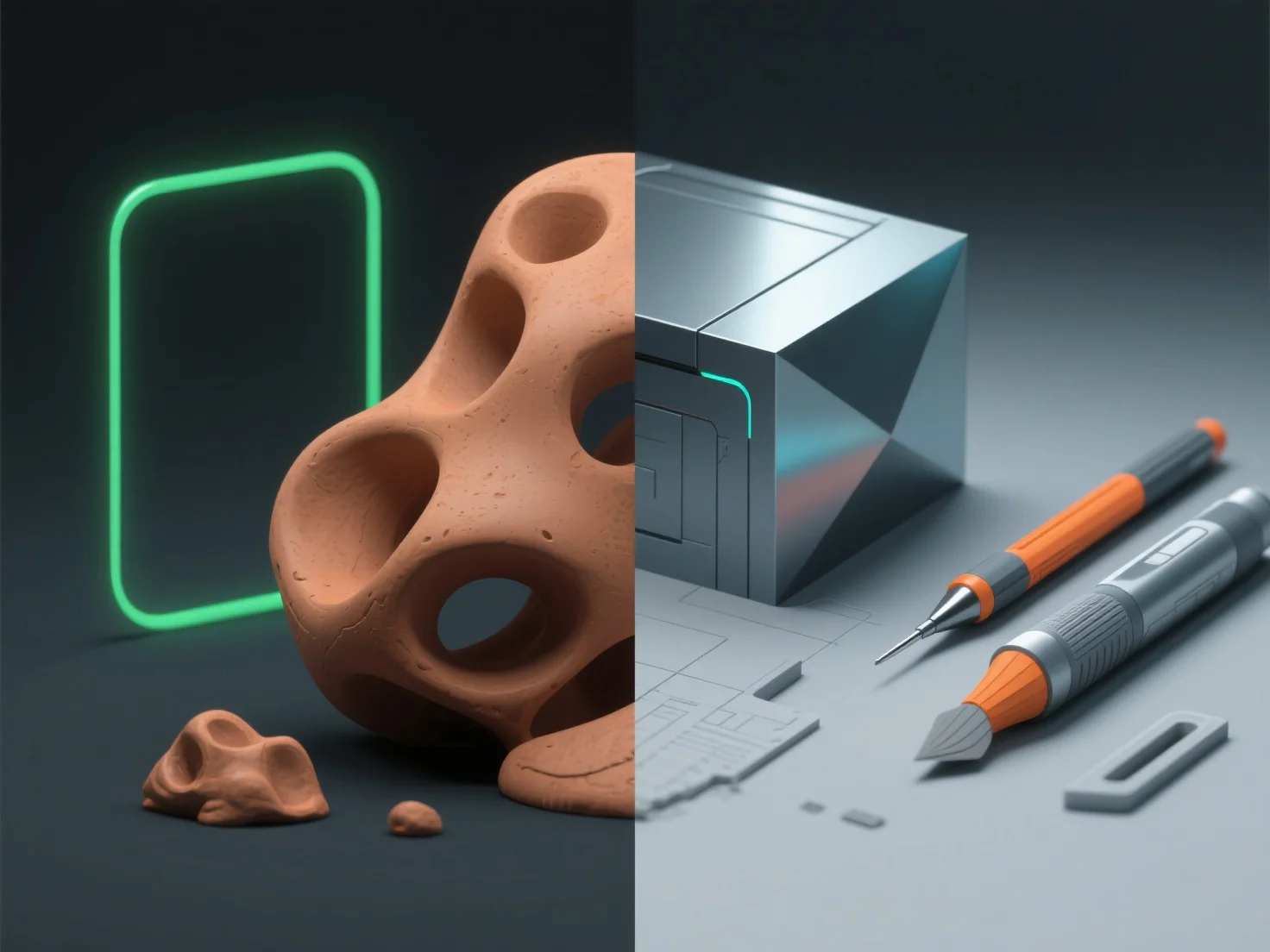
Lors de la combinaison d'outils de sculpture et de modélisation de surfaces dures, les principales considérations incluent l'intégration du flux de travail, la compatibilité géométrique et la cohérence topologique, assurant une fusion fluide des détails organiques.
- **Intégration du flux de travail** : Planifiez les transitions d'outils à l'avance. Utilisez des outils de sculpture (par exemple, ZBrush) pour les détails organiques et des outils de surfaces dures (par exemple, les opérateurs booléens de Blender) pour les bords nets, afin d'éviter des processus décousus. - **Compatibilité géométrique** : Équilibrez la résolution du maillage : une polygonalisation élevée pour les détails sculptés afin de capturer des textures fines, et une polygonalisation optimisée pour les surfaces dures afin d'éviter les ralentissements de performance. - **Cohérence topologique** : Alignez le flux d'arêtes entre les zones sculptées et les zones de surfaces dures ; une topologie incohérente peut provoquer des problèmes de déformation dans l'animation ou l'impression 3D.
La retopologisation des maillages sculptés améliore souvent l'alignement avec les composants de surface dure, renforçant ainsi l'intégrité globale du modèle.