


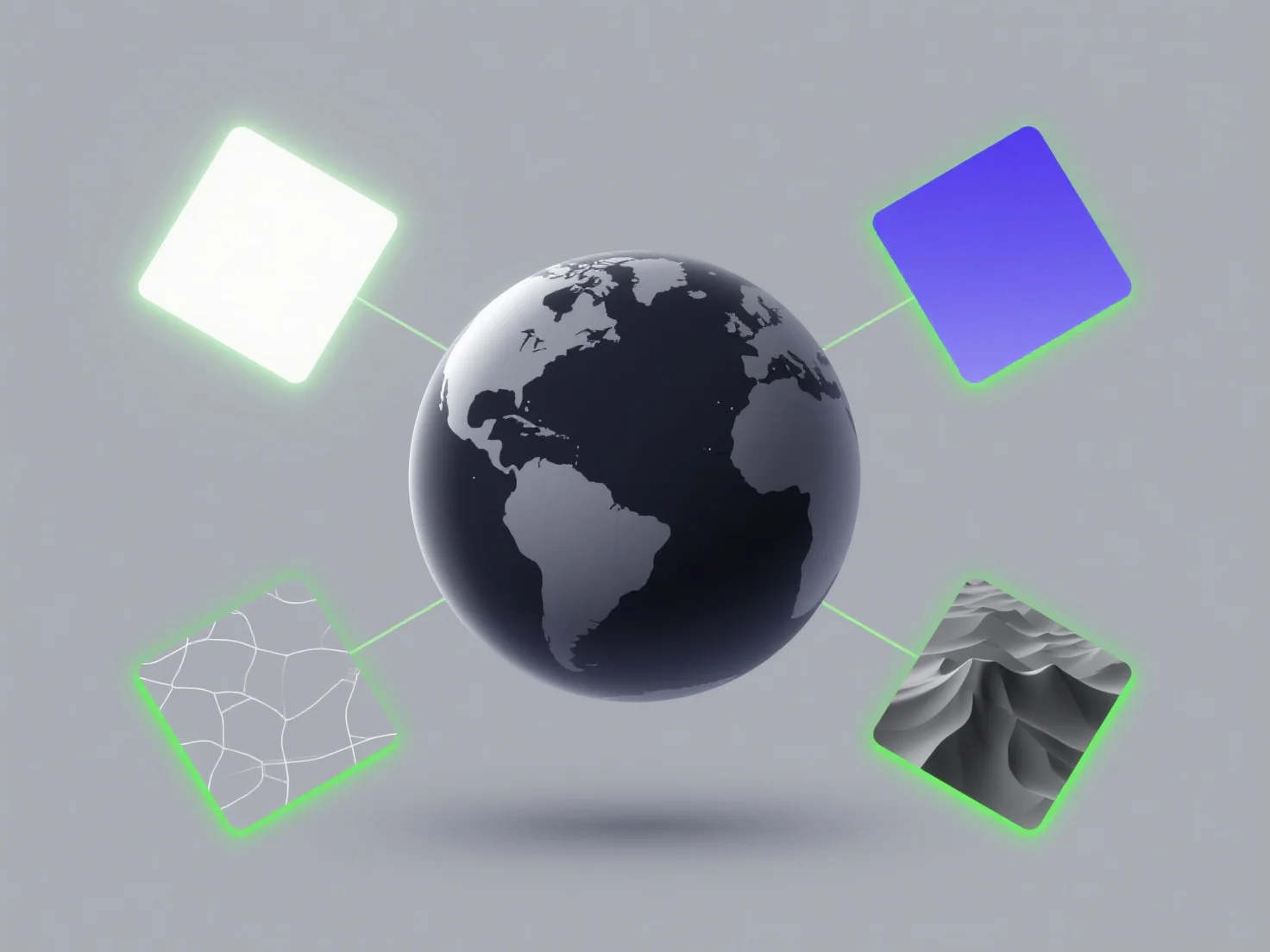
Les types courants de cartes de texture incluent les cartes diffuses, spéculaires, normales, de relief, d'albédo, de rugosité et de déplacement, chacune simulant des propriétés de surface spécifiques pour améliorer le réalisme des modèles 3D.
- Cartes Diffuse/Albedo : Définissent la couleur de base d'une surface. L'albedo exclut souvent les effets d'éclairage pour obtenir une tonalité de matériau cohérente, tandis que la diffuse peut inclure un ombrage de base. - Cartes Spéculaire/Rugosité : Contrôlent la réflectivité. Les cartes spéculaires ajustent l'intensité des reflets (par exemple, la brillance métallique), tandis que les cartes de rugosité déterminent les finitions mates (rugosité élevée) ou brillantes (rugosité faible). - Cartes Normales/Bump : Ajoutent des détails de surface sans polygones supplémentaires. Les cartes normales utilisent des valeurs RVB pour simuler l'orientation de la surface en 3D.
Ces cartes équilibrent collectivement la qualité visuelle et les performances, ce qui est crucial dans la modélisation 3D, les jeux et l'animation pour des surfaces réalistes.