


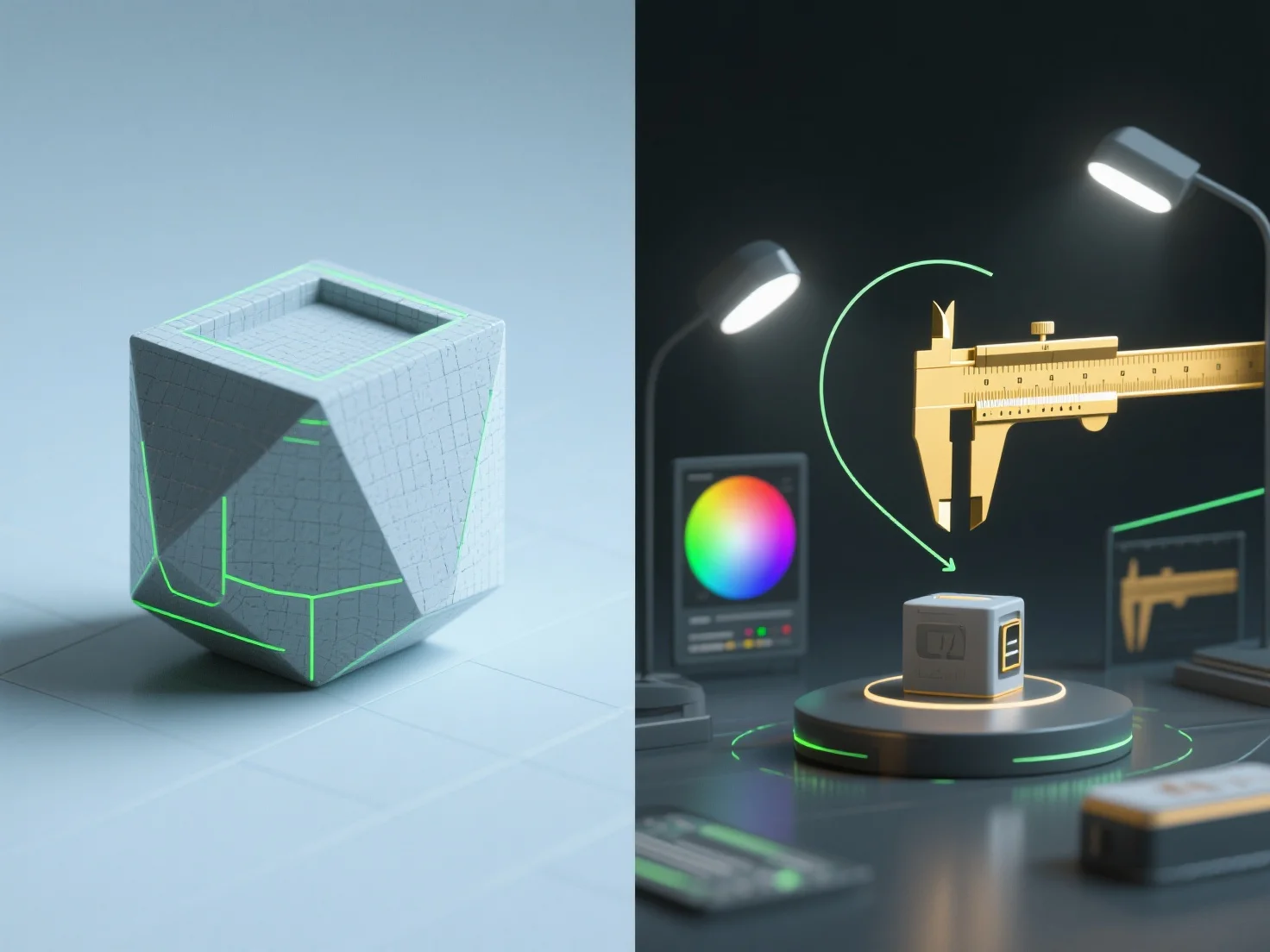
Adhérer aux normes de rendu dans les visualisations 3D implique de définir des références techniques claires, de maintenir la cohérence des éléments fondamentaux et de valider les résultats par rapport aux directives afin de répondre aux exigences de l'industrie ou du projet.
- **Définissez les exigences techniques à l'avance** : Spécifiez les paramètres clés tels que la résolution, l'espace colorimétrique, etc.
- **Assurer la cohérence de l'éclairage et des matériaux** : Standardiser l'intensité de la lumière, la qualité des ombres et les propriétés des matériaux.
- **Utiliser des outils de validation** : Employer des logiciels automatisés ou des listes de contrôle pour vérifier la conformité aux normes définies, telles que la précision des couleurs ou la résolution de sortie, en s'assurant que les rendus répondent aux critères prédéfinis avant leur finalisation.
Ces pratiques rationalisent les flux de travail, améliorent la qualité du rendu et assurent l'alignement avec les directives techniques et visuelles.