


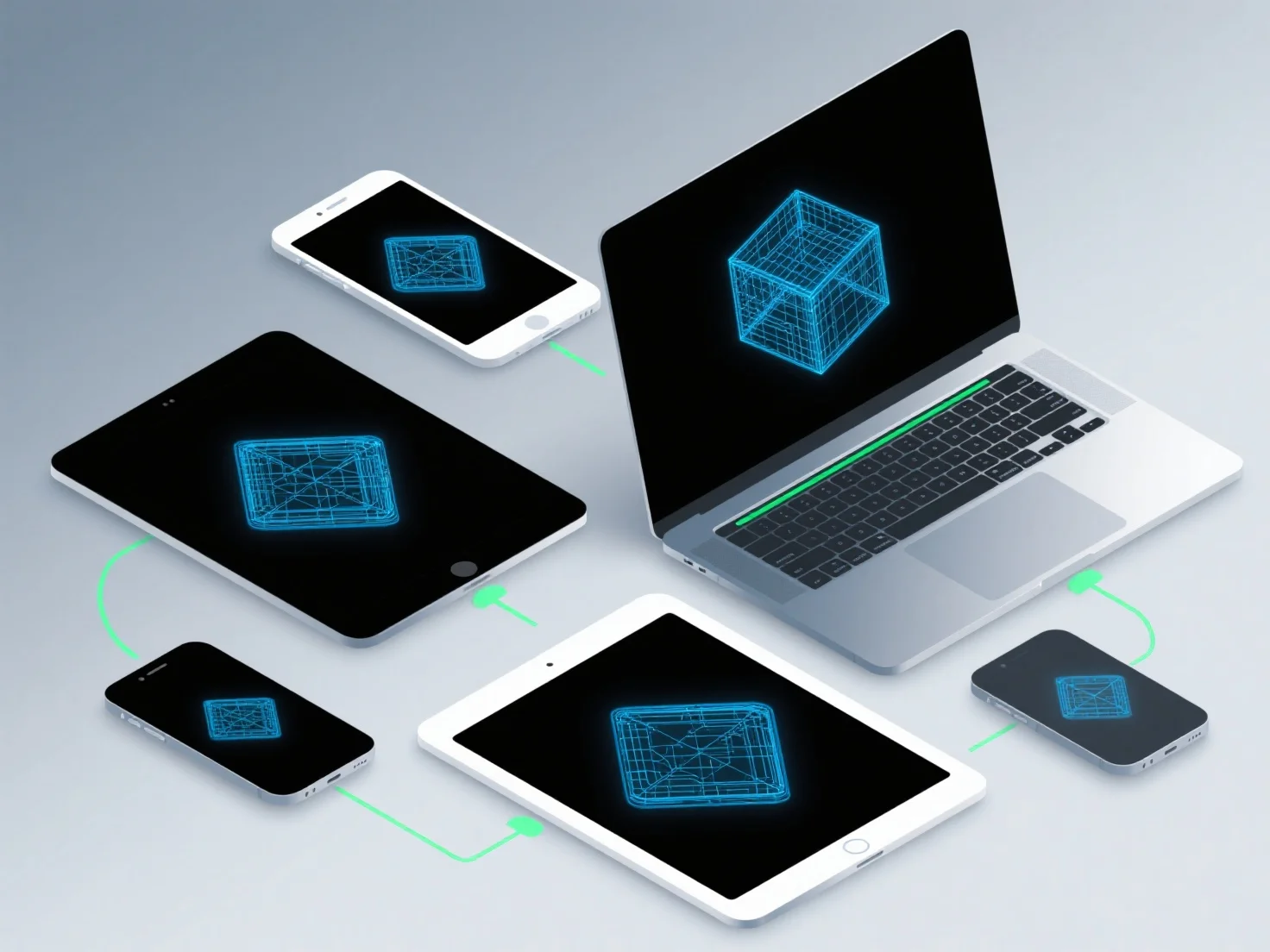
La technologie 3D s'adapte aux environnements multi-appareils en optimisant la compatibilité et les performances sur divers matériels, assurant ainsi une expérience utilisateur cohérente.
Il optimise les modèles 3D en ajustant le nombre de polygones et la résolution des textures : les appareils haut de gamme (stations de travail) utilisent des modèles détaillés, tandis que les téléphones mobiles et les tablettes adoptent des versions simplifiées pour réduire la charge de traitement.
Adopte des formats universels et légers.
Les méthodes de rendu des tailleurs : rendu en temps réel pour les appareils interactifs (mobiles, tablettes) et sorties pré-rendues pour les gadgets à faible consommation d'énergie, en équilibrant la qualité visuelle et la vitesse.
Ces ajustements permettent au contenu 3D de fonctionner de manière fiable sur tous les appareils, répondant ainsi aux besoins des utilisateurs sur plusieurs appareils.