


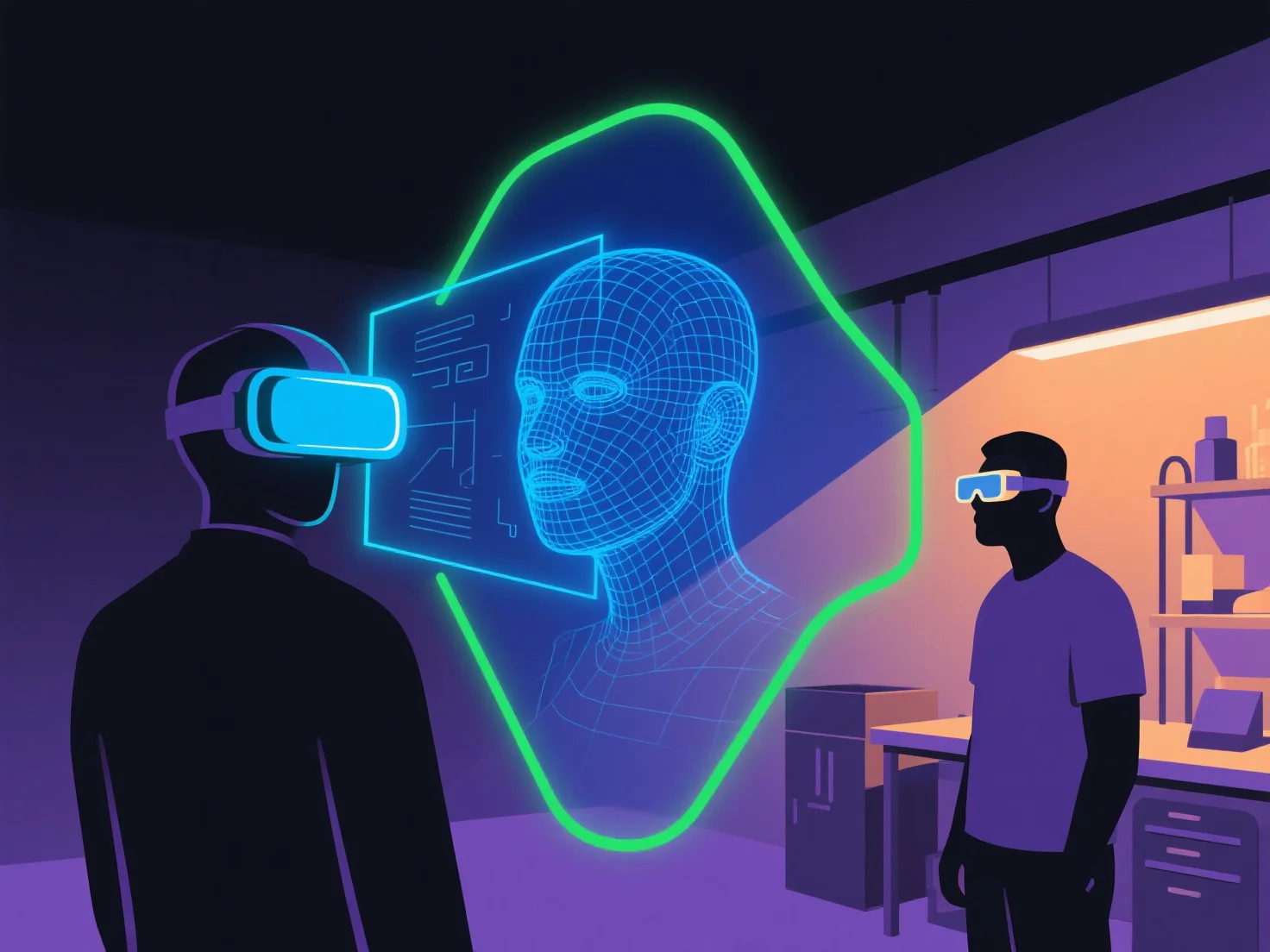
La modélisation 3D est déployée dans les solutions de réalité virtuelle et augmentée en créant des ressources numériques de base, telles que des objets 3D, des environnements ou des personnages, que les systèmes rendent en expériences visuelles immersives. Ces modèles constituent la base des mondes entièrement virtuels de la réalité virtuelle et des superpositions du monde réel de la réalité augmentée, permettant des interactions utilisateur interactives et réalistes.
- **Fondation pour l'immersion** : La réalité virtuelle s'appuie sur des modèles 3D détaillés pour construire des mondes entièrement virtuels, tandis que la réalité augmentée les utilise pour superposer des éléments numériques à la réalité, assurant une cohérence visuelle entre les espaces numériques et physiques. - **Permettre l'interaction** : Les modèles soutiennent l'engagement des utilisateurs, tels que la manipulation d'objets dans les jeux de réalité virtuelle ou l'accès aux détails de l'équipement dans la formation en réalité augmentée, améliorant l'interactivité. - **Optimiser les performances** : Les modèles à faible polygonalisation sont priorisés pour assurer un rendu fluide, essentiel pour maintenir l'immersion, en particulier dans les prototypes initiaux.
Les applications courantes incluent les jeux de réalité virtuelle (environnements interactifs), la formation en réalité augmentée (superpositions d'équipements) et les visites virtuelles (espaces 3D réalistes).